
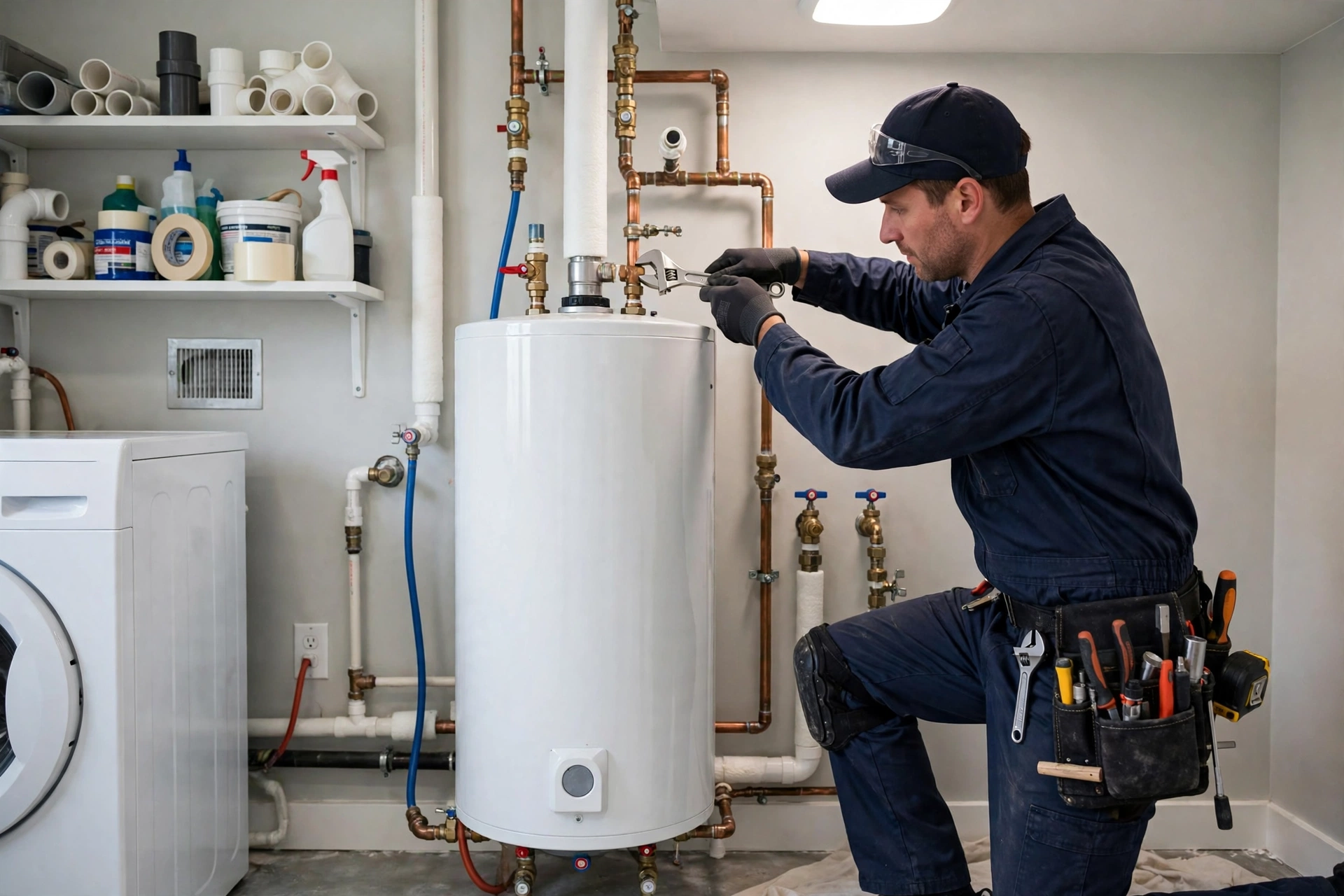
Water Heater Replacement Near Me: Costs, Signs and Tank vs Tankless
Water heater replacement near me is a search most homeowners make only when the hot water stops, the tank starts leaking, or the repair bill is bigger than the heater is worth. A standard tank water heater replacement typically costs 1,200 to 2,400 dollars installed, while a tankless unit costs 2,800 to 4,800 dollars installed, based on 2026 plumber price guides in the United States. Tank heaters last 8 to 12 years and tankless units last 15 to 20 years, so knowing the signs of failure and the cost of each option helps you plan a replacement before an emergency. This guide explains when to repair and when to replace, what each type costs, and how to find a good plumber near you.
The reason water heater replacement deserves planning is that a failed heater is both inconvenient and damaging. A leaking tank can flood a garage or utility room, ruin flooring, and grow mould if it is not caught quickly, while a heater that keeps breaking down costs money in repeated repairs. Most replacements are straightforward, often completed in a day, but the price varies widely by heater type, size, fuel, and local labour rates. A little knowledge before you call a plumber puts you in a much stronger position to get a fair quote.
What Are the Signs Your Water Heater Needs Replacing?
The clearest sign your water heater needs replacing is age, because most tank water heaters last 8 to 12 years, and a tank past 10 years with a costly repair is usually better replaced than fixed. You can find the manufacture date coded into the serial number on the rating sticker, and if you cannot decode it, a plumber can read the label for you. Other warning signs include rusty or discoloured hot water, popping or rumbling noises from sediment building up inside the tank, water pooling around the base, and hot water that runs out much faster than it used to.
A leaking tank itself cannot be repaired, because the steel has rusted through from the inside, and a leak is the most urgent sign of all. Frequent repairs are another warning: if you have paid for two or more repairs in the past two years, or if a single repair quote is more than half the cost of a new unit, replacement usually wins on money. Pilot lights that keep going out, a relief valve that keeps leaking, or a heater that cannot keep up with your household are all reasons to plan a replacement rather than waiting for a complete failure.
How Much Does Water Heater Replacement Cost Near Me?
Water heater replacement near me prices depend on the type of heater, the size, and local labour rates, and 2026 plumber guides give a consistent picture. A standard 40 to 50 gallon tank costs about 1,200 to 2,400 dollars installed in Charlotte, North Carolina, and about 2,500 to 3,200 dollars in Las Vegas, where labour and permit costs are higher. A high-efficiency or power-vent tank runs 1,800 to 3,200 dollars, a heat pump hybrid runs 2,200 to 4,000 dollars, and a whole-home tankless unit runs 2,800 to 4,800 dollars installed. Repairs, when they are worth doing, typically cost 176 to 897 dollars.
Several factors can push the price up or down. A larger tank, a change from electric to gas, new venting, a gas line upgrade, or code items such as an expansion tank, a drain pan, and new shutoff valves all add to the bill. Converting from a tank to a tankless unit almost always needs a larger gas line and new venting, which is why tankless installation labour is higher. Always get a written quote that lists the heater model, the installation work, the permit, and haul-away of the old tank, so you can compare quotes fairly. Prices vary by region, so local quotes matter more than national averages.
Should You Repair or Replace Your Water Heater?
The repair-or-replace decision follows a simple rule that plumbers use every day: repair if the unit is young and the fault is a single component, and replace if the unit is old or the repair is expensive. A bad thermostat, heating element, igniter, or gas valve on a heater under six to eight years old is usually worth repairing, as is a leaking relief valve or fitting. A leaking tank, heavy sediment with rust in the water, or a heater past 10 years old with a costly repair all point to replacement, because tanks cannot be patched and old heaters keep failing.
The 50 percent rule is a useful check: if the repair quote is more than about 50 percent of the cost of a new unit and the heater is past roughly two-thirds of its expected life, replacement usually wins. Also consider energy efficiency, because a new heater, especially a heat pump hybrid or a tankless unit, can cut running costs enough to pay back part of its higher price over time. Ask your plumber for both prices in writing, the repair and the replacement, and ask how many years of life each option realistically buys you. That comparison makes the decision much clearer.
Tank or Tankless: Which Water Heater Is Better?
Choosing between a tank and a tankless water heater is the biggest single decision inside the price, and each type suits different homes. A tank heater stores 40 to 50 gallons of hot water and is the straightforward like-for-like swap in most homes, with lower upfront cost and same-day installation, but a limited supply that can run out during back-to-back showers. A tankless heater warms water only when you open a tap, so the hot water never runs out, and it lasts 15 to 20 years, but it costs more upfront, needs a larger gas line and venting work, and takes a day or more to install.
A heat pump hybrid is a third option worth considering, because it uses electricity very efficiently and has the lowest running costs, although it needs a roomy space with plenty of air around it and costs 2,200 to 4,000 dollars installed. For a small household that rarely runs out of hot water, a standard tank is usually the best value. For a large family, a home with a soaking tub, or a household planning to stay put for many years, a tankless or hybrid unit can be worth the higher price. Ask your plumber to size the unit for your coldest winter water temperature, because a tankless unit sized for summer can come up short on a winter morning.
What Happens During a Water Heater Replacement?
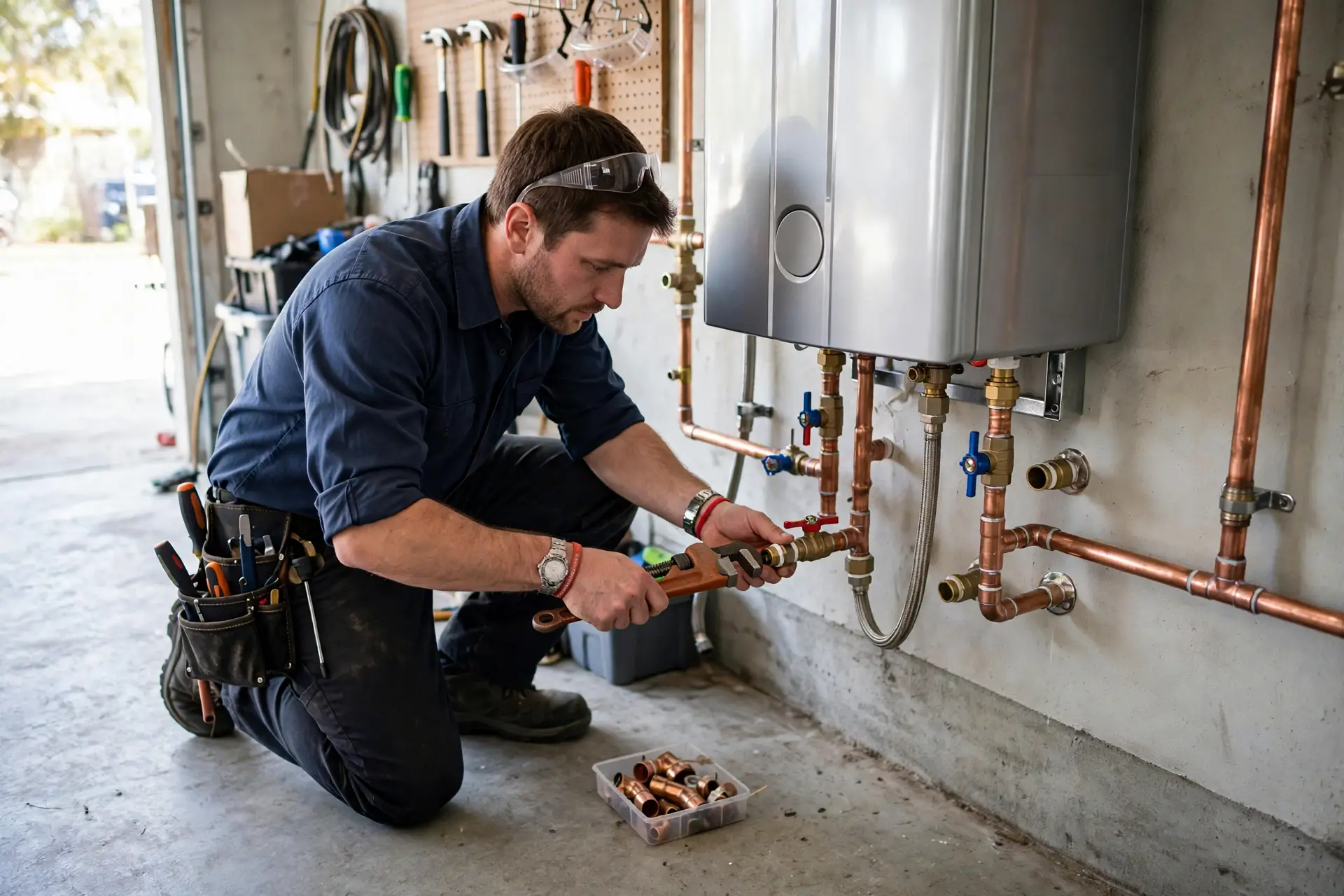
A standard tank water heater replacement is usually completed in a few hours, often on the same day, while a tankless conversion typically takes a full day. The plumber starts by turning off the power or gas and the water supply, draining the old tank, and disconnecting the pipes, vent, and electrical or gas connections. The old tank is hauled away, the new heater is set in place, and the plumber connects the water lines, gas or electrical supply, venting, and safety devices such as the temperature and pressure relief valve, expansion tank, and drain pan.
Before the job is finished, the plumber fills the new heater, checks for leaks, tests the temperature and pressure, and makes sure the venting and gas connections are safe. In many areas a permit and inspection are required, and a proper install includes code items that older heaters may not have had. Ask the plumber what is included in the quote, how long the job will take, and what warranty covers both the heater and the installation. A good plumber leaves the area clean, explains how to care for the new heater, and gives you the warranty paperwork before leaving.
How Do You Find a Good Plumber Near Me?
Finding a good plumber for water heater replacement near me starts with checking licences, insurance, and reviews. Confirm the plumber is licensed in your state and carries liability insurance, because water heater work involves gas, electricity, and water, and mistakes can be dangerous. Read recent reviews on Google and other platforms, and look for comments about punctuality, cleanliness, clear pricing, and how the plumber handles problems. Ask friends or neighbours for recommendations, because a plumber who has done good work locally is usually the safest choice.
Get at least two or three written quotes for the same heater type and scope of work, and compare them line by line rather than on the total alone. Ask which heater brand and model is quoted, what the warranty covers, whether the permit and inspection are included, and how the old tank will be removed. Be wary of quotes far below the local average, because they often leave out code items, permits, or proper venting. A reputable plumber answers questions clearly, puts the quote in writing, and does not pressure you to decide on the spot.
How Can You Make Your Water Heater Last Longer?
A water heater lasts longer when it is maintained, and the most important job is flushing the tank once a year to remove sediment that builds up on the bottom. Sediment insulates the water from the burner, makes the heater work harder, and causes the rumbling and popping noises that signal a tank in trouble. Flushing is a simple job for a plumber, and it also lets the plumber check the anode rod, a metal rod inside the tank that corrodes in place of the tank itself. Replacing a worn anode rod every four to six years, at a typical cost of 180 to 300 dollars, can add years to a tank life.
Other habits help too, including setting the thermostat to 120 degrees Fahrenheit, or 49 degrees Celsius, which is hot enough for showers and dishes while reducing scale build-up and scalding risk. Keep the area around the heater clear, check the relief valve once a year, and watch for rust on fittings or moisture at the base, because catching a small problem early is always cheaper than replacing a tank. In hard-water areas, a water softener protects both the heater and your other appliances. A heater that is flushed yearly and checked regularly will usually reach the top of its expected lifespan.
Conclusion
Water heater replacement near me is a job worth planning before the tank fails, because a standard tank costs 1,200 to 2,400 dollars installed and lasts 8 to 12 years, while a tankless unit costs 2,800 to 4,800 dollars and lasts 15 to 20 years. Watch for the warning signs, especially age over 10 years, rusty water, rumbling noises, leaks, and hot water that runs out too fast, and use the 50 percent rule to decide between repair and replacement. Get written quotes from licensed plumbers, compare the same heater and scope, and choose the type that fits your household and your plans. Done right, a new water heater gives you years of reliable hot water with lower running costs.
How Long Do Water Heaters Last?
A standard tank water heater typically lasts 8 to 12 years, while a tankless water heater lasts 15 to 20 years with proper maintenance. A heat pump hybrid lasts about 10 to 15 years. Hard water shortens tank life because sediment builds up on the bottom, so annual flushing and anode rod checks help a heater reach its full lifespan. Check the manufacture date on the rating sticker to know how old your heater is.
How Much Does It Cost to Replace a 50-Gallon Water Heater?
A standard 40 to 50 gallon tank water heater costs about 1,200 to 2,400 dollars installed in many US cities, and about 2,500 to 3,200 dollars in higher-cost areas such as Las Vegas, based on 2026 plumber price guides. Premium, high-recovery, power-vent, and 75-gallon tanks cost more, from about 3,650 to 7,700 dollars. The quote should include removal of the old tank, permit, and inspection, so compare written quotes for the same scope.
Can a Leaking Water Heater Be Repaired?
A leaking tank itself cannot be repaired, because the steel has corroded from the inside and the leak will only get worse. A leaking relief valve, drain valve, or pipe fitting can usually be repaired, and those are much cheaper fixes. If water is pooling at the base of the tank, assume the tank has failed and plan a replacement promptly to avoid flooding, and turn off the water supply and power or gas to the heater until a plumber arrives.
Is a Tankless Water Heater Worth It?
A tankless water heater is worth it for large households, homes with soaking tubs, or owners planning to stay put for many years, because it provides endless hot water and lasts 15 to 20 years. It costs more upfront, usually 2,800 to 4,800 dollars installed, and often needs a larger gas line and new venting. For a small household that rarely runs out of hot water, a standard tank is usually better value, so the right choice depends on your household size.
Do I Need a Permit to Replace a Water Heater?
In many US counties a water heater replacement needs a permit, and code items such as an expansion tank, a drain pan, and new shutoff valves are often part of a proper install. Your plumber should handle the permit and arrange the inspection as part of the quote. Ask before the work starts whether the permit and inspection are included, because unpermitted work can cause problems when you sell your home, and it may also affect your insurance. Your plumber can confirm the local rules before work begins.