
John and Mary Jewelry: What It Really Is, the Free-Jewelry Offer, and How to Stay Safe
John and Mary Jewelry is an online store at johnandmary-jewelry.com that advertises handmade rings, necklaces, bracelets and earrings, and it became widely known in 2026 through social media adverts claiming that a couple called John and Mary are retiring after decades of making jewellery and are giving everything away for free, with shoppers only paying for shipping. The verifiable facts tell a more cautious story: the domain was registered in May 2026, its own closure sale page named Friday 19 June 2026 as the closing date yet the same free offer was still running months later, and Australia’s NSW Police Force publicly flagged the store in an April 2026 scam alert about AI-driven website phishing. There is no verified physical shop and no independently confirmed history behind the brand, so shoppers should treat this seller as unverified and check the facts before paying anything.
What Is the Store Behind the Name
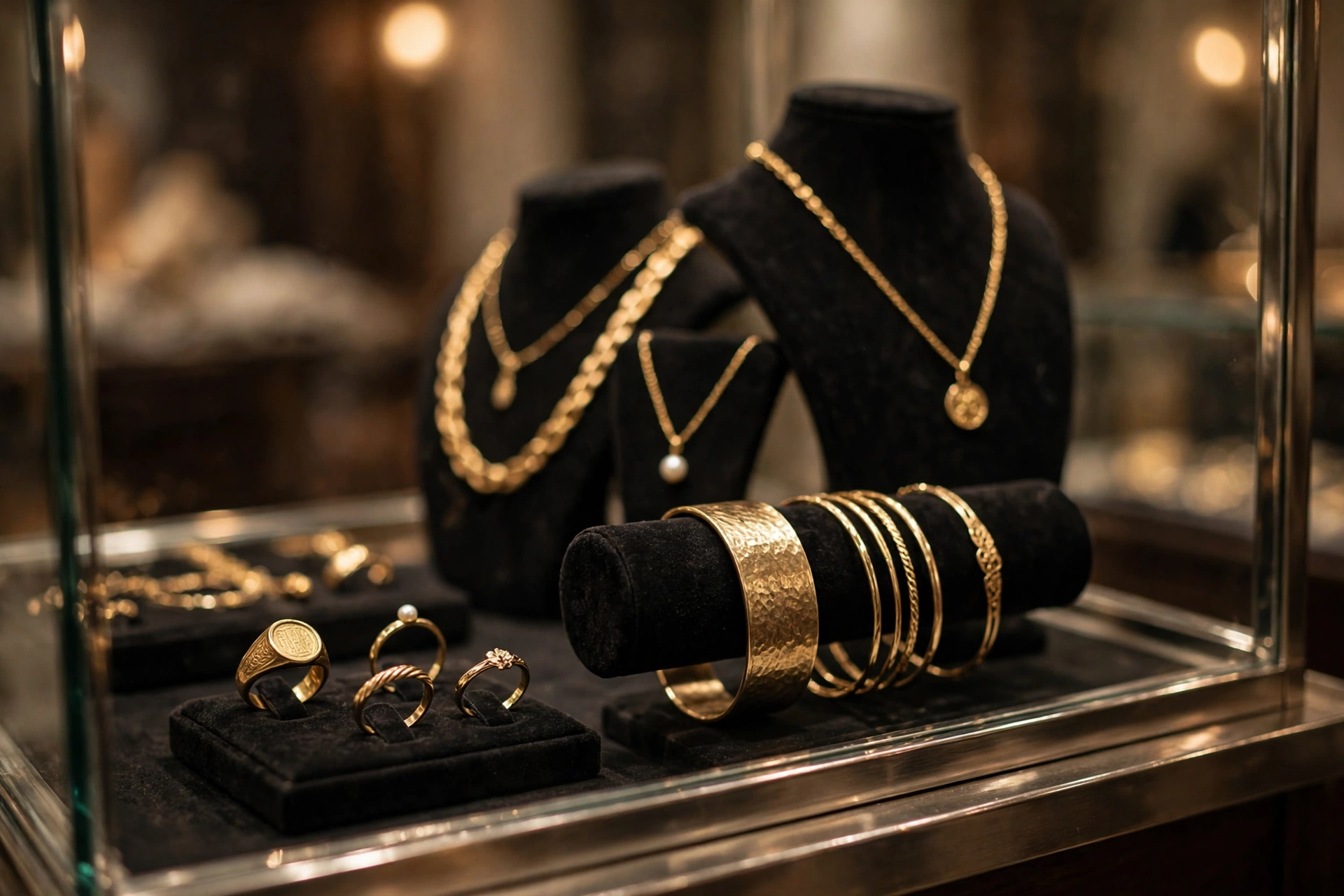
The store presents itself online as a small handmade jewellery business run by a couple named John and Mary, and it reaches most shoppers through sponsored posts on Facebook and Instagram rather than through a high-street shop or an established retail brand. The website lists around 149 products, including gold-coloured rings, sapphire-style jewellery, pearl necklaces and bracelet sets, with most pieces shown at original prices of roughly 145 to 165 US dollars before being reduced by 100 percent to zero, leaving only a shipping charge to pay. Independent research published in October 2026 found no registered business, no identifiable physical shop and no independent records connecting the people in the photographs to the company behind the site, so as far as anyone outside the site can verify, this is a recently created online storefront whose story exists mainly on its own pages and in its own advertising.
The name itself causes confusion, because several unrelated businesses use similar names and none of them is the online store in the adverts. A boutique called John and Mary operates in Warsaw selling leather bags and accessories, a permanently closed jewellery repair shop of a similar name once traded in Cagayan de Oro City in the Philippines, and a long-established fine jeweller in Lexington, Kentucky trades under the different name of St John and Myers, a business rooted in that city since 1937. None of those businesses has any verified connection to johnandmary-jewelry.com, and treating them as the same seller would mislead a shopper about where their money is actually going. When people search for this name, the store they almost always mean is the online free-jewellery site, and that is the business this guide examines using only claims that can be checked against independent sources.
What the Website Claims About Itself
The story at the centre of this store is a sentimental one, and it explains why the offer feels so trustworthy to many shoppers. According to the website, John and Mary have spent 38 years creating handmade jewellery together, beginning with a ring that John made for Mary, and they are now retiring and want to thank customers by giving away their remaining collection instead of leaving it in storage. The closure sale page announces that everything is free until midnight and that the business closes on Friday 19 June 2026, while product pages add reassurance with promises of waterproof materials, a lifetime warranty and a 30-day money-back guarantee. Together these details create the impression of a careful, long-running family business making one final generous gesture, which is exactly why the claims deserve to be checked rather than accepted at face value.
None of those central claims has been independently verified, and several sit uneasily with the public record. The domain was registered in May 2026, which leaves no traceable online history for a business claiming 38 years of trading, and the reviewer who examined the store in October 2026 reported being unable to find any verifiable information establishing the claimed history, such as a registered business or an identifiable shop. The closing date is equally hard to reconcile with the site’s own behaviour, because the closure sale page named 19 June 2026 as the final day while the same promotional pages were still accessible and still advertising the giveaway in October 2026. A genuine retailer can leave an outdated page online by mistake, but a closing date is one of the most important facts a real closing business would correct, and its survival alongside an urgent midnight deadline is a strong reason to pause before ordering.
What Independent Checks Actually Show
The most authoritative warning about this store comes from the NSW Police Force in Australia, which published a public scam alert on 22 April 2026 featuring a screenshot of the site and describing it as an example of AI-driven website phishing. The police graphic showed the familiar layout: an older couple photographed behind a display case, the headline handmade jewelry by John and Mary, and product tiles for a gold cushion solitaire ring and a gold emerald bracelet set both advertised at zero dollars after a 100 percent saving, beneath a blue banner claiming everything was free store wide until midnight. The force’s message urged the public to be cautious about fraudulent e-commerce sites using unrealistic free offers, and commenters described near-misses with the same imagery appearing across multiple sites. A police warning does not prove that every order goes unfulfilled, but it is a far stronger signal than a single unhappy review and should weigh heavily in any decision to buy.
Is This Store Legit or a Scam
The honest answer, as of November 2026, is that this seller cannot be confirmed as a legitimate long-standing business, and several red flags identified by police and independent reviewers mean shoppers should treat it as high risk rather than as a proven scam with a court finding behind it. No authority has published a verdict that the store never delivers anything, and some social media commenters have said they received rings after waiting two to three weeks, while others reported poor-quality costume jewellery, missing orders and unauthorised charges. That mixed picture is common with low-cost overseas drop-shipping operations, where some parcels do arrive and the product is simply far cheaper and lower in quality than the advertised original price suggested. What can be said with confidence is that the retirement story is unverified, the closing date passed without the sale ending, and the advertising has been flagged by police as an example of AI website phishing.
The business model behind the offer also deserves a clear explanation, because it shows how a free item can still cost a shopper real money. When every product is listed at zero dollars and only shipping is charged, the shipping fee becomes the actual price, and a complaint filed with the Better Business Bureau in August 2026 illustrates the pattern: a buyer reported paying more than 30 dollars in shipping for three pieces of jewellery that quickly fell apart. The same buyer said similar designs appeared on other websites despite the impression that the pieces were special handmade creations, and that when they asked for a replacement the seller said it no longer had a physical shop for a return and offered a discount on the shipping charge instead. A shopper who pays 30 dollars in shipping for jewellery that would sell for a few dollars on a wholesale marketplace has not received a free gift; they have bought very cheap jewellery at a large markup, and that gap between advertised value and delivered quality is the real cost of the offer.
What Customers Have Reported
Customer reports about the store are sharply divided, and reading them together gives a more useful picture than any single review on its own. On one side, several Facebook users have posted positively, including one customer in June 2026 who said the store sent a ring and earrings she described as the prettiest, noting the items took some time to arrive but did eventually come, and another commenter who reported a positive transaction with no issues at all. Those accounts suggest that at least some orders are fulfilled. On the other side, other buyers have described poor-quality costume jewellery arriving instead of the fine pieces pictured, items that differed from the photographs, long waits of two to three weeks, missing orders, and in some cases unauthorised charges that had to be disputed with a bank.
The Better Business Bureau complaint from August 2026 remains the most detailed single account, because it is a formal complaint rather than a passing social media comment and it records specific numbers. The buyer paid more than 30 dollars in shipping for three pieces, found the jewellery fell apart quickly, noticed the same designs on other websites, and was told there was no physical shop for a return when they asked for a replacement. That complaint does not prove every customer has the same experience, and one complaint is a small sample, but it matches the pattern described by consumer protection agencies, where a free offer is used to collect shipping payments for low-cost goods. Shoppers should also remember that reviews hosted on the store’s own website are not independent evidence, because a seller controls which testimonials appear there, and the February 2026 video investigation specifically noted that the site had no real reviews outside its own pages.
Red Flags to Check Before You Order
The offer ticks several boxes on the standard checklists published by consumer protection agencies, and recognising those patterns is useful far beyond this one website. The Florida Department of Agriculture and Consumer Services lists an unbelievably low price as the biggest warning sign, especially when luxury items such as jewellery are offered at a fraction of their claimed value, and it warns that a very new social media store selling at very low prices with limited delivery information deserves extra caution. The same guidance advises shoppers to check whether a retailer provides adequate information about privacy, terms and conditions, dispute resolution and contact details, and to be wary when a seller is based overseas or does not allow payment through a secure service such as PayPal or a credit card. A store that asks for payment by wire transfer, gift card, pre-loaded money card or cryptocurrency is a particular danger, because money sent that way is very unlikely to be recovered if the goods never arrive.
How to Check Any Online Jewellery Store Before You Pay
A careful check takes about ten minutes and can save a shopper far more than that in disputed charges and disappointment, so it is worth doing before any first order from an unfamiliar jeweller, including John and Mary Jewelry. Start by searching the store’s exact name together with the words scam, complaint and reviews, and read results from independent sources such as consumer agencies, police warnings and established review platforms rather than the testimonials on the store’s own pages. Then check the domain’s age through a free domain lookup tool, because a business claiming decades of history should leave a trace older than a few months, and look for a real business address, a working phone number and a named company registration that can be checked against a public register. If the only contact route is a web form or a single email address and no physical shop can be found on a map, that absence is itself information, and it should lower the amount of trust and money a shopper is willing to risk.
The payment page is the next place to look, because it determines what happens if the order goes wrong. Pay with a credit card or through a trusted checkout such as PayPal wherever possible, because the US Federal Trade Commission advises that a credit card best protects shoppers when something goes wrong, since the charge can be disputed, and the Florida consumer guidance gives the same advice while warning against wire transfers, gift cards and cryptocurrency. Read the refund and returns policy in full before paying, and be suspicious if it is vague, if returns must go to an address that does not match the business address, or if the policy promises a refund but the seller has no verifiable location to send goods back to. Finally, compare the product photographs with a reverse image search, because the August 2026 complaint noted that similar designs appeared on other websites, and a handmade claim is hard to credit when the same ring is listed by several unrelated sellers.
What to Do If You Already Ordered From John and Mary Jewelry
If you have already placed an order and are now worried, act quickly rather than waiting to see whether a parcel eventually arrives. Keep every record of the transaction, including the order confirmation, the payment receipt, screenshots of the product page and the advertised price, and any emails from the seller, because those records are the evidence a bank or card provider will ask for if a dispute is needed. Contact your card provider or bank as soon as you suspect a problem and ask about disputing the charge, explaining that the goods were not as described or never arrived, and do this within the dispute window your card provider sets rather than leaving it for months. Consumer advisers consistently recommend a credit card or PayPal for exactly this reason, because both routes give the buyer a formal way to challenge a payment that a wire transfer or gift card never will.
It is also worth reporting the experience so that other shoppers can find it, because a single detailed complaint in a public database is often what warns the next person in time. In the United States, suspected online shopping fraud can be reported to the Federal Trade Commission at ReportFraud.ftc.gov, and the Better Business Bureau accepts complaints that become part of a business’s public record, which is how the August 2026 complaint about this store became visible to researchers. In the United Kingdom, shoppers can report to Action Fraud, and in Australia the national Scamwatch service collects the same kind of report. Reporting does not guarantee a refund, but it creates the independent record that future shoppers rely on, and it helps authorities track sellers who use the same story and imagery across multiple websites.
Safer Ways to Buy Jewellery Online
Buying jewellery online can be perfectly safe when the seller is real, traceable and accountable, and the habits that protect a shopper are simple once they become routine. Established jewellers publish a verifiable business address, a company registration number, a working telephone line and a returns address that matches the business, and they carry independent reviews on platforms they do not control, such as Trustpilot or Google reviews, where unhappy customers can also be seen. Their product pages state the metal, the stone, the weight and the care instructions in specific terms, and their prices sit within a believable range for the materials described, because a solid gold ring with a genuine sapphire cannot realistically be given away for the cost of postage. A shopper who checks those details first and pays by credit card or PayPal is buying from a business that can be found, contacted and held to its promises if something goes wrong.
Is John and Mary Jewelry Safe to Order From
John and Mary Jewelry is not a safe order to place without caution, because its central claims are unverified, its domain dates only from May 2026, its advertised closing date of 19 June 2026 passed while the free offer continued, and the NSW Police Force flagged the store in an April 2026 scam alert about AI-driven website phishing. Some customers have reported receiving items after a wait of two to three weeks, so it cannot be described as a seller that never delivers, but other buyers have reported poor-quality costume jewellery, missing orders and a Better Business Bureau complaint describing more than 30 dollars paid in shipping for three pieces that quickly fell apart. A shopper who still wishes to try it should treat the shipping fee as the real price, pay only by credit card or PayPal so the charge can be disputed, and accept that the quality may not match the advertised original prices.
Can You Get a Refund From John and Mary Jewelry
A refund depends on how you paid and whether the seller cooperates, and the available evidence suggests neither route is straightforward. The store advertises a 30-day money-back guarantee, but the August 2026 complainant who asked for a replacement was told the seller no longer had a physical shop for a return and was offered a discount on shipping instead, which suggests the guarantee may be difficult to use in practice. The strongest route is through the payment provider, because a credit card charge can be disputed and PayPal offers buyer protection for items that arrive damaged, significantly different from their description or not at all, while a wire transfer, gift card or cryptocurrency payment is very unlikely to be recoverable. Keep order confirmations, screenshots and delivery records, contact the card provider promptly, and report the seller to the Federal Trade Commission at ReportFraud.ftc.gov or the Better Business Bureau if the seller does not resolve the problem.
Conclusion
John and Mary Jewelry is best understood as a cautionary example of how a warm story and a free offer can make an unverified online store feel trustworthy, because the retirement tale, the handmade claim and the midnight deadline are all persuasive, yet the facts that can be checked point the other way. The domain was registered in May 2026, the closing date of 19 June 2026 passed with the sale still running, independent reviewers found no verifiable business history, the NSW Police Force flagged the store as an example of AI website phishing, and a Better Business Bureau complaint describes more than 30 dollars in shipping for jewellery that quickly fell apart. Some customers did receive items, but the gap between the advertised value and the delivered quality is the real story. The safest course is to verify first, pay only by a method that allows a dispute, and buy fine jewellery from sellers whose identity, address and reputation can be checked, because a bargain is only a bargain when the seller is real and the goods are what they claim to be.