

Dot Physicals Near Me: How to Find a Certified Examiner, Costs and What to Expect
Dot physicals near me are easy to find once you know where to look, and the exam itself is simpler than most drivers expect. A DOT physical is a medical exam that commercial drivers must pass to show they are fit to drive, and it must be done by an examiner listed on the Federal Motor Carrier Safety Administration (FMCSA) National Registry. If you pass, you receive a medical examiner’s certificate, often called a DOT medical card, which is valid for up to 24 months. This guide explains who needs the exam, how to find a certified examiner near you, what the exam checks, how much it costs and what to bring, so you can walk in prepared and walk out certified.
What Is a DOT Physical?
A DOT physical is the medical examination that commercial motor vehicle drivers must pass under federal rules set by the Federal Motor Carrier Safety Administration (FMCSA). The exam checks whether a driver meets the physical qualification standards in federal rule 49 CFR 391.41, which covers vision, hearing, blood pressure and other health conditions that could affect safe driving. The exam must be performed by a medical examiner listed on the FMCSA National Registry of Certified Medical Examiners, and that list includes medical doctors, doctors of osteopathy, physician assistants, advanced practice nurses and chiropractors. No other examiner can issue a valid certificate, so checking the registry before you book is the single most important step in the whole process.
It is important to understand what a DOT physical is not, because drivers often confuse it with other tests. A DOT physical is not a drug test, and it is not a full annual health check-up, even though it covers many of the same areas. The exam is recorded on the Medical Examination Report Form, known as MCSA-5875, and the examiner reviews your health history with you before carrying out the physical checks. If you meet the standards, the examiner issues your medical certificate, and for drivers who hold a commercial driver’s licence, the result is now reported electronically to the FMCSA, which passes it to your state licensing agency. Since 23 June 2025, CDL and commercial learner’s permit holders no longer need to carry the paper certificate, because the result moves electronically.
Who Needs a DOT Physical Near Me?
The requirement for a DOT physical applies to drivers of commercial motor vehicles in interstate commerce, whether or not they need a commercial driver’s licence. That means the rule covers far more drivers than just long-haul truckers, including delivery drivers, bus drivers and anyone driving a commercial vehicle across state lines for work. If you drive a vehicle with a gross weight rating over 10,001 pounds, or a vehicle designed to carry more than 15 passengers, or a vehicle carrying hazardous materials, you almost certainly need a current medical certificate. Drivers who operate only within one state may follow different state rules, so it is worth checking your own state’s requirements if you never cross a state line.
You must be examined and certified before you drive a commercial vehicle for the first time if you have never been certified, and at least once every 24 months after that, or sooner if your certificate was issued for a shorter period. You must also be re-examined if an injury or illness has affected your ability to drive safely, or if a medical examiner has previously found you not qualified. Drivers certified under the insulin-treated diabetes standard or the alternative vision standard must be examined at least every 12 months. If you are starting a new driving job, your employer will usually ask for a current certificate before your first shift, so booking your exam early avoids delays that can cost you work.
How to Find DOT Physicals Near Me
The fastest way to find DOT physicals near you is to search the FMCSA National Registry by city, state or ZIP code, because only examiners on that list can legally perform the exam. The registry is free to search and shows the examiner’s name, address and contact details, so you can compare locations and call ahead for an appointment. Many drivers also find examiners through occupational health clinics, urgent care centres, chiropractic offices and truck stop clinics, all of which often advertise DOT physicals, but you should still confirm the examiner is on the National Registry before you book. A clinic can advertise the service, yet only a listed examiner can sign your certificate, so the registry check protects you from wasting a trip.
When you compare locations, think about more than just distance, because the quality of the visit matters too. Look for a clinic that offers walk-in appointments if your schedule is unpredictable, and ask whether the exam fee is clearly stated before you arrive, since prices vary widely between providers. Some large trucking companies have their own approved clinics, and some employers will pay for the exam or reimburse the cost, so it is worth asking your employer before you book. Drivers who live in rural areas may need to travel further, but many clinics now offer same-day appointments, and some run Saturday hours specifically for drivers who cannot take time off during the week.
What Does a DOT Physical Check?
The DOT physical checks the standards set out in 49 CFR 391.41, and the examiner works through them one by one during a visit that usually takes 30 to 45 minutes. The vision test requires at least 20/40 in each eye and in both eyes together, with or without glasses or contacts, a field of vision of at least 70 degrees in each eye, and the ability to recognise the red, green and amber colours of traffic signals. The hearing test requires you to hear a forced whispered voice in your better ear at five feet or more, with or without a hearing aid, or to pass an audiometric test showing average hearing loss of no more than 40 decibels in the better ear. Bring your glasses, contacts or hearing aids to the exam, because the tests are done with them in place.
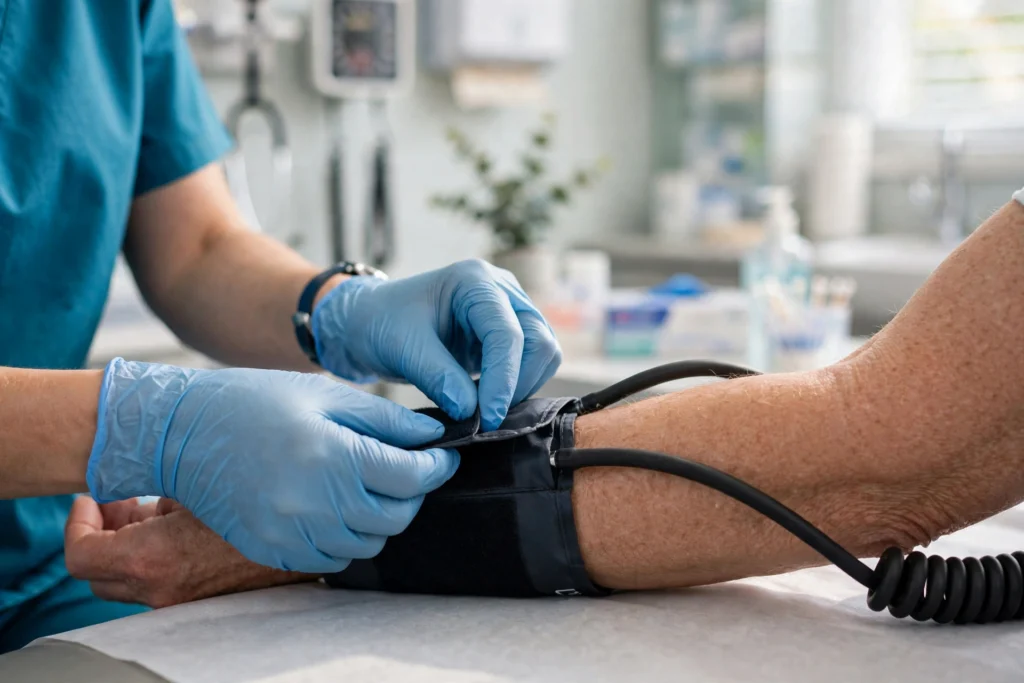
Blood pressure is checked, and while the federal rule does not print a single number, the examiner applies FMCSA medical guidance and their own judgement about whether your blood pressure is likely to interfere with safe driving. A reading below 140/90 generally supports a full two-year certificate, while higher readings may mean a shorter certificate or a delay until the condition is controlled. The exam also includes a urinalysis, which screens for protein, blood and sugar in the urine as a check for underlying conditions, and drivers should know that this is not a drug test. The examiner also reviews your health history and checks your heart, lungs, abdomen, spine, limbs and nervous system, looking for conditions such as heart disease, epilepsy, diabetes treated with insulin, sleep disorders and psychiatric conditions that could affect your ability to drive safely.
How Long Is a DOT Physical Good For?
A DOT physical certificate is valid for up to 24 months, which is the longest period the rules allow, and most healthy drivers receive the full two years. The examiner can issue a shorter certificate when a condition needs monitoring, and shorter periods of three, six or twelve months are common for drivers with high blood pressure or other conditions that the examiner wants to watch. Drivers certified under the insulin-treated diabetes standard or the alternative vision standard must be re-examined at least every 12 months, and their certificates are limited accordingly. The examiner decides the length of your certificate, and the decision is recorded on the certificate itself, so check the expiry date before you leave the clinic and set a reminder well before it runs out.
Keeping your certificate current matters more than many drivers realise, because an expired medical card can cost you your commercial driving privileges. For CDL holders, the result is reported electronically to the FMCSA and shared with the state, and a finding of not physically qualified is also reported, which can invalidate earlier certificates. If your certificate was issued for a shorter period, you must be re-examined before it expires, and you should book the renewal at least a few weeks early in case the examiner asks for extra records or a follow-up visit. A good habit is to book your next exam six weeks before the expiry date, which leaves time to sort out any paperwork without losing a day of work.
How Much Do DOT Physicals Cost Near Me?
DOT physicals commonly cost about 75 to 150 dollars in the United States, though prices vary by region, by clinic and by whether any extra tests are needed. Occupational health clinics and truck stop clinics often advertise a flat fee for the exam, while urgent care centres and private practices may charge more, so it pays to call two or three providers and ask for the total price before you book. Some clinics charge extra for follow-up visits if the examiner needs more information, and a few charge separately for the urinalysis or for completing extra forms, so ask what is included in the quoted price. The exam is rarely covered by standard health insurance when it is done for work, because it is a regulatory requirement rather than a medical treatment, but some employers pay for it or reimburse the cost.
The cheapest exam is not always the best value, and drivers should weigh price against convenience and reliability. A clinic that offers walk-in appointments, clear pricing and same-day certificates can save you more in lost work time than a cheaper clinic that needs two visits. If your employer has a preferred provider, using that clinic can also speed up the paperwork, because the clinic already knows what your employer needs. Whatever you pay, keep the receipt, because some employers reimburse the cost and some drivers can claim it as a work expense. Ask about payment methods before you arrive, since some clinics take card only and others accept cash, and a few require payment at the time of booking.
What to Bring to Your DOT Physical
Bringing the right documents and items to your DOT physical makes the visit faster and reduces the chance of a delay or a shorter certificate. Start with a complete list of the medicines you take, including the dose and how often you take each one, and bring the bottles or a printed list from your pharmacy if you have one. Bring records for any condition you report, such as a letter from your treating doctor about diabetes, heart disease or sleep apnoea, because the examiner may need that information before deciding. If you wear glasses or contacts, bring them, and if you use a hearing aid, bring that too, since the vision and hearing tests are done with your aids in place.
You should also bring your photo identification and your current medical certificate if you have one, plus any FMCSA exemption letter or skill performance evaluation certificate that applies to you. Drivers with insulin-treated diabetes should bring the Insulin-Treated Diabetes Mellitus Assessment Form, known as MCSA-5870, completed by their treating clinician, and remember that the exam must take place within 45 days of that form being signed. Drivers who cannot meet the vision standard with the worse eye may qualify under the alternative vision standard, but that also involves extra paperwork. Arriving with everything ready shows the examiner you are organised, and it can be the difference between leaving with a two-year certificate and leaving with a request for more information.
How to Prepare for Your DOT Physical
Preparing for your DOT physical starts a few days before the appointment, not in the waiting room, and a little preparation can make a real difference to the result. Get a good night’s sleep the night before, avoid heavy meals and alcohol, and drink water normally, because dehydration can affect the urinalysis and a poor night’s sleep can raise your blood pressure. If you take blood pressure medicine, take it as prescribed on the day of the exam, and avoid caffeine and nicotine for a few hours before the visit, since both can raise your blood pressure temporarily. If you know your blood pressure runs high, check it at a pharmacy in the days before the exam so you know where you stand and can talk to your doctor if it needs attention.
On the day of the exam, arrive a few minutes early so you are not rushed, and tell the examiner honestly about your health history, because hiding a condition can lead to a certificate being withdrawn later if it comes to light. Fill in the health history form carefully and completely, and be ready to explain any condition you list, including what treatment you receive and how it is controlled. If the examiner needs more information before deciding, they must tell you it has to be provided within 45 days, so ask exactly what they need and how to send it. Most drivers who prepare properly pass without any trouble, and the exam is far less stressful when you know what to expect.
What Happens If You Fail a DOT Physical?
Failing a DOT physical does not always mean the end of your driving career, and the first thing to understand is the difference between being found not qualified and being asked for more information. If the examiner needs more records or a specialist opinion, they will tell you what is needed and give you up to 45 days to provide it, and many drivers pass after supplying the missing paperwork. If you are found not qualified, the result is reported to the FMCSA, and for CDL holders every medical certificate previously issued stops being valid from that point, so you cannot legally drive a commercial vehicle until you are certified again. That sounds serious, and it is, but many conditions that cause a failure can be treated or managed, and a second exam after treatment often succeeds.
The most common reasons for a short certificate or a failure are uncontrolled blood pressure, unmanaged diabetes, untreated sleep apnoea and vision or hearing problems that have not been corrected. Each of these can usually be improved with treatment, new glasses or a hearing aid, and a follow-up exam can then issue a certificate. If you disagree with the examiner’s decision, you can seek a second opinion from another National Registry examiner, though the second examiner will also see the earlier result. The practical advice is simple: treat the conditions you can control, gather the records the examiner asks for, and rebook when you are ready, because most drivers who fail the first time pass on a later attempt once the underlying issue is addressed.
Conclusion
Dot physicals near me are straightforward to arrange once you know the rules, and the exam itself is a practical check on the things that matter for safe driving. The most important step is choosing an examiner from the FMCSA National Registry, because only a listed examiner can issue a valid certificate, and the registry search by ZIP code takes only a few minutes. Bring your medicines list, your glasses or hearing aid, and any records for conditions you report, and arrive rested and prepared so your blood pressure and other readings reflect your normal health. A certificate lasts up to 24 months for most drivers, and booking your renewal six weeks before it expires keeps you driving without interruption. If you are due for an exam, book it this week, because a current medical card is one of the simplest ways to protect your licence and your livelihood.
How do I find DOT physicals near me?
You can find DOT physicals near you by searching the FMCSA National Registry of Certified Medical Examiners by city, state or ZIP code, which is free and shows only examiners who are legally allowed to perform the exam. Occupational health clinics, urgent care centres, chiropractic offices and truck stop clinics also advertise DOT physicals, but you should still confirm the examiner is on the National Registry before you book. Call two or three providers to compare prices and appointment times, and ask whether the quoted fee includes everything, because some clinics charge extra for follow-up visits or additional forms. Choosing a clinic that offers walk-in appointments and same-day certificates can save you a day of lost work.
How long is a DOT physical good for?
A DOT physical certificate is valid for up to 24 months, which is the longest period the federal rules allow, and most healthy drivers receive the full two years. The examiner can issue a shorter certificate of three, six or twelve months when a condition such as high blood pressure needs monitoring. Drivers certified under the insulin-treated diabetes standard or the alternative vision standard must be re-examined at least every 12 months. Check the expiry date on your certificate before you leave the clinic and book your renewal at least six weeks before it expires, because an expired medical card can cost you your commercial driving privileges.
How much does a DOT physical cost?
DOT physicals commonly cost about 75 to 150 dollars in the United States, though prices vary by region and by clinic. Occupational health clinics and truck stop clinics often advertise a flat fee, while urgent care centres and private practices may charge more, so it pays to call a few providers and ask for the total price before you book. The exam is rarely covered by standard health insurance because it is a regulatory requirement for work rather than a medical treatment, but some employers pay for it or reimburse the cost. Keep your receipt, and ask about payment methods before you arrive, since some clinics take card only and others accept cash.
What should I bring to a DOT physical?
You should bring a complete list of your medicines with doses, records for any condition you report, your glasses or contacts and your hearing aid if you use one, plus photo identification and your current medical certificate if you have one. Drivers with insulin-treated diabetes should bring the Insulin-Treated Diabetes Mellitus Assessment Form, known as MCSA-5870, completed by their treating clinician, and the exam must take place within 45 days of that form being signed. Bring any FMCSA exemption letter or skill performance evaluation certificate that applies to you. Arriving with everything ready makes the visit faster and reduces the chance of a delay or a shorter certificate.
Is a DOT physical the same as a drug test?
No, a DOT physical is not the same as a drug test, and the two are governed by separate rules. The DOT physical is a medical exam under 49 CFR 391.41 that checks vision, hearing, blood pressure and other health conditions, and it includes a urinalysis that screens for protein, blood and sugar as a check for underlying conditions. Drug and alcohol testing for commercial drivers falls under separate Department of Transportation rules, and employers require a pre-employment drug test for CDL jobs. You can be asked to do both, but passing one does not mean you have passed the other, so treat them as two separate requirements.