
Ceramic Tint vs Regular Tint: Which Is Worth the Money in 2026?
Ceramic tint vs regular tint is the first question most drivers ask when they start shopping for window film, and the answer is not as simple as picking the most expensive option. Ceramic tint uses nano-ceramic particles to block infrared heat without darkening the glass very much, while regular tint usually means dyed film, which darkens the glass by absorbing visible light but does little for infrared heat. The two films can look almost identical from outside the car, yet they perform very differently on a hot day, and they age very differently over the years. This guide compares ceramic tint and regular tint on heat rejection, durability, cost, signal interference and the law, so you can decide which one is worth the money for your car.
What Is Ceramic Tint?
Ceramic tint is a premium window film made with microscopic ceramic particles embedded in the film, and those particles are engineered to block infrared radiation while letting visible light pass through. Infrared is the part of sunlight you feel as heat, and it makes up about half of the solar energy that hits your windows, so blocking it is what actually keeps a car cooler. Modern nano-ceramic films can reject 45 to 65 percent of total solar energy, known as TSER, and premium films reach 90 percent or more on infrared rejection alone. Because ceramic particles contain no metal, the film does not interfere with mobile phone, GPS or tyre pressure monitoring signals, which is a real advantage in modern cars that depend on those systems.
One of the most useful things about ceramic tint is that it can reject serious heat even at a very light shade, and a 70 percent VLT ceramic film can match or beat the heat rejection of a much darker 20 percent VLT dyed film. VLT stands for visible light transmission, and it measures how much light passes through the film, so a higher number means a lighter film. That matters because many states limit how dark your front windows can be, and ceramic is often the only way to get strong heat rejection while staying within the law. Ceramic film also blocks up to 99 percent of ultraviolet rays, which protects your skin and stops your dashboard and seats from fading, and quality brands last ten years or more without fading, bubbling or changing colour.
What Is Regular Tint?
Regular tint almost always means dyed film, which is the original and cheapest window tint technology, and it works in a completely different way from ceramic. A layer of pigment-dyed polyester is laminated to the window, and the dye absorbs visible light, which darkens the glass and gives privacy and glare reduction. The problem is that dyed film is essentially transparent to infrared heat, so it blocks only 15 to 30 percent of total solar energy, and the heat it does absorb can radiate back into the cabin. On a hot day, a car with dyed film still gets hot inside, and the difference between dyed film and ceramic film can be 10 to 20 degrees Fahrenheit in cabin temperature.
Regular tint is not only about dyed film, because the term also covers metalized and carbon films, which sit between dyed and ceramic on both price and performance. Metalized film uses tiny metallic particles to reflect solar radiation and rejects 35 to 55 percent of total solar energy, but the metal can interfere with GPS and mobile signals, which is why it is becoming rare. Carbon film uses carbon particles instead of metal, rejects 35 to 50 percent of solar energy, and does not interfere with signals, which makes it a reasonable mid-range choice. For this comparison, though, regular tint means the dyed film that most budget tint jobs use, because that is what most drivers are offered when they ask for the cheapest option.
Ceramic Tint vs Regular Tint: Heat Rejection
Heat rejection is where ceramic tint vs regular tint shows the biggest gap, and it is the reason most people who switch to ceramic never go back. On the makers’ own specification sheets, ceramic films reject 47 to 70 percent of infrared energy, while a typical dyed film rejects only about 22 percent, and that gap is felt every time you sit in a parked car on a sunny day. The key number to look for on a film’s specification sheet is TSER, which stands for total solar energy rejected, and modern ceramic films measure 45 to 65 percent TSER, compared with 15 to 30 percent for dyed film. AutoZone’s guide to ceramic and regular tint notes that ceramic blocks up to 99 percent of UV rays and significantly reduces infrared heat, which is why it keeps a car noticeably cooler than a dyed film at the same shade.
The practical difference shows up in the numbers that drivers actually feel, because a car with good ceramic tint can be 10 to 20 degrees Fahrenheit cooler inside than a car with poor tint on the same hot day. That cooler cabin means the air conditioning works less hard, the steering wheel and seats are less painful to touch, and the interior materials last longer. It also means that darkness is a poor guide to performance, because a light ceramic film can reject more heat than a dark dyed film, and judging a tint by how dark it looks will mislead you. If heat is your main reason for tinting, and you live somewhere with long hot summers, ceramic is the clear winner, and the difference is large enough to feel on the first drive.
Ceramic Tint vs Regular Tint: Durability and Fading
Durability is the second major difference between ceramic tint vs regular tint, and it is where the cheaper option costs you money in the long run. Dyed film typically lasts three to five years before it starts to fade, bubble or turn purple, and the purple shift is the classic sign of a dying dyed film, caused by the dye breaking down under ultraviolet light. Once a dyed film starts to purple, it cannot be fixed, and the only solution is to strip it off and pay for a new installation, which means the cheap job ends up costing twice. Dyed films also lose their legal standing over time, because as the dye degrades the film can fade below the legal VLT limit, so a tint that was legal when it was installed may read illegal four years later.
Ceramic film, by contrast, is built to last ten years or more, and quality brands carry lifetime warranties for the original owner because the ceramic particles do not break down under UV light. Ceramic does not fade, does not turn purple and does not bubble when it is installed properly, which means the film looks as good in year eight as it did in year one. That durability changes the cost calculation completely, because a ceramic job that costs three times as much but lasts three times as long is not really more expensive over the life of the car. Drivers who keep their cars for many years, or who live in sunny climates where tint takes a beating, will see the biggest benefit from ceramic, while drivers who change cars every two or three years may never notice the difference.
Ceramic Tint vs Regular Tint: Cost Comparison
Cost is where regular tint wins on paper, and it is the main reason most drivers still choose it, so the numbers deserve an honest look. A full-car dyed film job typically costs 100 to 250 dollars, and some budget shops advertise even less, which makes it an easy decision for anyone who wants privacy and a smarter look without spending much. A full-car ceramic job typically costs 400 to 900 dollars, with premium brands such as 3M Crystalline, LLumar and XPEL at the top of that range, and larger vehicles such as full-size SUVs and trucks can cost 700 to 1,100 dollars or more. The gap is real, and for a driver on a tight budget it can feel like a lot of money for something you cannot see working.
The honest way to compare the two is to look at cost per year rather than cost on the day, because a dyed film that costs 200 dollars and lasts four years costs 50 dollars a year, while a ceramic film that costs 600 dollars and lasts twelve years also costs 50 dollars a year. Add in the cost of removing and replacing a failed dyed film, plus the fuel saved by running the air conditioning less, and ceramic often comes out ahead over a long ownership. That said, if you plan to sell the car within two years, or if you only want a darker look and do not care much about heat, a dyed or carbon film is a sensible way to save money. The right choice depends on how long you will keep the car and how hot your summers get, not on which film is objectively better.
Ceramic Tint vs Regular Tint: Signals, Visibility and Looks
Signals and visibility are two areas where ceramic tint has a clear advantage, and they matter more than most drivers expect before they buy. Metalized regular tint can interfere with GPS navigation, mobile phone reception and tyre pressure monitoring systems, because the metallic particles reflect radio signals as well as sunlight, and that interference is the main reason metalized film is falling out of use. Dyed film does not interfere with signals, because it contains no metal, but it also does little for heat, so it avoids one problem by offering little performance. Ceramic film contains no metal either, so it does not interfere with any electronic signal, while still delivering the best heat rejection available, which makes it the only film that solves both problems at once.
Visibility is the other half of the story, because a tint that looks good from outside but is hard to see through at night is a safety problem. Ceramic films are known for excellent optical clarity, and because they reject heat without needing to be very dark, you can choose a lighter shade that keeps night visibility good while still cutting the heat. Dyed films, by contrast, need to be dark to give any meaningful heat reduction, and a very dark dyed film can make night driving harder, especially in rain. If you drive a large SUV such as the Jeep Grand Cherokee Overland, the extra glass area makes heat rejection matter even more, and a light ceramic film can keep the cabin cool without darkening the windows to a level that hurts visibility. Always test the film at night before you commit, because clarity matters as much as shade.
Window Tint Laws: What You Must Check Before You Buy
Window tint laws vary by state, and they are the one part of this decision that can cost you a fine if you get it wrong, so check your own state’s rules before you book an installation. Every state sets a minimum VLT for the front side windows and the windscreen, and many states also limit how dark the rear windows can be and how reflective the film can look. Some states are strict, allowing only very light film on the front windows, while others are more relaxed, and the rules can also differ for cars, SUVs and trucks. The International Window Film Association publishes state-by-state guidance, and a reputable installer in your area will know the local limits, but the legal responsibility sits with you as the driver, so do not rely on the shop alone.
Ceramic film has a real advantage under strict tint laws, because it can deliver strong heat rejection at a light shade that is legal almost everywhere. A 70 percent VLT ceramic film is very light and legal in strict states, yet it rejects more heat than a 20 percent VLT dyed film, which would be illegal on front windows in many places. That means drivers in strict states do not have to choose between staying legal and staying cool, because ceramic gives them both. Before you buy, ask the installer to show you the film’s specification sheet, check the VLT against your state’s limit, and keep the receipt and the specification sheet in the car, because they are useful if you are ever stopped and asked about the tint.
Which Tint Should You Choose?
Choosing between ceramic tint vs regular tint comes down to three questions, and answering them honestly will point you to the right film. The first question is how long you will keep the car, because ceramic makes the most sense when you will own the vehicle for five years or more, while dyed film is fine for a car you plan to sell soon. The second question is how hot your climate is, because drivers in hot southern states or anyone who parks outside all day will feel the ceramic difference every single day, while drivers in mild climates may never notice it. The third question is your budget, because ceramic costs two to four times as much upfront, and if that money is not available, a carbon film is a sensible middle ground that gives better heat rejection and durability than dyed film without the ceramic price.
For most drivers who keep their cars for years and live somewhere with real summers, ceramic is worth the money, because it keeps the car cooler, lasts longer, protects the interior and never interferes with electronics. For drivers who want a darker look on a tight budget, or who will sell the car within a couple of years, dyed film is a reasonable choice that still improves privacy and glare. Carbon film sits in the middle and suits drivers who want a step up from dyed without paying the full ceramic price. Whichever you choose, spend as much care on the installer as on the film, because a bad installation will bubble, peel and look terrible no matter how good the material is.
How to Choose a Good Tint Installer
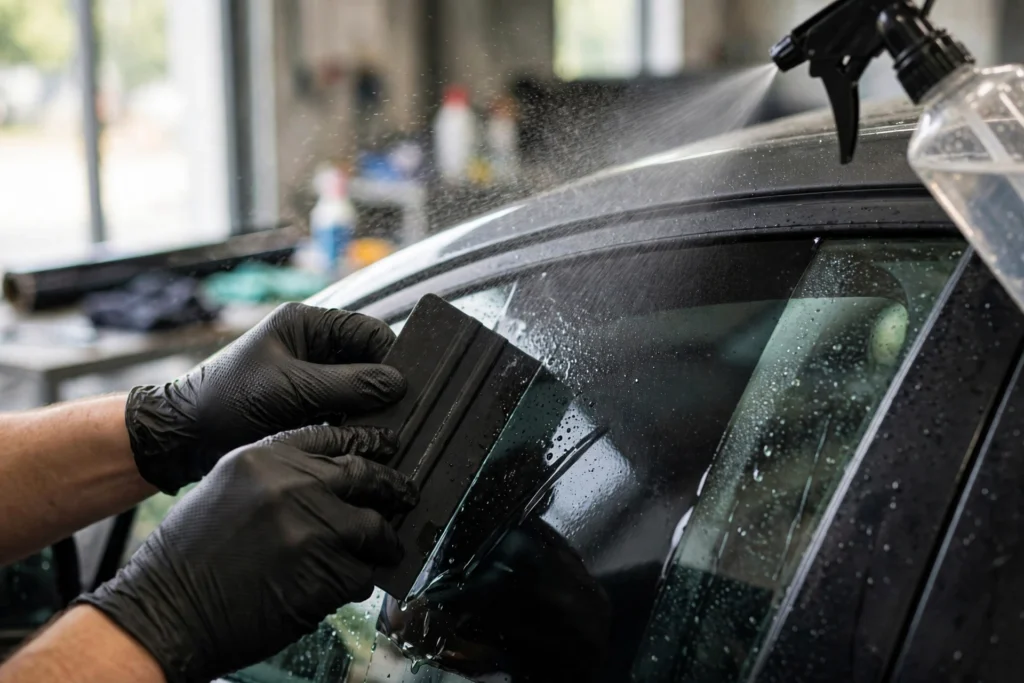
A good tint installer matters as much as the film itself, because even the best ceramic film will fail if it is fitted badly, and a bad job is expensive to fix. Start by looking for a shop that specialises in window tint rather than a general garage that does it occasionally, and ask how long they have been tinting and which brands they install. A good shop will show you samples of each film type, explain the TSER and infrared rejection numbers on the specification sheet, and give you a written quote that states the film brand, the VLT and the warranty. Ask to see recent work, read reviews from local drivers, and be wary of any shop that cannot name the film brand or will not put the warranty in writing.
On the day of the installation, expect the job to take two to four hours for a full car, and ask the installer what to expect afterwards, because the film needs time to cure. Most installers tell you not to roll the windows down for two to five days while the adhesive sets, and small water bubbles under the film are normal and usually disappear as it dries. If bubbles, peeling or creases remain after two weeks, take the car back, because a reputable shop will fix its own work under warranty. A lifetime warranty on ceramic film is only useful if the shop is still in business to honour it, so a well-established local installer is worth more than a cheap quote from a pop-up shop that may be gone next year.
Conclusion
Ceramic tint vs regular tint is not really a contest between a good film and a bad film, because both have their place, and the right answer depends on your car, your climate and your budget. Ceramic tint wins clearly on heat rejection, durability, signal clarity and performance at legal shades, and it often costs the same per year as dyed film once you count how long it lasts. Regular dyed tint wins on upfront price, and it is a sensible choice when money is tight or when you will not keep the car for long. Carbon film sits in the middle and suits drivers who want a step up from dyed without the ceramic price. Whatever you choose, check your state’s tint laws first, pick a reputable installer, and ask to see the film’s specification sheet before you pay. A well-chosen tint keeps your car cooler, protects your interior and makes every drive more comfortable, and that is worth getting right.
Is ceramic tint really worth the extra money?
Ceramic tint is worth the extra money for most drivers who keep their cars for five years or more, because it rejects far more infrared heat, lasts ten years or longer without fading, and does not interfere with phone or GPS signals. A ceramic job typically costs 400 to 900 dollars for a full car, compared with 100 to 250 dollars for dyed film, but the ceramic film lasts two to three times as long, so the cost per year is often similar. Drivers in hot climates feel the difference every day, because the cabin can be 10 to 20 degrees Fahrenheit cooler than with dyed film. If you plan to sell the car within two years, or you only want a darker look, dyed film is a reasonable way to save money.
How long does ceramic tint last compared to regular tint?
Ceramic tint typically lasts ten years or more, and quality brands carry lifetime warranties for the original owner, because the ceramic particles do not break down under ultraviolet light. Regular dyed tint typically lasts three to five years before it fades, bubbles or turns purple, and once it starts to purple it cannot be fixed and must be stripped off and replaced. Carbon film sits in the middle and usually lasts longer than dyed film without matching ceramic. The practical result is that a ceramic job often outlives the car, while a dyed job will need replacing at least once during a long ownership, which narrows the real cost gap between the two.
Does ceramic tint block more heat than regular tint?
Yes, ceramic tint blocks far more heat than regular dyed tint, and the difference is large enough to feel on the first drive. On the makers’ specification sheets, ceramic films reject 47 to 70 percent of infrared energy, while a typical dyed film rejects only about 22 percent, and modern ceramic films measure 45 to 65 percent total solar energy rejection compared with 15 to 30 percent for dyed film. The key point is that ceramic rejects heat without needing to be dark, so a light 70 percent VLT ceramic film can reject more heat than a dark 20 percent VLT dyed film. Always check the TSER and infrared rejection numbers on the specification sheet rather than judging a film by how dark it looks.
Will ceramic tint interfere with my phone or GPS?
No, ceramic tint will not interfere with your phone, GPS navigation or tyre pressure monitoring system, because it contains no metal particles. Metalized regular tint can interfere with those signals, because the metallic particles reflect radio waves as well as sunlight, which is one reason metalized film is becoming rare. Dyed film also does not interfere with signals, but it offers much less heat rejection than ceramic. Ceramic is the only film type that combines the best heat rejection with zero signal interference, which makes it the safest choice for modern cars that depend on GPS, mobile data and tyre pressure sensors.
Is ceramic tint legal in all states?
Ceramic tint is legal in all states as long as the shade you choose meets your state’s visible light transmission limit, and its ability to reject heat at light shades makes it the easiest film to fit within strict laws. Every state sets a minimum VLT for front side windows and the windscreen, and some states are much stricter than others, so you must check your own state’s rules before buying. A 70 percent VLT ceramic film is very light and legal in strict states, yet it rejects more heat than a dark dyed film that would be illegal on front windows in many places. Ask your installer to show the film’s specification sheet and keep it with the receipt in case you are ever asked about the tint.