
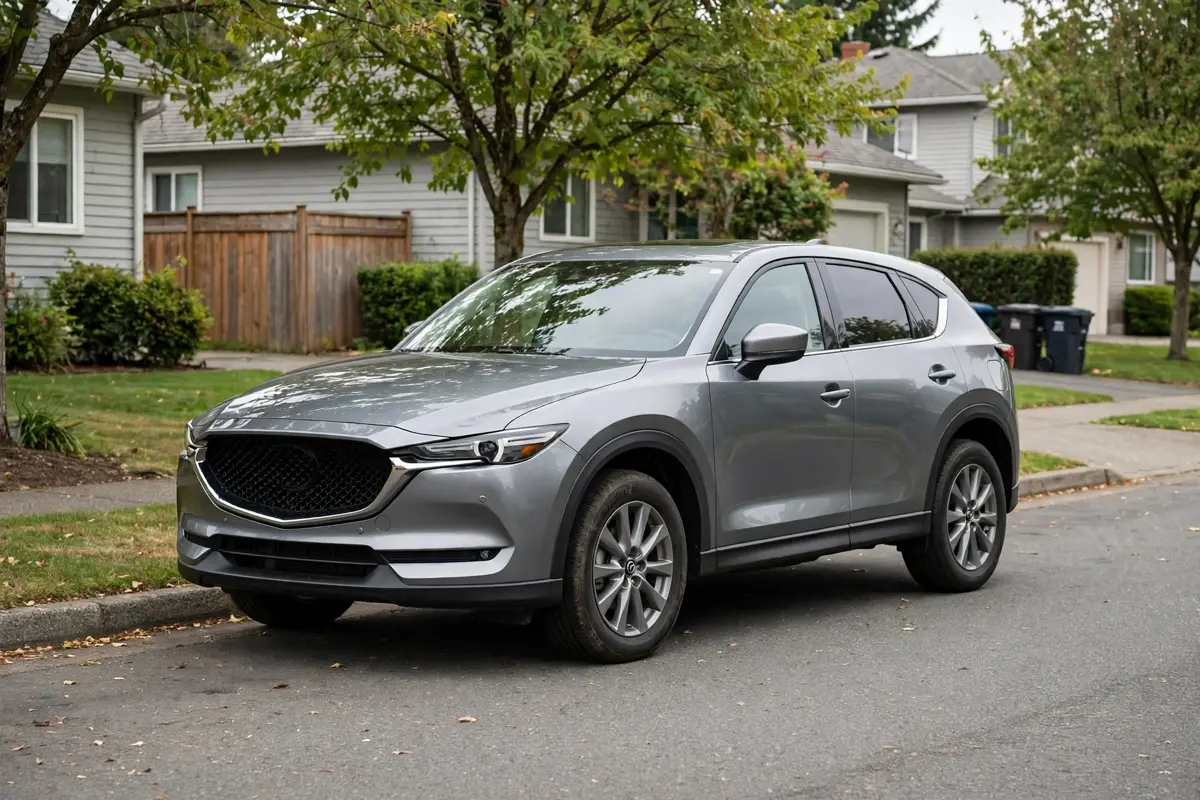
Used Mazda CX-5: The Complete Buying Guide for 2026
A used Mazda CX-5 is one of the smartest buys in the family SUV market, because it pairs genuinely enjoyable driving with a strong reliability record and generous equipment, and the short answer for most buyers is to choose a second-generation petrol car from 2021 onwards with a full service history. The CX-5 has been Mazda’s best-selling model worldwide every year since 2014, and three generations now cover the used market, from affordable first-generation cars built between 2012 and 2017 to the much-improved second generation that ran from 2017 to 2025. This guide explains the generations, the engines worth having, the problems to check before you pay, and how to inspect a car properly, so you can buy with confidence instead of guesswork.
What Is a Used Mazda CX-5
A used Mazda CX-5 is a five-door, five-seat family SUV that sits between compact crossovers such as the Nissan Qashqai and larger seven-seat SUVs, and it competes directly with the Toyota RAV4, Volkswagen Tiguan, and Kia Sportage. Every CX-5 comes with front-wheel drive or all-wheel drive, a practical boot, and a cabin that has always felt a class above its price, which is a large part of why the model has stayed popular for well over a decade. The first generation, known by its chassis code KE, went on sale in 2012 as the first car built entirely around Mazda’s Skyactiv engines and chassis, and the second generation, coded KF, followed in 2017 with a quieter cabin, sharper styling, and better safety equipment. An all-new third generation reached European showrooms in December 2025, which means the used market is still almost entirely about the first two generations, and that is good news for buyers because those cars are well understood, widely available, and supported by a deep pool of ownership knowledge.
What makes the CX-5 unusual among family SUVs is that it was designed to be enjoyable to drive rather than merely practical, with precise steering, a well-judged ride, and engines that are refreshingly simple by modern standards. The petrol engines use a conventional six-speed automatic gearbox instead of a droning continuously variable transmission, which owners consistently praise, and the interior materials and design have always punched above the car’s price point. Reliability data supports the reputation too, with the CX-5 performing well in breakdown statistics such as those published by the German automobile club ADAC, and the main caution in the whole buying story is one specific engine rather than the car as a whole. Understand the generations, choose the right engine, and check the known weak points, and a CX-5 is a car you can keep happily for years.
Which Mazda CX-5 Generation Should You Buy
The generation you choose matters more than almost anything else when buying a used Mazda CX-5, because each generation has a different engine line-up and a different set of faults to watch for. The first generation, the KE built from 2012 to 2017, is the budget buy, with a 2.0-litre Skyactiv-G petrol producing 160 or 165 PS, a 2.5-litre petrol with 192 PS that joined after the February 2015 facelift, and a 2.2-litre Skyactiv-D diesel with 150 or 175 PS. The 2015 facelift also brought LED headlights, an electric parking brake, and the MZD Connect infotainment system, and buying guides consistently call the 2015 to 2017 cars the safest of this generation because the early faults had been sorted by then. These cars are now cheap, and a first-generation petrol with a good history is a sensible budget buy, but a first-generation diesel needs proof of careful maintenance before you should consider it.
The second generation, the KF built from 2017 to 2025, is the car most used buyers will meet, and it is the better buy if your budget stretches to it. It kept the winning formula but added refinement, a stiffer body, better safety kit, and a 2.5-litre turbo petrol with 227 hp on regular fuel or 250 hp on premium fuel in the United States from the 2019 model year. European buyers got the 2.0-litre petrol with 160 or 165 PS, the 2.5-litre petrol with 194 PS, and the 2.2-litre diesel with 150, 175, or 184 PS from 2021, with AdBlue exhaust treatment added to diesels from July 2018, a facelift in September 2021, and 24-volt mild hybrid assistance on petrol engines from model year 2023. Buying guides recommend a facelifted KF from 2021 to 2025 with a 2.0 or 2.5 petrol engine as the sweet spot, because it has the stiffer body, the latest equipment, and proven mechanics. The third generation, revealed on 10 July 2025 and on sale in Europe since December 2025, uses a single 2.5-litre mild-hybrid petrol engine with 141 PS, a longer wheelbase, and a large 15.6-inch touchscreen with Google built in, but it is too new for used buying or long-term verdicts, and Mazda plans a full hybrid version for 2027.
Which Used Mazda CX-5 Engine Is the Best Choice
The engines are the whole story when buying a CX-5, because the petrols are close to bulletproof while the diesel needs a very specific kind of owner. The 2.0-litre Skyactiv-G petrol, with 160 or 165 PS in European cars and 155 hp in United States specification, is a simple and honest engine that asks for little and delivers adequate performance for most family driving. The 2.5-litre petrol, with 192 PS in the first generation and 194 PS in the second, is the stronger pick and the one most guides recommend, because it pulls more easily with a full car and still runs on regular unleaded fuel. The 2.5-litre turbo petrol, available in some markets from the 2019 model year, adds real pace but is rarer and more expensive to buy, so it suits buyers who specifically want performance rather than those shopping for value.
The 2.2-litre Skyactiv-D diesel is where caution is needed, because it is economical on long journeys but brings a list of documented problems that petrol buyers never have to think about. Early diesel cars suffered from rising oil levels caused by fuel diluting the oil after interrupted diesel particulate filter regeneration, carbon build-up in the intake, and on some 2013 to 2014 cars turbo damage linked to camshafts that were not hardened enough. Injector fixings that were too loose caused oil contamination and led to a recall, and cylinder head gasket problems with coolant loss were also documented on early diesel cars. A diesel CX-5 can still be a good car, but only for a driver who covers long distances regularly so the particulate filter can complete its regeneration, and only with a full service history that proves the oil has been changed on time and the recall work has been done. For most buyers doing mixed or town driving, the 2.5-litre petrol is the safer and simpler choice.
What Problems Should You Check Before Buying a Mazda CX-5
The known problems on a CX-5 cluster around the diesel engine, specific model years, and a handful of recalls, so a careful buyer can check them all before paying. On early first-generation diesels from 2012 to 2014, ask for proof that the camshaft and turbo issues were addressed, check the oil level and smell the dipstick for diesel contamination, and look for any record of injector recall work, because leaking injector seals can sludge the oil and seize the engine. On any diesel, check the service history for regular oil changes and ask the seller how the car has been used, since a diesel that has spent its life on short town trips will have suffered more particulate filter trouble than one used on motorways. Coolant loss, white residue around the cylinder head, and any sign of overheating should all be treated as reasons to walk away unless a specialist can explain them.
The second generation has its own watch list, and the two items to verify are the rocker arm recall affecting 2018 to 2019 cars and oil consumption on the 2021 turbo petrol, both of which should appear in the car’s recall and service records. Across both generations, check that the liftgate recall on early cars was completed, test every electrical item including the infotainment screen and the electric parking brake, and listen for suspension knocks on a test drive over uneven roads. The petrol engines have very few reported faults by comparison, which is why guides keep steering buyers towards them, but no used car should be bought without a check of its history. Ask for the full service book, look for main dealer or reputable specialist stamps rather than gaps, and consider an independent pre-purchase inspection, because a professional inspection costs far less than repairing a diesel engine fault that a quick look around a forecourt would never reveal.
How Do You Inspect a Mazda CX-5 Before You Buy It
A proper inspection of a CX-5 starts before the engine is even switched on, with the paperwork, because a car with a complete history is a fundamentally different proposition from one with gaps and excuses. Ask to see the service book, the previous MOT certificates, and any receipts for work done, and check that the mileage rises steadily through the records rather than jumping or stalling. Look at the number of previous owners, check that the vehicle identification number on the paperwork matches the plates on the car, and confirm that any recall work, especially the diesel injector and rocker arm recalls, is recorded as completed. A seller who is relaxed about showing paperwork is usually a seller with nothing to hide, while a seller who rushes you or cannot find the history is giving you useful information of a different kind.
With the paperwork satisfied, move to the car itself, starting with a cold engine so you can hear how it starts and watch for smoke from the exhaust. Check the oil level and colour, look for coolant leaks, inspect the tyres for uneven wear that hints at suspension or alignment trouble, and examine the body for mismatched paint that suggests accident repair. Inside, test the infotainment system, the air conditioning, the electric parking brake, and every window and seat adjustment, because electrical faults are annoying and expensive to chase later. Then take a proper test drive of at least twenty minutes, covering town streets, a fast road, and some uneven surfaces, listening for knocks, feeling for pulling under braking, and watching the temperature gauge. Finish by checking the boot for the spare or repair kit, folding the rear seats to confirm they work, and making sure the car drives straight and stops cleanly, because a car that passes all of that is very likely a good one.

Is a Used Mazda CX-5 a Good Buy in 2026
The CX-5 is a good buy in 2026 for the same reasons it has always been one, because it offers a premium-feeling cabin, enjoyable driving, and strong reliability at a price well below its rivals. The second-generation petrol cars from 2021 onwards are the pick of the range, combining the facelifted body and latest equipment with proven mechanics and a full set of modern safety systems, while the first-generation petrol cars from 2015 to 2017 offer remarkable value for buyers on a tighter budget. The CX-5 has been Mazda’s best-selling model worldwide every year since 2014, which means parts are plentiful, independent specialists know the car well, and there is a deep pool of owner knowledge to draw on when anything does need attention. Running costs are reasonable for the class, with the six-speed automatic gearbox avoiding the expensive failures that trouble some rivals, and the petrol engines running happily on regular unleaded fuel.
The case against buying one is narrow but worth stating honestly, because it centres on the diesel and on very early cars. A diesel CX-5 bought without a full history, or used mainly for short town trips, can generate repair bills that wipe out every penny of its fuel saving, and the earliest 2012 to 2014 cars now carry the age-related wear that any decade-old car does. Buyers should also remember that the third generation is now on sale with a more spacious cabin and a new digital interior, which will gradually pull used values of older cars down, so paying a premium for a late second-generation car deserves a careful look at what a new one costs. None of that changes the core verdict, which is that a well-chosen used Mazda CX-5, preferably a petrol car with a full history and a clean inspection, remains one of the most satisfying family SUVs you can buy second-hand.
Conclusion
Buying a used Mazda CX-5 well is mostly a matter of choosing the right generation and the right engine, then verifying the car in front of you instead of trusting the advert. The second-generation petrol cars from 2021 to 2025 are the sweet spot for most buyers, the first-generation petrol cars from 2015 to 2017 are the value pick, and the diesel should only be bought with a full history and a life of long journeys behind it. Check the recalls, read the service history, inspect the car cold, and drive it properly before you pay, because those steps cost nothing and catch almost every problem that matters. A CX-5 bought this way is a car that rewards its owner every day with a cabin that feels special and driving manners that no rival in the class quite matches.
Take your time, compare two or three cars rather than falling for the first one, and do not be afraid to walk away from a car whose history does not add up, because there are plenty of good CX-5s on the market. The right car is out there, and when you find it, the combination of a smooth petrol engine, a six-speed automatic gearbox, and a cabin that feels a class above will remind you why this SUV has been Mazda’s best seller for more than a decade. Buy the petrol, check the history, and enjoy the drive.
What Is the Best Year for a Mazda CX-5
The best years for a Mazda CX-5 are the facelifted second-generation cars from 2021 to 2025 with the 2.0 or 2.5 petrol engine, according to buying guides that weigh reliability, equipment, and value together. These cars have the stiffer body, the latest safety equipment, and proven mechanics, and the September 2021 facelift brought the most up-to-date version of the second generation before the third generation arrived in late 2025. The 2.5-litre petrol is the preferred engine in these years because it pulls strongly with a full car while still running on regular unleaded fuel, and the 24-volt mild hybrid assistance added to petrol engines from model year 2023 gives a small efficiency benefit without adding complexity for the owner.
If your budget does not stretch to a 2021 car, the first-generation petrol cars from 2015 to 2017 are the next best choice, because the February 2015 facelift sorted the early faults and added LED headlights and the MZD Connect infotainment system. These cars offer most of the CX-5 experience at a much lower price, and a 2.5-litre petrol from these years is a particularly good buy. The years to be most careful with are the early diesel cars from 2012 to 2014, which carry the documented camshaft, turbo, and oil contamination problems, and the 2018 to 2019 cars affected by the rocker arm recall, which should only be bought with proof that the recall work was completed.
Is the Mazda CX-5 Diesel Reliable
The Mazda CX-5 diesel is reliable only for the right owner and with the right history, and it is the one version of this car that demands real care from a used buyer. The 2.2-litre Skyactiv-D diesel is economical on long journeys, but early cars suffered from rising oil levels caused by fuel diluting the oil after interrupted particulate filter regeneration, carbon build-up in the intake, and turbo damage linked to camshafts that were not hardened enough on some 2013 to 2014 cars. Injector fixings that were too loose caused oil contamination and led to a recall, and cylinder head gasket problems with coolant loss were also documented on early diesel cars, so the diesel’s record is genuinely mixed rather than simply bad.
A diesel CX-5 can still be a sensible buy if it has a full service history proving regular oil changes, if the recall work is recorded as complete, and if it will continue to be used mainly on long journeys where the particulate filter can regenerate properly. A diesel that has spent its life on short town trips, or one with gaps in its service history, is a risk that most buyers should avoid, because the repair bills for oil contamination and turbo damage are large. For most buyers, the 2.0 or 2.5 petrol engine is the safer choice, since the petrols have very few reported faults and ask for little beyond routine servicing.
What Should I Check on a High-Mileage Mazda CX-5
A high-mileage CX-5 deserves the same checks as any used car, with extra attention to the service history, because regular maintenance matters more than the number on the odometer. Start with the paperwork and look for oil changes at the correct intervals, since a car that has been serviced on time will have a far healthier engine than a lower-mileage car that has been neglected. Check the MOT history for repeated advisories on suspension, brakes, or corrosion, because a pattern of the same advisory appearing year after year tells you what the previous owner chose not to fix. Ask whether the clutch, if it is a manual, and the brakes and suspension bushes have been replaced, since these are wear items that any high-mileage car will eventually need.
On the car itself, listen for knocks over bumps, feel for vibration through the steering wheel, and watch for smoke on a cold start, all of which can signal wear that is expensive to put right. Test the air conditioning, the infotainment system, and the electric parking brake, and inspect the tyres for uneven wear that hints at alignment trouble. On a diesel, the checks matter even more, so look for oil dilution on the dipstick, ask about particulate filter regenerations, and be ready to walk away if the history is thin. A high-mileage petrol CX-5 with a thick file of receipts and a clean inspection is often a better buy than a low-mileage car with no history at all, because the paperwork tells you how the car was treated, and that matters more than the miles.