
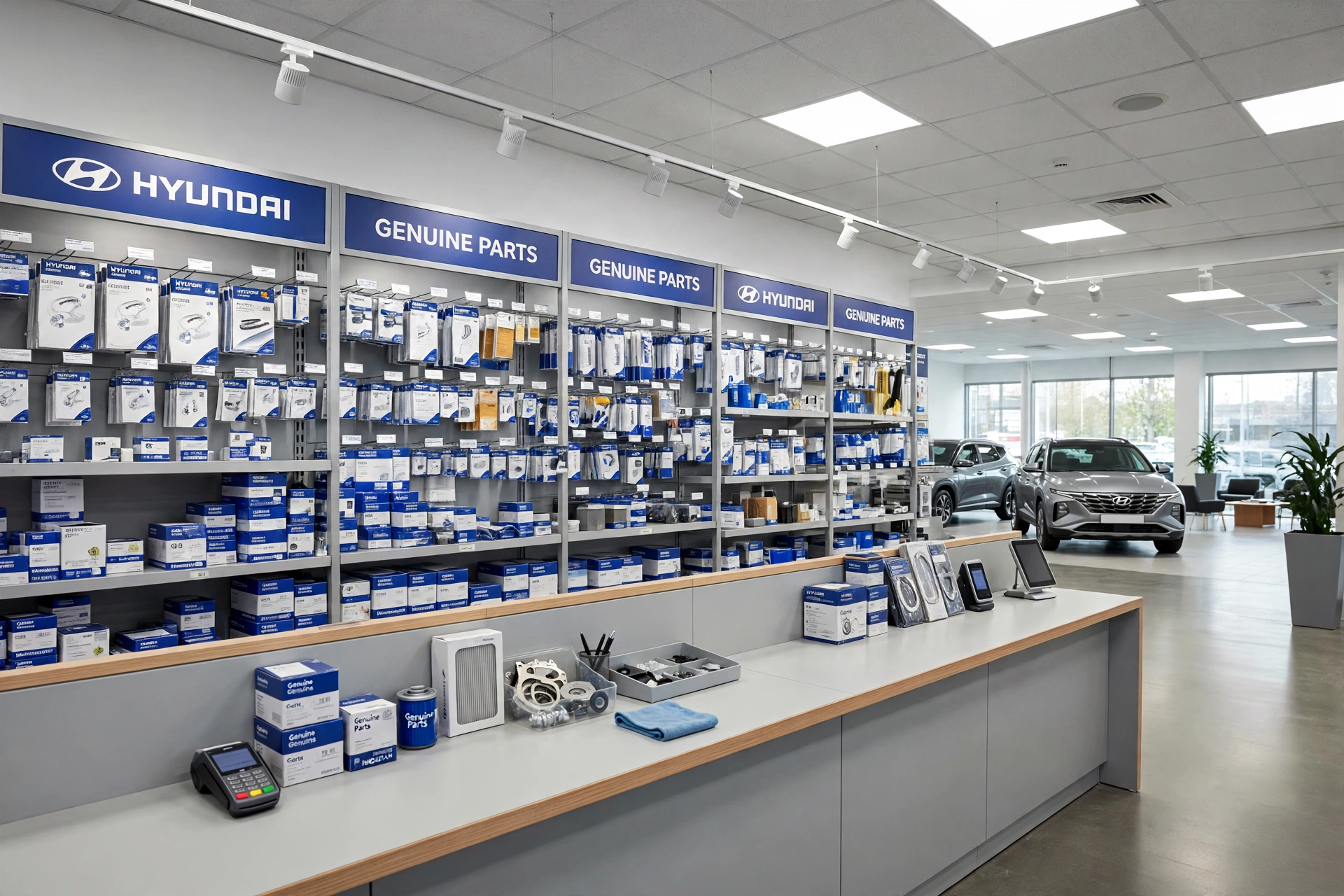
The quickest reliable way to get Hyundai parts near me is to start with your vehicle identification number, known as the VIN, and contact an authorised Hyundai dealer parts department or a reputable local motor factor, because either route can confirm the exact part for your model, year and trim before you spend any money, while an online search by part number is the best backup when the part is not held locally. As of November 2026, Hyundai Genuine Parts remain the safest choice for safety-critical components such as brakes, steering and airbag parts, according to Hyundai Motor Europe, while good-quality aftermarket parts can be sensible for non-safety items, provided they meet recognised standards and come from a supplier you can trace. The rest of this guide explains how to tell the two apart, how to avoid ordering the wrong part, and which questions protect both your wallet and your warranty.
Searching for a car part can feel urgent, especially when your Hyundai is off the road, yet the drivers who get the best result are usually the ones who slow down for ten minutes at the start, because a part ordered in a hurry is far more likely to be the wrong variant, the wrong side, or a poor-quality copy that fails within months. Hyundai builds many models that look similar but use different brakes, filters, sensors and suspension parts across model years, trims and engine types, so a part described simply as fitting a Tucson or an i30 may still be wrong for your particular car. Taking the time to gather your VIN, your registration details and the exact symptom or part name before you phone anyone will save you the cost and frustration of returns, repeated garage visits and, in the worst case, a part that damages another component.
What Finding the Right Part Really Means for Your Hyundai
Finding the right part is not simply a matter of locating the nearest shop that stocks something with a Hyundai badge on the box, because the part must match your exact vehicle configuration, meet the quality standard your car was designed around, and arrive with a warranty you can actually use if it fails. A genuine part is made to the same specification as the component fitted at the factory, which means its dimensions, materials and performance characteristics have been tested against the rest of your car, whereas a cheaper copy may look identical in a photograph yet use thinner metal, weaker seals or a different electrical resistance that only reveals itself after fitting. For that reason, experienced Hyundai owners tend to treat the search as a small piece of research rather than a quick purchase, checking the part number first and only then comparing suppliers on price, availability and aftercare.
The practical consequence of getting this step right is that your repair lasts, your car keeps its original driving feel, and you avoid the hidden cost of doing the same job twice, which is a common story when a bargain part fails early and the labour to replace it has to be paid all over again. This is particularly important for modern Hyundai models, which rely on sensors, driver-assistance systems and electronic modules that communicate with each other, so a small difference in a sensor or a connector can trigger warning lights, affect fuel economy or disable a safety feature. By contrast, a correctly specified part slots into that system without drama, and the garage can complete the job once, test it properly and hand the car back with confidence that the repair will hold.
Where to Find Hyundai Parts Near You
Your local authorised Hyundai dealer parts department is the most dependable starting point when you need a part quickly and correctly, because the staff can look up your car by VIN in the official parts catalogue, confirm availability from the Hyundai logistics network, and order anything that is not in stock, often for collection within a short time. Many drivers are surprised to learn that a dealer is not always the most expensive option once fitting, warranty and the cost of a wrong part are taken into account, and a dealer can also tell you honestly when a part is no longer available for an older model, which saves you days of searching. If you prefer an independent route, a well-established local motor factor or auto parts shop can be equally useful, especially for common service items such as filters, brake pads and batteries, provided the staff are willing to check fitment against your VIN rather than guessing from the model name alone.
Online suppliers add a third option that is worth using when the part is unusual, the local price is high, or you already know the exact part number and simply need the best delivered price from a traceable seller. The safest way to use this route is to search by the Hyundai part number rather than by a generic description, to buy only from sellers who display full business details and a clear returns policy, and to keep the packaging and invoice so that any warranty claim is straightforward. When you search for Hyundai parts near me online, treat the results as a shortlist to verify rather than a final answer, phoning the supplier to confirm the part number, the brand, whether the part is new, used or reconditioned, and how long delivery will actually take before you pay.
How to Check a Hyundai Part Fits Your Car Before You Order It
The single most reliable fitment check is your seventeen-character VIN, which is printed on your V5C registration document, on a plate visible through the windscreen, and on a sticker inside the driver-side door frame, because it identifies your car down to its engine, gearbox, trim and production date. Giving this number to a dealer or a competent parts supplier removes most of the guesswork, and a good supplier will read it back to you and confirm the part number they intend to supply before taking payment, which is a habit worth insisting on. If you are ordering a part yourself, compare the part number on the old component, where it is visible and safe to do so, with the number on the listing, and check the model year, engine size, fuel type and whether your car has any relevant option such as a particular braking system or driver-assistance package.
Photographs can help, but they should never be your only check, because two parts that look the same in a picture can differ in a mounting hole, a connector shape or a thread size that only becomes obvious during fitting. A sensible routine is to ask the seller for the part number in writing, to confirm the returns policy for a wrongly supplied part, and to keep the old part until the new one is fitted, so that the garage can compare them side by side before installation. This routine takes a few extra minutes and can feel fussy, yet it is exactly what professional mechanics do, and it is the difference between a repair that is finished in one visit and a car that sits on a ramp while a replacement part is sent back and forth.
Genuine Hyundai Parts vs Aftermarket Parts: What Is Actually Worth Paying For?
Genuine Hyundai parts are designed and engineered specifically for Hyundai vehicles, and Hyundai states that they are tested under simulated extreme conditions to ensure quality, reliability and durability, which is why they are the default recommendation for anything that affects safety, emissions or the long-term health of the engine. That does not mean every component on your car must be genuine, because many aftermarket manufacturers produce high-quality parts to recognised standards, and for items such as wiper blades, floor mats, bulbs and some filters, a reputable aftermarket brand can offer good value without any meaningful compromise. The judgement that matters is one of risk: the more a part affects braking, steering, suspension, airbags or engine management, the stronger the case for a genuine part, while the lower the safety stakes, the more room there is to choose on price and availability.
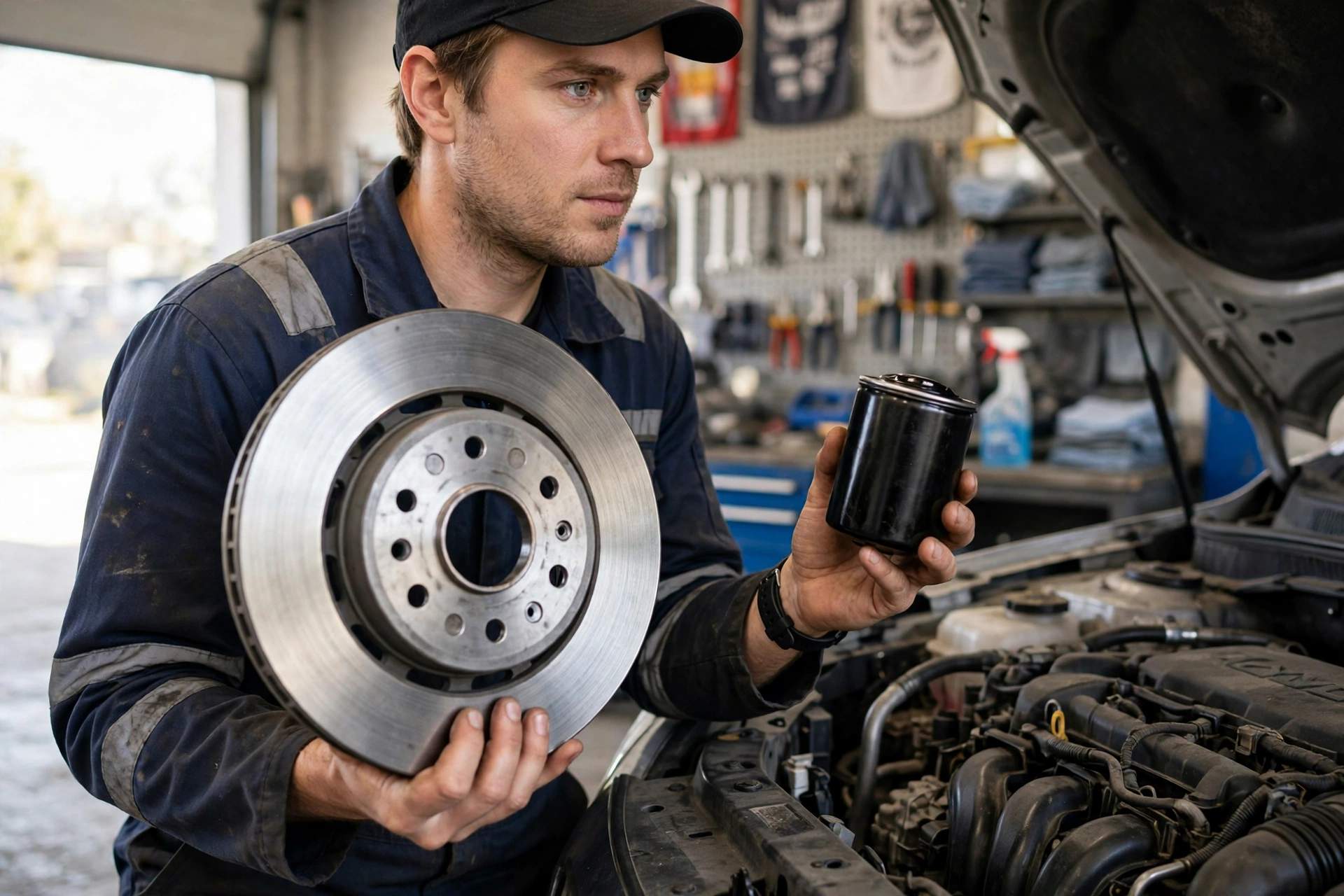
The warranty question is where many drivers worry unnecessarily, because there is a persistent myth that using any aftermarket part automatically voids a manufacturer warranty, and that is not how the law works in the United States under the Magnuson-Moss Warranty Act, which the Federal Trade Commission explains generally prevents a manufacturer from voiding warranty cover simply because an independent shop did the work or an aftermarket part was used, unless the manufacturer can show that the part or the work caused the damage. Hyundai has also revised warranty language in the past after FTC attention to wording that implied genuine parts were compulsory, which underlines that the choice is yours, although keeping receipts and fitting records is essential if a warranty claim is ever disputed. A practical approach is therefore to use genuine parts while the car is under warranty for anything connected to a potential claim, and to weigh genuine against quality aftermarket parts more freely once the car is older, always keeping the invoice and the part number for your records.
How to Spot Fake or Low-Quality Hyundai Parts Before They Cost You More
Counterfeit car parts have become more convincing in recent years, with copied packaging, copied logos and part numbers that look correct at first glance, so the price alone is no longer a reliable guide and a part that is dramatically cheaper than every other supplier should prompt a careful check rather than excitement. Genuine Hyundai parts normally arrive in branded packaging with clear part numbers, batch information and, in many markets, holographic or QR-based authentication features, and a reputable seller will be able to explain where the part came from and provide an invoice that traces it back to an authorised source. If a seller cannot answer those questions, pressures you to pay by an untraceable method, or offers no warranty and no returns, those are strong reasons to walk away, because the saving on the part is rarely worth the cost of a failure that damages your car or puts you at risk.
Quality can also be judged by the details that a photograph cannot hide once you know what to look for, such as rough casting, uneven paint, misspelt words on the packaging, loose fittings and a weight that feels noticeably lighter than the original component. Comparing the new part with the old one before fitting is the simplest test of all, and a good garage will welcome that comparison rather than resist it, because a mechanic who fits a suspicious part risks their own reputation when it fails. When you are searching for Hyundai parts near me and a supplier seems too good to be true, it usually is, and the drivers who avoid the worst outcomes are the ones who treat a suspiciously cheap brake disc or sensor as a warning sign rather than a bargain.
What to Ask Before You Buy or Book a Fitting
Before you pay for a part or book a fitting, a short list of questions will tell you almost everything you need to know about the supplier and the garage, and a professional business will answer them without hesitation. Ask whether the part is genuine Hyundai, original-equipment or aftermarket, and ask for the brand name and part number in writing, because that single answer determines the warranty, the expected lifespan and whether the part can be returned if it is wrong. Ask how long the part is guaranteed for and whether the guarantee covers both the part and the labour, what the total fitted price will be including VAT and any diagnostic charge, and how long the job will take, because a clear written estimate protects you from a bill that grows without your agreement.
You should also ask the garage what happens if the part does not fix the problem, whether they will show you the old part after removal, and whether they will check for any outstanding safety recalls while the car is with them, because these questions reveal whether the business works transparently or relies on customers not asking. A garage that photographs its findings, explains its diagnosis in plain language and calls you before doing any additional work is a garage worth returning to, while a business that cannot give a straight answer to a simple question about parts or pricing is telling you something important. Keeping the answers, the estimate and the final invoice together in a folder, whether paper or digital, builds a service history that supports future warranty claims and helps the next owner trust the car when you eventually sell it.
Conclusion
Finding Hyundai parts near you does not have to be a gamble, because the process is straightforward once you know it: start with your VIN, confirm the exact part number, choose genuine parts for safety-critical work, and buy only from a supplier who can explain the part, guarantee it and take it back if it is wrong. The time you spend on those checks is repaid in a repair that is done once, a car that drives as it should, and a bill without unpleasant surprises, which is a better outcome than any small saving on a part of uncertain origin. As of November 2026, the safest habit remains the simplest one, which is to treat the dealer parts counter as your reference point, compare independent and online options against it, and keep every receipt, so that your Hyundai stays reliable, safe and genuinely yours for many more miles.
The next time a warning light appears or a service is due, you will already know what to do, and that confidence is worth more than the few minutes the research takes. Hyundai parts near me is a search that millions of drivers make every year, and the ones who get the best value are not the ones who find the cheapest listing first, but the ones who find the right part, from the right supplier, fitted by the right hands, and that is a standard any driver can meet with the steps in this guide.
Is it cheaper to buy Hyundai parts from a dealer or online?
Buying online can appear cheaper at first glance, because an online listing often shows a lower headline price than a dealer parts counter, yet the comparison is only honest once delivery, fitting, returns and warranty are included in the total. A dealer price usually includes a verified part number, a manufacturer-backed warranty and the ability to return a wrongly supplied part without a dispute, while an online purchase can involve delivery charges, a restocking fee and the cost of a second garage visit if the part does not fit. The sensible approach is to obtain the dealer price as a benchmark, then compare the delivered price from a traceable online seller, and to remember that the cheapest part is rarely the cheapest repair when the labour to fit it twice is taken into account.
If the part is a common service item and you already know the exact part number, an online purchase from a reputable seller can be good value, provided the seller displays full business details and a clear returns policy. If the part is safety-critical, unusual or needed urgently, the dealer route is usually the better choice, because the part is verified, the warranty is straightforward and the car spends less time off the road while you wait for a delivery that may or may not be correct.
Can I use aftermarket parts on my Hyundai without voiding the warranty?
In general, using an aftermarket part or an independent garage does not automatically void your Hyundai warranty, because the United States Magnuson-Moss Warranty Act, as explained by the Federal Trade Commission, generally prevents a manufacturer from denying warranty cover simply because work was done elsewhere or a non-genuine part was fitted, unless the manufacturer can show that the part or the work caused the failure. This protection is widely misunderstood, and some drivers have been told incorrectly that only dealer servicing preserves their warranty, which is not the position under that law. The position in the United Kingdom is different in its legal detail, but the practical principle is similar, in that a warranty claim can only fairly be refused where the part or the repair is shown to be the cause of the fault.
Those records make any future warranty discussion straightforward, because they show that the work was done properly and that the part was a reasonable choice for the job, which is exactly what a warranty assessor needs to see, and they also help a future owner trust the car when you eventually sell it.
How do I find the part number for my Hyundai?
The most reliable way to find the correct part number is to ask an authorised Hyundai dealer parts department to look it up from your VIN, because the official catalogue lists parts by your exact model, year, trim and engine, and the staff can confirm the number before you order. You can also find the number printed or stamped on the original component itself, although that is not always visible or safe to access without removing other parts, so it is best left to a mechanic when the component is buried in the engine bay or behind a panel. Your vehicle handbook and service history may name the part in general terms, but they rarely give the full Hyundai part number, so they are a starting point rather than a final check.
Keeping a note of part numbers for filters, brakes and other regularly replaced items also makes future servicing quicker and reduces the chance of a wrong part being ordered in a hurry, which saves both time and money over the life of the car. That small habit also makes every future garage visit smoother and helps the parts supplier find the right component first time.
How long do Hyundai parts take to arrive?
Delivery times depend on whether the part is held in stock locally, held at a regional distribution centre, or has to be ordered from the manufacturer, and as of November 2026 the honest answer is that common service parts are often available the same day, while less common parts can take a few working days. A dealer parts department can usually tell you the expected arrival time when you place the order, and a reputable online seller should state the dispatch time and the delivery estimate before you pay, so you can plan the garage booking around the part rather than the other way round. If a seller cannot give you a realistic delivery date, that is a sign to check another supplier before you commit.
The delay that catches most drivers out is not the delivery itself but the discovery that the part is wrong once it arrives, which adds a return, a re-order and another wait to the repair. Confirming the part number, the model year and the engine type before ordering is therefore the best way to keep the total time short, and it is worth asking the garage to hold the booking until the part is in hand and checked against the old component.
Should I buy used Hyundai parts?
Used Hyundai parts can be a reasonable choice for older cars, for cosmetic items such as trim, mirrors and lights, and for parts that are no longer manufactured, provided you buy from a reputable breaker who tests the part, offers a short warranty and allows a return if it does not work. The saving can be substantial, and a used genuine part is sometimes a better fit than a new copy of uncertain quality, because it was made to the original specification and has already proved that it fits the model. A good breaker will ask for your VIN, confirm the part number and tell you the mileage and condition of the donor vehicle, which are all signs of a professional operation.
They are also a poor choice when a new part is only slightly more expensive, because the small saving is rarely worth the absence of a full manufacturer warranty and the labour cost of fitting the part twice if it fails soon after installation, so choose new parts for anything safety-critical.