
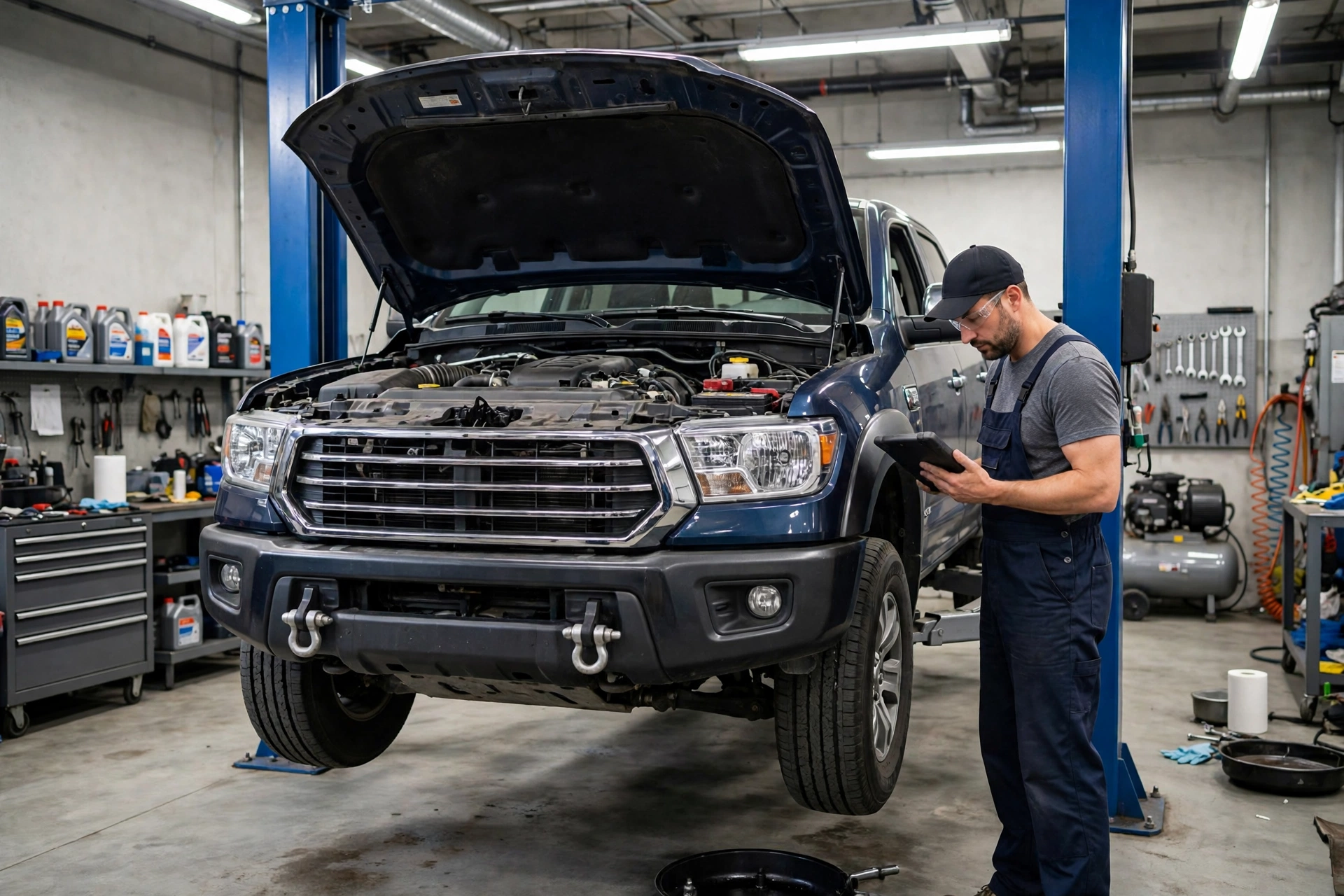
The fastest way to find diesel repair near me is to search for a garage that explicitly lists diesel diagnostics, fuel-injection work, turbochargers and emissions systems among its services, then phone two or three of them with your vehicle year, make, model, engine type and symptoms, and choose the one that asks good questions, quotes a diagnostic fee in advance and promises a written estimate before any repair begins. As of November 2026, a genuine diesel specialist should be able to explain the diagnostic process in plain language, show you test results or photographs, and separate work that is needed now from work that can safely wait, which is the clearest sign that you have found a professional rather than a garage that simply replaces parts until the problem disappears. The rest of this guide explains the warning signs to watch for, the questions that protect you, and how a good first visit should unfold.
Diesel engines reward specialist care in a way that petrol engines often do not, because they operate at far higher fuel pressures, rely on precise injection timing, and use turbochargers and emissions equipment that demand specific diagnostic tools and training. A general garage can be excellent for routine servicing, yet a diesel fault that involves hard starting, loss of power, heavy smoke or a warning light deserves a technician who works on diesel engines every day and understands the difference between a failing injector, a tired turbocharger and a blocked diesel particulate filter. Choosing that specialist before the problem becomes urgent is one of the cheapest decisions a diesel owner can make, because early diagnosis usually means a smaller repair and a shorter time off the road.
What Diesel Repair Near Me Should Include
A proper diesel repair service covers far more than swapping a faulty part, because it begins with listening to the driver, recording the exact symptoms and the conditions in which they appear, and then testing the vehicle systematically before recommending any work. Diesel specialists should have scan tools that can read manufacturer-specific codes, pressure-testing equipment for the fuel system, and the knowledge to interpret live data such as fuel rail pressure, boost pressure and exhaust temperatures, rather than relying on a single fault code to decide what to replace. They should also understand the emissions systems fitted to modern diesels, including diesel particulate filters and selective catalytic reduction, because those systems are a frequent source of warning lights and a common area where an inexperienced garage can recommend an expensive part that was never the real cause.
The service should also include clear communication at every stage, starting with a written record of your description of the fault, a stated diagnostic fee, and an agreement about how and when the garage will contact you with its findings. After testing, you should receive a written estimate that lists the parts and labour separately, states whether the parts are new, reconditioned or aftermarket, and explains what is needed now and what can be monitored for later, so that you can make an informed decision rather than feeling pressured into approving everything at once. A garage that follows that routine is showing you its working method, and that method is usually a better guide to quality than any advertisement or review score on its own.
Warning Signs Your Diesel Needs a Specialist Soon
Diesel engines usually give clear warnings before a small fault becomes a major repair, and learning to recognise them early can save a considerable amount of money and inconvenience. Hard starting, especially on a cold morning, extended cranking before the engine catches, or a need for repeated attempts to start are all signs that the glow plugs, battery, fuel system or compression may need attention, and they should not be ignored simply because the engine eventually starts. A noticeable loss of power under load, hesitation when accelerating, or a feeling that the vehicle is holding back on hills can point to a turbocharger, fuel delivery or air intake problem, while rough idling, shaking or a change in the engine note often signals an injector or a combustion issue that will only worsen if it is left.
Smoke, smells and warning lights are the other signals that deserve a prompt visit, because blue smoke can indicate oil burning, white smoke can indicate unburnt fuel or coolant, and black smoke can indicate incomplete combustion or a boost problem, each of which points a specialist toward a different set of tests. A diesel particulate filter warning, an engine management light, or a message about emissions should be treated as a request for diagnosis rather than a fault to clear and forget, because clearing a code without fixing the cause usually means the light returns and the underlying problem continues to damage the engine. If the vehicle overheats, shows a low oil pressure warning, leaks fuel, produces heavy smoke or cannot maintain safe speed, you should stop in a safe place and arrange assistance rather than continuing to drive, and you should never open a hot cooling system or attempt to loosen high-pressure fuel lines yourself.
How to Choose a Diesel Repair Shop Near You
Choosing a diesel garage starts with evidence of diesel experience rather than with a convenient location or a low headline price, because a shop that works on diesel engines every day will have the tools, the training and the supplier relationships to diagnose your vehicle correctly. Look for technicians with recognised qualifications such as ASE certification with diesel endorsements, ask how often the garage services your particular engine type, whether that is a Power Stroke, a Cummins, a Duramax or a European diesel car engine, and ask whether the staff receive ongoing training, because diesel technology changes constantly and a garage that stopped learning years ago will struggle with a modern vehicle. Online reviews can help, but they are most useful when they mention diesel work specifically, name the problem that was fixed, and describe clear communication, rather than simply praising a friendly reception.
A visit or a phone call will tell you even more than a website, because a good diesel garage asks about your vehicle year, mileage, modifications, towing use and service history before it quotes a price, and it is honest about the jobs it does not do, such as emissions equipment removal, which a reputable shop will decline. When you search for diesel repair near me, shortlist two or three garages that meet those tests, phone each one with the same description of your symptoms, and compare not only the price but the quality of the questions you are asked, because the garage that listens carefully before it quotes is usually the garage that diagnoses carefully once the vehicle is on the ramp.
What Happens During a Diesel Diagnostic Visit
A diesel diagnostic visit should begin at the counter, where the service writer records your symptoms in your own words, confirms the best number for updates, and states the diagnostic fee before any testing begins, so that there are no surprises later. The technician then scans all the relevant modules on the vehicle, because a trouble code identifies a condition the vehicle detected rather than proving which part needs replacement, and a careful technician will use that code as a starting point for physical tests, such as checking fuel pressure, inspecting the turbocharger, testing glow plugs and examining the exhaust system. That testing takes time, and a garage that promises an instant answer to a complex diesel fault is usually guessing, whereas a garage that explains what it has tested and what remains uncertain is doing the job properly.
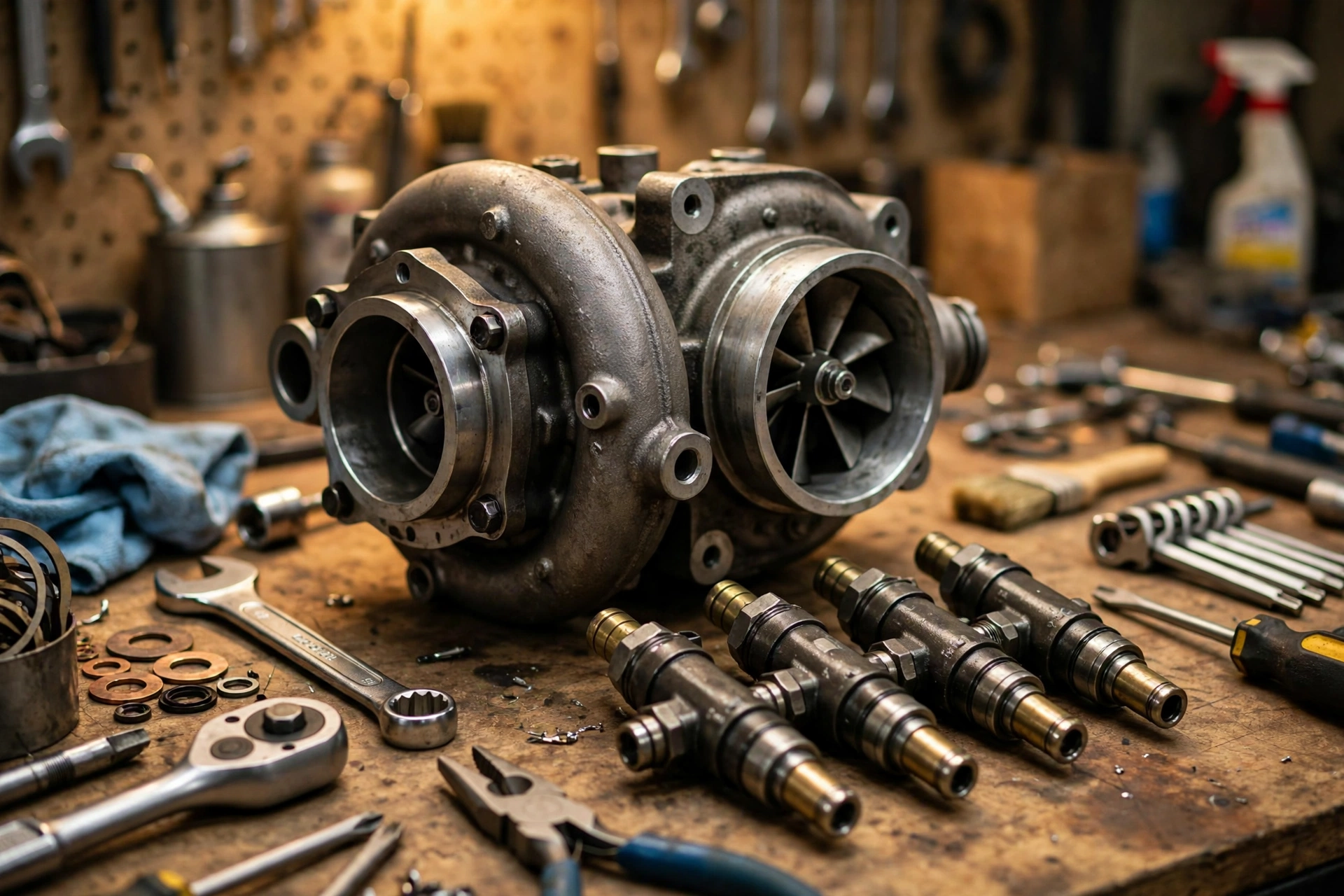
Once the testing is complete, the garage should contact you with its findings, ideally with photographs or video of the faulty component, and present a written estimate that separates the immediate repair from routine maintenance and any other findings that can wait. You should be asked for approval before any repair begins, and you should be told how long the work will take, what warranty applies to the parts and labour, and whether the vehicle will be road-tested before it is returned to you. That road test matters, because it confirms that the repair has actually fixed the symptom you reported rather than simply clearing a warning light, and a garage that skips it is cutting a corner that you will pay for later.
Diesel Repair Costs: What to Expect and What to Ask Before You Agree
Diesel repair costs vary widely because the price depends on the vehicle, the fault, the parts required and the labour time, so any article that gives a single fixed figure for a diesel repair would be misleading, and a trustworthy garage will not quote a repair price before it has diagnosed the problem. What you can expect, as of November 2026, is a diagnostic fee that is stated in advance and is often applied to the repair if you approve it, a written estimate that breaks out parts and labour, and a clear statement of whether the parts are genuine, original-equipment or aftermarket, because those choices affect both the price and the warranty. You should also expect the garage to explain the difference between work that is needed now for safety or to prevent further damage, and work that is advisable soon or can be monitored, so that you can prioritise your spending rather than approving a long list under pressure.
The questions that protect you financially are simple ones, and they should be asked before you approve any work: what testing established the fault, what remains uncertain, how the proposed repair addresses the symptom you reported, what the total price will be including VAT, and what warranty covers the parts and the labour. You should also ask whether the garage will call you before doing any additional work beyond the estimate, because reputable shops treat the estimate as an agreement and seek your approval before exceeding it. Keeping the written estimate, the final invoice and any test results together gives you a record that supports a warranty claim, helps the next garage that works on the vehicle, and shows a future buyer that the diesel has been maintained by people who understood it.
Questions to Ask Before You Approve Any Diesel Repair
Before you hand over the keys, a short conversation can reveal whether the garage is the right one for your diesel, and the best garages welcome those questions because they know that an informed customer is easier to work with than a suspicious one. Ask whether the technicians regularly work on your engine type, how they plan to find the cause of the problem before replacing parts, whether they will show you what they find, and whether you will receive an estimate in writing before work starts. Ask what kind of parts they use, how long the repair will take, what warranty applies, and whether they will road-test the vehicle afterwards, because each answer tells you something about the garage’s method and its confidence in its own work.
You should also ask about maintenance that could prevent the next problem, such as fuel filter intervals, oil specifications for your engine, and the driving habits that keep a diesel particulate filter healthy, because a garage that explains prevention is thinking about your long-term costs rather than only the current invoice. If a garage cannot answer these questions clearly, rushes you into approving work, or refuses to put an estimate in writing, those are reasons to pause and phone another specialist, even if it means waiting a day longer. A diesel repair is a significant expense, and the right garage is the one that treats your questions as part of the service rather than as an interruption to it.
Conclusion
Finding a good diesel repair garage near you is less about luck than it is about method, because the garages that do the best work share the same habits: they ask detailed questions, they test before they replace, they explain their findings in plain language, and they give you a written estimate and a warranty you can rely on. The drivers who get the best results are the ones who describe their symptoms carefully, keep their service history to hand, and choose a specialist with proven diesel experience rather than the nearest general garage or the cheapest quote. That approach takes a little more time on the first visit, but it is repaid in repairs that last, in bills without surprises, and in a diesel vehicle that stays reliable for the work you need it to do.
Booking a diagnostic visit at the first sign of trouble gives the specialist time to test properly, order the right part and complete the repair on your schedule, rather than on the schedule imposed by a roadside breakdown. Early action also keeps a small fault from turning into a major repair, which is the cheapest outcome of all for any diesel owner. Diesel repair near me is a search worth doing properly, and the garage you find by asking the right questions is the garage you will be glad to return to, season after season, whenever your diesel needs attention.
How much does diesel repair usually cost?
Diesel repair costs vary too much for a single reliable figure, because the price depends on your vehicle, the fault, the parts required and the labour time, and a garage that quotes a repair price before diagnosing the problem is guessing rather than estimating. As of November 2026, the honest pattern is a diagnostic fee stated in advance, often applied to the repair if you approve it, followed by a written estimate that separates parts and labour and states whether the parts are new, reconditioned or aftermarket. Common maintenance such as filters and servicing costs far less than a fuel-injection or turbocharger repair, which is why diagnosis matters so much.
The best way to control the cost is to obtain that written estimate before approving work, to ask which items are needed now and which can wait, and to keep the estimate and the final invoice together. A garage that explains the cost in those terms is helping you make a decision, while a garage that gives only a vague total without a breakdown is asking you to trust it without evidence, and that is rarely a good basis for a significant repair.
How do I know if a mechanic is qualified to repair diesel engines?
A qualified diesel mechanic should be able to describe specific diesel experience, name the engine types they work on regularly, and explain the diagnostic tools they use for fuel-injection, turbocharger and emissions work. Recognised qualifications such as ASE certification with diesel endorsements are a useful indicator, as is ongoing training, because diesel technology changes constantly and a technician who stopped learning years ago will struggle with a modern engine. A good garage will also be honest about the jobs it does not do, and will tell you on the first call if your vehicle is outside its specialism.
If a garage asks none of those questions and simply quotes a price, it is unlikely to diagnose the problem carefully, and you would be better served by a specialist who treats the first conversation as part of the diagnosis and takes your description seriously.
What is the most common diesel engine problem?
There is no single most common diesel problem that applies to every vehicle, because the pattern depends on the engine type, the age, the mileage and how the vehicle is used, yet a small group of faults appears repeatedly in diesel workshops. Hard starting and rough running often point to glow plugs, injectors or fuel delivery, loss of power often points to the turbocharger or the air intake, and warning lights often point to the diesel particulate filter or the emissions system, particularly on vehicles that make many short journeys. Fuel contamination, worn injectors and boost leaks are also familiar to diesel specialists, and each requires a different set of tests to confirm.
If you notice a new symptom, write down when it happens, whether the engine is cold or warm, and whether it appears under load, because that information helps the technician narrow the possibilities far more quickly than a vague description alone ever could.
Can a regular mechanic repair a diesel engine?
A regular mechanic can handle routine diesel servicing such as oil changes, filters and brakes, and many general garages do that work well, yet a complex diesel fault is best handled by a specialist with diesel-specific training, tools and experience. Diesel engines operate at far higher fuel pressures than petrol engines, use precise injection timing, and rely on turbochargers and emissions equipment that demand particular diagnostic skills, so a generalist who rarely sees a diesel fault may replace parts by trial and error. That approach can work, but it is slower, more expensive and more likely to miss the real cause than a diagnosis by a technician who works on diesels every day.
Ask your regular garage honestly whether a particular fault is within its diesel experience, because a good garage will tell you when a specialist is the better choice, and that honesty is itself a sign of a business worth keeping for the long term.
How long does a diesel repair take?
The time a diesel repair takes depends on the fault, the availability of parts, and how busy the garage is, so a reliable answer can only be given after diagnosis, and as of November 2026 a reputable garage will give you an estimated timeline before you leave the vehicle with them. A straightforward service or filter change may be completed the same day, while a diagnostic visit, a fuel-injection repair or a turbocharger replacement can take longer, particularly if a part has to be ordered and the vehicle must be tested after fitting. The garage should explain the timeline when it presents the written estimate, and it should contact you promptly if testing reveals additional work that changes the schedule.
If the garage needs to order a part, ask whether the vehicle is safe to drive in the meantime, and agree a time for an update call, so that you are not left waiting without information while the repair is under way.