
Car Wash for Sale: How to Buy the Right One
A car wash for sale is one of the most popular small-business purchases in the United States, because car washes earn steady cash income, run on relatively simple operations, and serve a demand that never really goes away. Buying one is not as simple as paying the asking price and opening the doors, though, because the value of a wash depends on its format, its equipment, its water and environmental compliance, and above all its verified wash volume and membership base. This guide explains the types of car wash, what they cost, what to check before you buy, and how financing usually works.
The appeal is easy to understand. Cars get dirty in every season, and most drivers would rather pay for a wash than do it themselves. A well-run express tunnel can wash hundreds of cars a day with a small team, and monthly membership plans turn one-off customers into recurring revenue. But the same features that make car washes attractive also hide risks, from ageing equipment and water bills to lease terms and local competition. A careful buyer checks the numbers before signing anything, and this guide shows you how.
What Types of Car Wash Are for Sale?
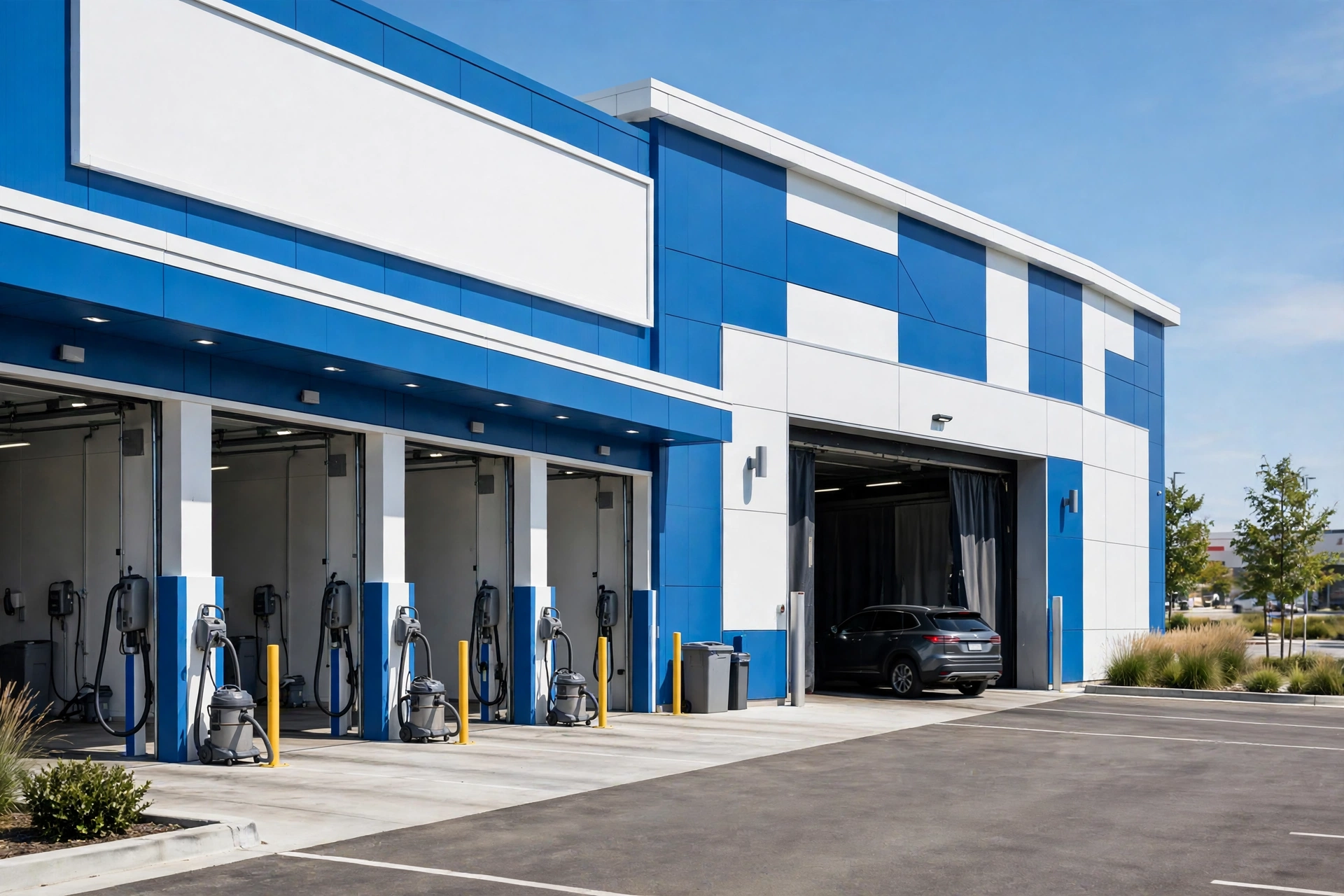
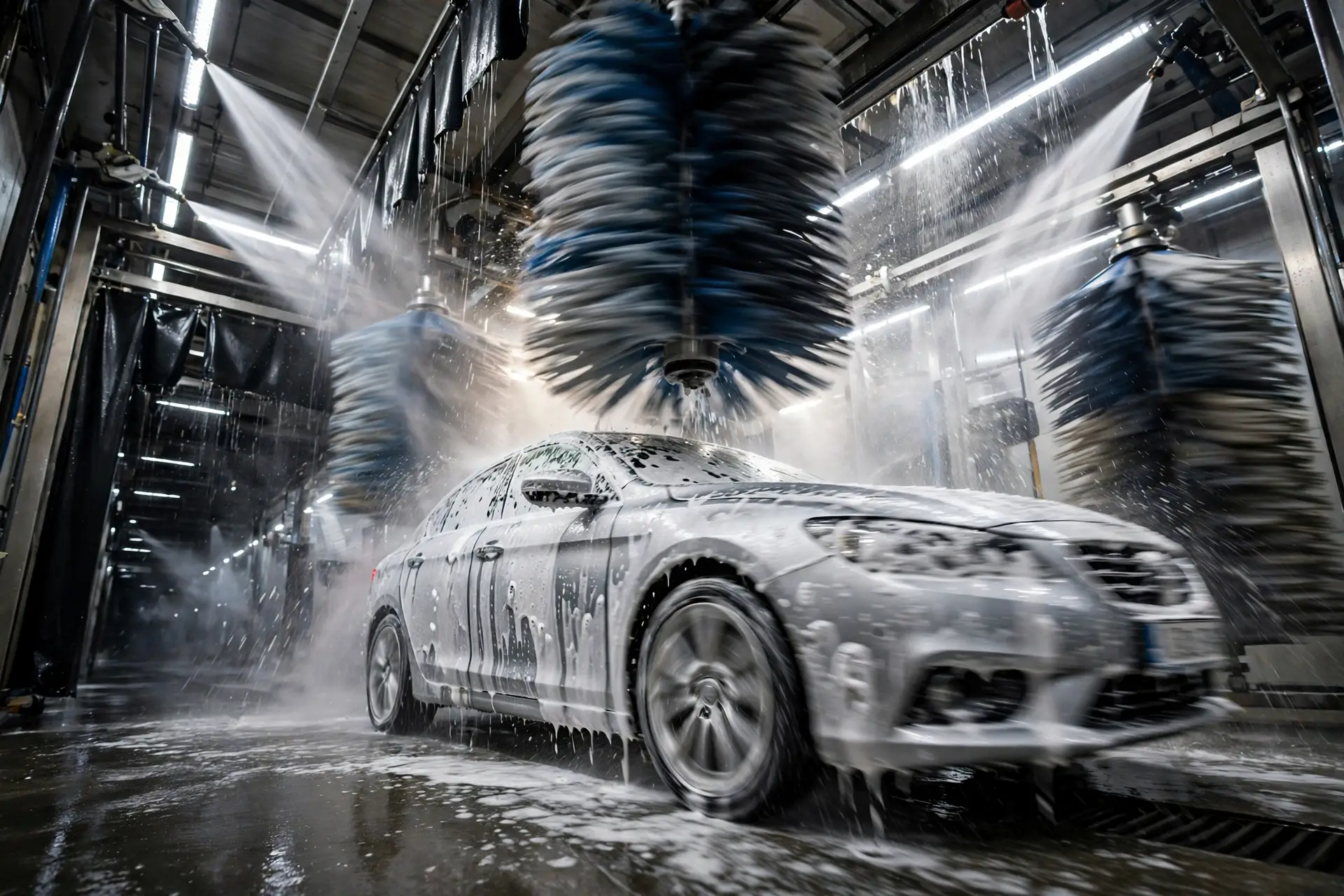
There are three main types of car wash for sale, and each one has different economics, staffing needs, and risks. An express tunnel wash moves cars along a conveyor through brushes, soap, and dryers, and it is the highest-volume format, often washing hundreds of cars a day with a small team and a strong membership programme. An in-bay automatic wash parks the car in a bay while the equipment moves around it, and it suits smaller sites with lower traffic. A self-service wash has open bays where customers wash their own cars with wands and coin or card payment, and it has the lowest staffing cost but also the lowest revenue per car.
Which format fits you depends on your capital, your time, and the site. Express tunnels need the most money and the most traffic, with a median asking price of around 1,200,000 dollars for an established car wash on BizBuySell when checked in October 2026, and tunnels with land sitting well above that median. Self-service sites cost far less but need an owner who is happy with hands-on maintenance and lower volumes. Before you look at any listing, decide which format matches your budget and how involved you want to be, because the wrong format is the most expensive mistake a first-time buyer can make.
How Much Does a Car Wash for Sale Cost?
The price of a car wash for sale depends on its format, location, equipment, and earnings, and 2026 acquisition guides give a useful range. Expect to pay 3 to 6 times seller’s discretionary earnings for a single-site owner-operator wash, and 5 to 8 times EBITDA for a multi-site or tunnel-format platform, according to a 2026 acquisition playbook from CT Acquisitions. BizBuySell’s car wash marketplace listed a median asking price of 1,200,000 dollars for an established car wash in October 2026, with express tunnels and land well above that figure and self-service sites well below it. These are asking prices, not sale prices, and the real value is always in the verified earnings.
Financing is usually available for buyers with good credit and a solid business plan. SBA 7(a) loans cover most car wash acquisitions under 5 million dollars, and they offer longer terms and lower down payments than conventional loans, although they require strong financials and can take months to close. Seller financing, equipment loans, and traditional bank loans are also common, often in combination. Start your financing conversations early, ideally before you make an offer, because a lender will want to see the same financials you do, and a pre-approval strengthens your negotiating position.
What Should You Check Before Buying a Car Wash?
Due diligence is where good car wash deals are separated from bad ones, and the checklist has five parts: price against format, verified wash volume, equipment condition, water and environmental compliance, and the lease or real estate. Start with the financials, and ask for three years of tax returns, profit and loss statements, and twelve months of bank statements, then reconcile the point-of-sale reports to the bank deposits and the tax returns month by month. If the three do not agree, you are underwriting a story rather than a business, and cash-heavy self-service bays deserve the closest look of all.
Next, verify the wash volume in person by counting cars yourself at a weekday peak, a weekend peak, and on a rainy day, and compare your counts with what the point-of-sale system reports for the same hours. Check the membership roster by pulling active members, monthly cancellations, and failed card charges from the billing processor, not from a seller summary, because recurring plans carry a wash far more than one-off traffic. Hire an independent inspector to record the manufacturer and install year of every major piece of equipment and read the service log, because a conveyor or dryer near the end of its life can cost tens of thousands to replace.
How Do Water and Environmental Rules Affect the Price?
Water is the core input of a car wash, and water and environmental compliance can make or break a deal. Ask for at least two years of water and sewer bills and compare them with wash counts, because water typically costs 5 to 10 percent of revenue, and a site with unusually high water use may have leaks or inefficient equipment. Confirm with the local water and sewer provider what service the property has, whether there are discharge requirements for wash water, and whether sand and oil interceptors are present and maintained. Many washes use a reclaim system that filters and reuses part of the wash water, so find out whether the site has one, its age, its maintenance history, and how much it actually reduces water purchased.
Environmental review matters because car washes handle soaps, waxes, oils, and sediment, and some sites had earlier uses such as fuel sales. A Phase I environmental site assessment reviews the property history and current conditions, and if it flags concerns, a Phase II tests soil or groundwater. Most lenders require at least a Phase I on a car wash, so order it early to leave time to act on the results. Also confirm zoning with the local planning department, because a car wash must be an allowed use in its zone and legally established, and a lost curb cut or a planned road project can permanently change the value of a site.
How Do Memberships Change the Numbers?
Monthly unlimited memberships have changed the car wash business more than any other trend in the past decade, and they deserve a hard look from any buyer. Recurring membership revenue makes cash flow steadier and a business easier to finance, because a lender can see predictable income rather than weather-dependent daily sales. But memberships only help if they are real, so verify them from the billing processor: active member counts over time, cancellation rates, average price after discounts, and whether the membership data and payment platform transfer to you. Compare reported revenue with tax returns and sales tax filings, because membership figures are easy to inflate in a seller summary.
Also study the trade area, because memberships depend on local demand. Define the trade area as a 10-minute drive or a 3 to 5 mile radius, and check population, household income, and how many competing tunnels already operate there. Median household income matters, because membership pricing has a floor around 60,000 dollars and a premium band around 80,000 dollars, and a market with more than about one tunnel per 10,000 households is likely oversaturated. Count competing washes within three to five miles, note their type and pricing, and watch them at different times of day before you commit.
What Does the Buying Process Look Like?
Buying a car wash follows a defined sequence: pick the format that fits your capital and time, source deals through brokers and direct outreach, verify the operation with hands-on diligence, secure acquisition financing, then close and take over daily operations. Reputable brokers require a signed non-disclosure agreement before releasing financial details, which is standard practice and protects the seller’s confidential information. Once you have the numbers, review at least three years of tax returns and monthly profit and loss statements, and watch for one-time revenue spikes, unusual expense patterns, and owner personal expenses running through the business.
When you are ready to offer, your letter of intent should be conditional on the diligence items in this guide, including equipment inspection, environmental assessment, lease review, and financing approval. Review the lease or deed carefully, because if the wash sits on leased land, the remaining term, renewal options, rent escalations, and whether the landlord will subordinate to a lender all matter. After closing, plan for a handover period with the seller, train staff, and keep the membership programme running without interruption, because losing members in the first month is the fastest way to damage the business you just bought.
What Are the Ongoing Costs of Running a Car Wash?
Running a car wash has steady ongoing costs that a buyer must understand before signing, because they decide whether the business actually makes money. Water is the biggest variable cost, typically 5 to 10 percent of revenue, and it rises with wash volume, leaks, or inefficient equipment. Chemicals, soaps, waxes, and drying agents are the next cost, followed by electricity for pumps, dryers, and lighting, and gas if the site heats water. Equipment maintenance is a regular expense too, because brushes wear out, pumps need seals, and pay stations need repairs, so smart owners budget a fixed amount every month for parts and service.
Staffing, insurance, and property costs make up the rest of the monthly bill. Express tunnels need a small team on site during opening hours, while self-service sites need less staff but more owner time for cleaning and maintenance. Insurance must cover general liability, property, environmental liability, and business interruption, because a car wash handles water, chemicals, and customer vehicles. Rent or mortgage, property tax, and local business rates vary by location, and marketing, membership software, and card processing fees add a few more percent. A buyer who models these costs honestly, using the seller’s real utility bills and service invoices, will know whether the wash actually makes money.
Conclusion
A car wash for sale can be a strong small-business purchase, but only when the price matches verified earnings, the equipment is sound, the water and environmental position is clean, and the membership base is real. In 2026, expect to pay 3 to 6 times seller’s discretionary earnings for a single site, with a median asking price around 1,200,000 dollars for an established wash. Do the diligence in person, count the cars yourself, verify the memberships from the billing processor, and start financing conversations early. Buy on verified numbers rather than a seller story, and a car wash can be a reliable, cash-generating business for years.
How Much Does It Cost to Buy a Car Wash?
The median asking price for an established car wash was around 1,200,000 dollars on BizBuySell in October 2026, with express tunnels and land above that figure and self-service sites below it. Pricing is usually 3 to 6 times seller’s discretionary earnings for a single site, and 5 to 8 times EBITDA for multi-site or tunnel platforms. The real value is always in the verified earnings, not the asking price, so check three years of tax returns and bank statements before you judge whether a price is fair.
What Is the Most Profitable Type of Car Wash?
Express tunnel washes are usually the most profitable format because they wash the highest volume of cars with a small team and strong monthly membership programmes. In-bay automatics suit smaller sites with lower traffic, while self-service bays have the lowest costs but also the lowest revenue per car. Profitability depends more on location, traffic, and verified volume than on format alone, so a well-placed self-service wash can beat a poorly placed tunnel.
Can I Get a Loan to Buy a Car Wash?
Yes, SBA 7(a) loans cover most car wash acquisitions under 5 million dollars, and they are the most common financing route for first-time buyers. Traditional bank loans, equipment financing, and seller carryback are also used, often in combination. Lenders require strong financials, verified earnings, and usually a Phase I environmental assessment, so start financing conversations before you make an offer, and get a pre-approval to strengthen your negotiating position.
What Is the Biggest Risk When Buying a Car Wash?
The biggest risks are unverified earnings, ageing equipment, and water or environmental problems. Cash-heavy revenue can be overstated, a conveyor or dryer near the end of its life can cost tens of thousands to replace, and water bills, discharge rules, or a contaminated site can change the economics overnight. Independent inspection, in-person car counts, membership verification from the billing processor, and an environmental assessment are the best protection a buyer has.
How Long Does It Take to Buy a Car Wash?
A car wash purchase typically takes two to four months from first offer to closing, depending on diligence, environmental assessment, and financing. SBA loans can take the longest, so buyers should start lender conversations early. Rushing the process usually means skipping checks that matter, so allow time for equipment inspection, membership verification, and lease review before you close, and plan a handover period with the seller. A pre-approval from your lender and a complete document pack from the seller both help the process move faster.