
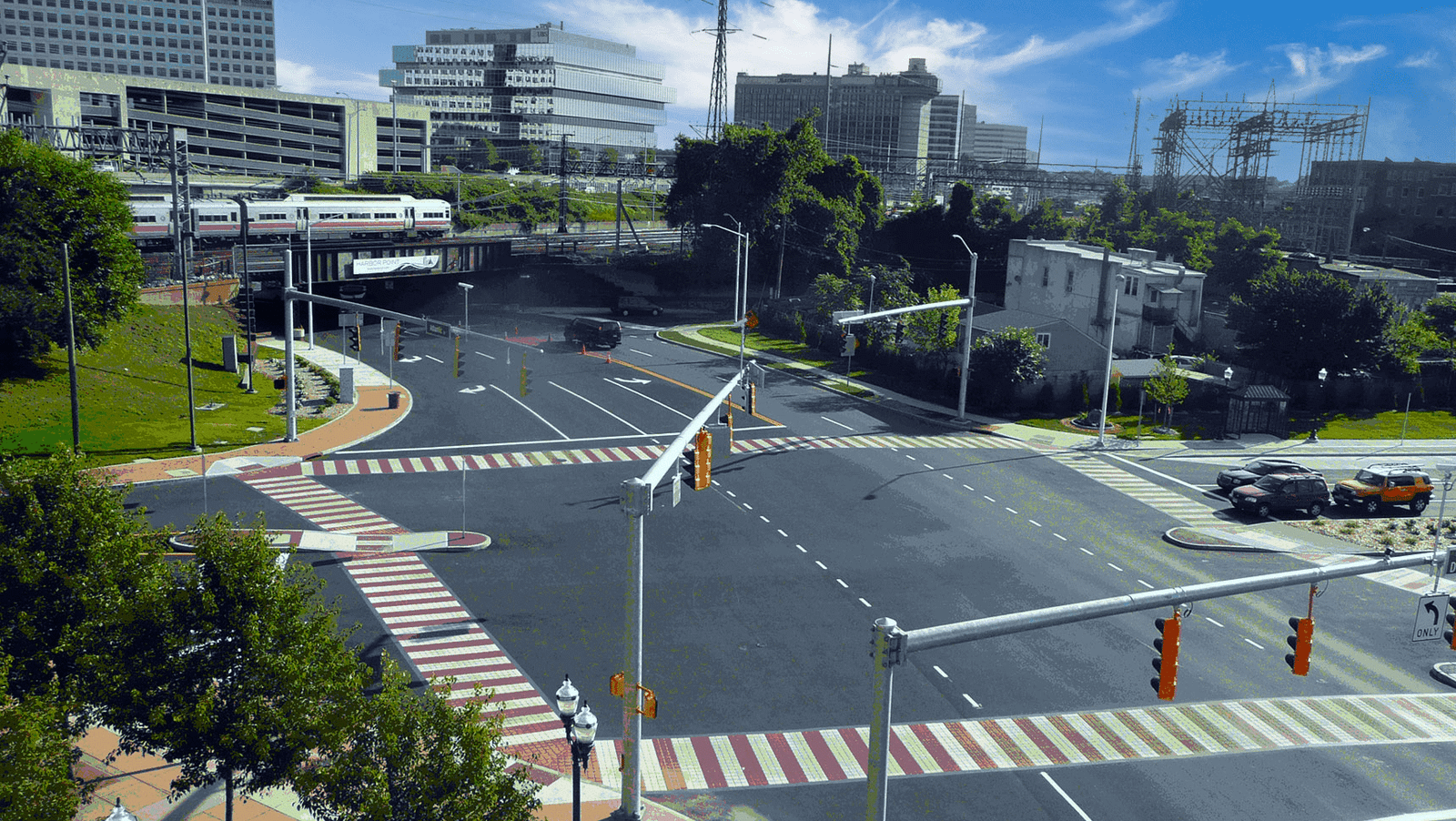
A familiar scene plays out in city budget meetings. A corridor is congested, residents are annoyed, and the proposal on the table is a hardware refresh: new signal heads, new cabinets, maybe a new pole. Sometimes that is exactly right. But a surprising amount of delay is not a hardware problem at all. It is a timing problem, and the evidence on what it costs is stronger than most people expect.
How much delay is simply bad timing?
The Federal Highway Administration’s Every Day Counts programme puts it bluntly: outdated signal timing accounts for more than 10 percent of all traffic delay and congestion on major routes. The traditional fix is retiming, in which engineers collect traffic counts by hand and rebuild the timing plans. According to a U.S. DOT intelligent transportation systems summary, that cycle often repeats only every three to five years, while traffic patterns change much faster than that.
Two older state programmes show what systematic retiming can deliver. A U.S. DOT lessons learned document reports that a Texas signal timing programme achieved a 62 to 1 benefit-cost ratio, with 24.6 percent less delay, 9.1 percent less fuel use and 14.2 percent fewer stops. California’s fuel efficient signal management programme showed 17 to 1, with 14 percent less delay, 8 percent less fuel use and 13 percent fewer stops. These are programme level averages from earlier decades, so they should be read as order of magnitude evidence rather than a forecast for any one corridor. Even so, they show how much value can sit in timing alone.
Three levels of signal operation
| Approach | How timing is set | Typical update frequency | Best suited to |
| Fixed time | One plan or a few time of day plans stored in the controller | Manual retiming, often every few years | Stable, predictable demand |
| Time of day with scheduled retiming | Plans tuned from periodic counts | Every three to five years in traditional practice | Corridors with regular weekday patterns |
| Adaptive signal control | Software adjusts green splits and offsets from live detector data | Every few minutes | Arterials with variable, unpredictable demand |
FHWA describes adaptive signal control technology as adjusting the timing of red, yellow and green lights to match changing traffic. It lists systems such as SCOOT, SCATS, RHODES, OPAC and ACS Lite as examples, and states that on average adaptive control improves travel time by more than 10 percent. A separate ITS benefits summary adds that adaptive control reacts to crashes, special events and road construction, which a fixed schedule cannot do.
The caveat is stated in the same material. The size of the benefit depends on the corridor. Adaptive control is most effective where demand varies from day to day, and much less compelling on a road whose traffic is already regular.
Where hardware quietly decides the outcome
This is where the timing versus hardware framing breaks down. Adaptive control is not software floating above the street. It needs detectors that report vehicles accurately, controllers capable of accepting new timing from a central system, and communications that keep the intersection reachable. If any of those is weak, the algorithm is working from bad information.
That makes the question of who supplies the equipment more than a procurement detail. Product ranges differ in how much of this stack a single supplier covers. The catalogue of one traffic signal company, for example, lists fixed time, networked and adaptive coordinated controllers alongside video and wireless vehicle detectors, which illustrates how the controller and the sensor layer are often specified together. Agencies still need to confirm interoperability with their own central system, since that is where integration problems usually surface.
A sensible order of operations
- Audit timing first. If plans are more than a few years old, retiming is likely the cheapest improvement available.
- Check detection. Faulty loops or misaimed cameras make both retiming and adaptive control less effective.
- Consider adaptive control only where demand varies. Corridors serving events, schools, ports or irregular commuter surges are the strongest candidates.
- Replace hardware when it fails or limits capability. Old controllers that cannot be networked, for instance, block every option above.
Quick answers
Is adaptive signal control always better than fixed timing? No. FHWA describes it as particularly effective on arterials with variable traffic demand. On steady roads the gain is smaller.
How often should signals be retimed? Traditional practice is every three to five years, but the interval depends on how quickly traffic patterns change.
Do these benefit figures apply everywhere? Not directly. The Texas and California results are programme averages from past decades, and adaptive control results vary by corridor.