
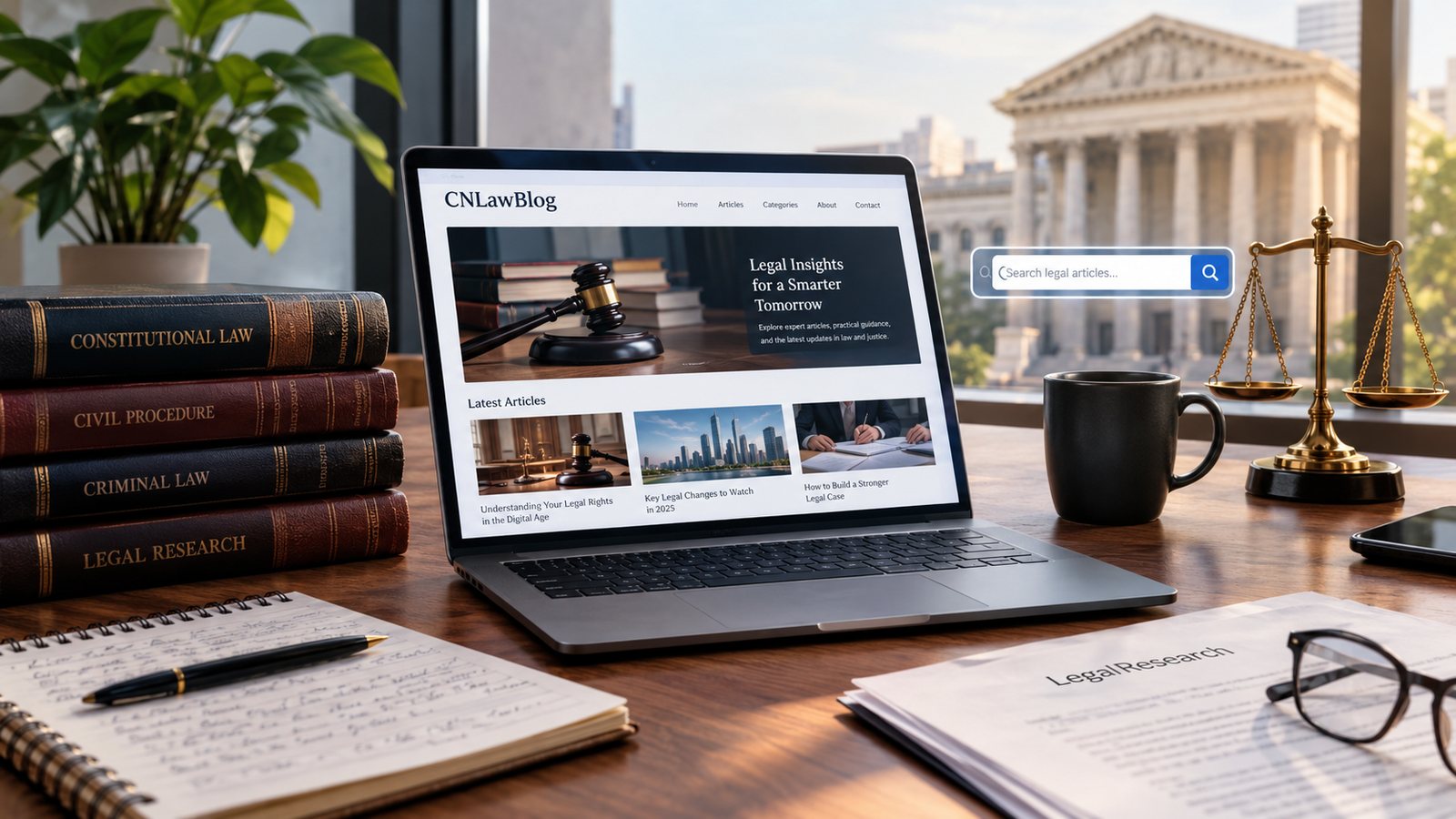
When people search for cnlawblog, they may expect to find a website dedicated entirely to legal information. That assumption is understandable because the name immediately sounds connected to law. However, the platform associated with CNLawBlog.com has a broader identity. It presents itself as an independent digital publication that aims to make complicated subjects easier to understand for everyday readers.
In a crowded online information environment, websites that explain difficult topics in simple language can be genuinely useful. Readers often want quick answers without going through complicated terminology, long reports, or highly technical explanations. CNLawBlog attempts to address that need through structured articles covering law and several other practical areas.
According to its own About page, CNLawBlog describes itself as an independent publication founded in August 2018. Its current coverage includes law, technology, business, finance, education, health, home improvement, real estate, lifestyle, gaming, and related subjects.
What Is CNLawBlog?
CNLawBlog is an online publishing platform designed to provide accessible informational content. The name may suggest a narrow legal focus, but the current website is broader than a traditional law blog. Its homepage describes the publication as an independent source covering multiple areas of interest rather than operating as a government website, court portal, or law firm.
That distinction is important for readers. A website can publish useful legal information without being an official legal authority. When dealing with laws, regulations, contracts, financial decisions, or other high-impact matters, readers should always verify important information against primary sources and, where appropriate, consult a qualified professional.
The basic appeal of CNLawBlog is therefore its accessibility. Instead of assuming that every visitor already understands specialist terminology, its content is designed around explanations, guides, and practical information. This approach can make online research easier, especially for people who are just beginning to explore an unfamiliar subject.
What Topics Does CNLawBlog Cover?
Law remains an important part of the CNLawBlog identity, but it is not the only category represented on the current site. Its publication model has expanded into areas such as technology, business, finance, education, health, real estate, lifestyle, gaming, and home improvement.
This broad approach can be useful because readers do not always search for information within one narrow category. Someone researching a business issue may also need information about finance or technology. Likewise, a homeowner may be interested in legal, real estate, or home improvement topics at different stages of a project.
The variety also means readers should look at each article individually rather than assuming every page has the same level of expertise. A general informational article can be a useful starting point, while specialised legal, medical, financial, or technical questions may require stronger primary sources and professional guidance.
Why People Search for CNLawBlog
The keyword cnlawblog can represent several different search intentions. Some users may simply want to reach the website. Others may be trying to understand what the platform is, what subjects it covers, or whether its content is useful for research.
There is also some potential confusion because similarly named websites and publications appear in search results. For example, a separate publication known as China Law Blog is associated with Harris Sliwoski and has a different identity and focus. That means readers should check the exact domain before assuming that two similarly named websites belong to the same organisation.
Search intent matters because the best result for a navigational query is usually different from the best result for a research query. Someone searching specifically for CNLawBlog.com may simply want the official website, while someone searching for information about CNLawBlog may want an explanation, review, or background guide.
How CNLawBlog Makes Information Easier to Understand
One of the main ideas behind CNLawBlog is accessibility. Legal and professional subjects can become difficult when explanations are filled with technical terminology. A reader who is unfamiliar with the subject may understand the individual words but still struggle to understand the bigger picture.
A well-structured article solves part of this problem by starting with the basic concept and gradually moving toward practical details. Clear headings, short paragraphs, examples, and straightforward explanations can make information easier to scan on both desktop and mobile devices.
This approach is particularly useful for informational searches. Readers often arrive on a page because they have a specific question. If the article answers that question early and then provides useful context, the visitor can decide whether they need deeper research or professional assistance.
Is CNLawBlog an Official Legal Authority?
This is one of the most important questions to consider. CNLawBlog should not automatically be treated as an official government legal database, court, regulatory agency, or law firm simply because its name contains the word “law.”
The current CNLawBlog.com About page identifies the website as an independent digital publication. Its stated purpose is to make information accessible and understandable rather than to function as a government or judicial authority.
That does not mean informational articles are useless. They can provide background, explain terminology, and help readers identify questions they need to investigate further. However, legal decisions can have serious consequences, so the safest approach is to verify important claims through official legislation, court documents, regulatory websites, or qualified legal professionals.
What Makes an Online Information Source More Useful?
Readers should look beyond a website’s name when deciding whether an article is useful. A strong informational page should clearly explain its subject, avoid exaggerated claims, use relevant evidence, and give readers enough context to understand the topic.
Author transparency can also matter. Knowing who wrote an article, when it was published, and whether it has been updated gives readers additional context. For specialised subjects, author qualifications and references can be especially important.
Another useful habit is comparison. If a CNLawBlog article discusses a legal rule, for example, readers can compare the explanation with the relevant government or official legal source. This does not make the article unnecessary. Instead, it turns the article into a starting point for better research.
CNLawBlog and the Importance of Clear Digital Publishing
The growth of websites like CNLawBlog reflects a wider change in how people consume information. Readers increasingly use search engines to learn about subjects that were once researched through books, professional publications, or specialist databases.
That creates an opportunity for publishers. A website can reach a much wider audience when it explains complicated subjects in a clear and practical format. But wider reach also creates a responsibility to avoid misleading claims, unnecessary keyword repetition, and content that exists only to attract search traffic.
Google’s current Search guidance emphasises descriptive titles, useful content, clear page structure, and avoiding keyword stuffing. Google also warns against scaled content created primarily to manipulate rankings rather than provide value to users.
For a publication covering sensitive subjects such as law and finance, quality therefore matters more than simply publishing more pages. Readers benefit most when content is original, accurate, transparent, and genuinely helpful.
How to Use CNLawBlog Responsibly
The best way to use CNLawBlog is as an informational resource rather than automatically treating every article as professional advice. Start with the article that matches your question, identify the main points, and then determine whether the subject requires further verification.
For general learning, this approach can save time. A well-written article may introduce unfamiliar terminology, explain the background, and help you understand which questions to ask next. That can be especially valuable when a subject initially seems confusing.
For decisions involving legal rights, financial commitments, health, contracts, business compliance, or other significant consequences, take the extra step of checking authoritative sources. An online article can provide context, but it should not replace professional advice when the circumstances require it.
Final Thoughts on CNLawBlog
CNLawBlog is best understood as an independent online publication with a broader content focus than its name might initially suggest. While law is part of its identity, the current CNLawBlog.com platform also covers technology, business, finance, education, health, real estate, lifestyle, gaming, and other practical subjects.
For readers, the main advantage is accessibility. Complex subjects can be easier to approach when they are explained in straightforward language and organised into useful sections. At the same time, readers should understand the difference between an informational website and an official authority.
If you are researching cnlawblog, check the exact domain, read the article in context, look at its author and supporting information, and verify important claims through reliable primary sources. Used this way, CNLawBlog can be a useful starting point for online research while helping readers develop a more informed approach to digital information.
You May Also Raed: Stealthgram