
Cajun Food Near Me: How to Find the Best Gumbo, Jambalaya and Crawfish
If you have typed cajun food near me into your phone, you are looking for bold, hearty Louisiana cooking, and this guide will help you find it, order with confidence, and know what makes the real thing special. Cajun food is the rustic, flavour-packed cuisine of Louisiana’s Acadian people, built around dark roux, the “holy trinity” of onion, bell pepper, and celery, and generous seasoning. It is warm, communal food, often cooked in one big pot and shared at a crowded table, and once you have tasted a proper gumbo or a crawfish boil, you will understand why people travel hundreds of miles for it.
The good news is that you do not need to be in Louisiana to eat well, because Cajun restaurants, food trucks, and pop-up kitchens now appear in cities across the United States and beyond. The challenge is telling a genuinely good Cajun kitchen from a place that simply adds cayenne to a menu and calls it Louisiana cooking, and that is exactly what this guide is for. Below you will find the dishes to look for, the difference between Cajun and Creole cooking, practical search tips, and the basics of cooking Cajun food at home.
What Is Cajun Food?
Cajun food is the cooking of the Acadians, French-speaking settlers who were exiled from Canada in the eighteenth century and made new homes in the swamps and prairies of south-west Louisiana. Life there was hard and the ingredients were humble, so Cajun cooking grew up around resourcefulness: using every part of the animal, stretching meals with rice, and turning local game, seafood, and garden vegetables into dishes that could feed a large family from a single pot. That history is still visible in the food today, which is rustic rather than refined, generous rather than delicate, and built for sharing rather than for showing off.
The flavours of Cajun cooking come from a few foundations that appear again and again, and learning them will help you recognise the real thing wherever you eat it. The first is a dark roux, flour and fat cooked slowly until it turns the colour of milk chocolate, which gives gumbo and étouffée their deep, nutty richness. The second is the “holy trinity” of chopped onion, green bell pepper, and celery, which forms the base of most savoury dishes, much as onion, carrot, and celery do in French cooking. The third is seasoning: cayenne, paprika, garlic, and black pepper layered through the dish, so that the heat builds gently rather than hitting all at once. When someone searches for cajun food near me, this is the flavour they are hoping to find.
What Are the Signature Cajun Dishes You Must Try?
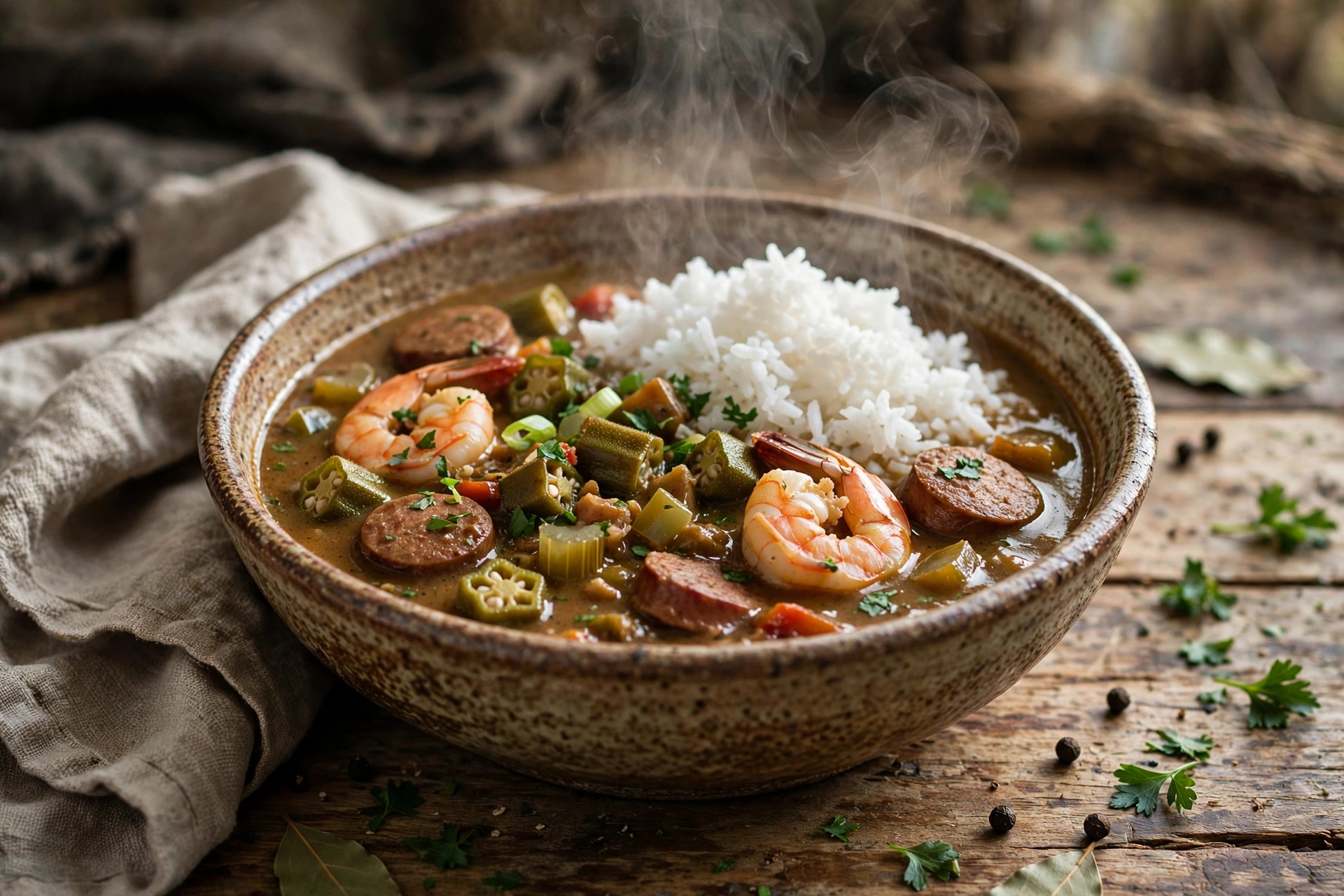
Gumbo is the dish most people think of first, and it is often called Louisiana’s signature dish, because a single bowl contains almost everything Cajun cooking stands for. It is a thick, rich stew built on a dark roux and the holy trinity, filled with chicken and andouille sausage or with seafood such as shrimp and crab, and served over white rice. Okra is sometimes added as a thickener, and a little filé powder, made from dried sassafras leaves, is often sprinkled on top. Every family and every restaurant has its own version, and Cajun gumbo is generally darker, richer, and made without tomatoes, which is one of the marks that sets it apart from some Creole versions.
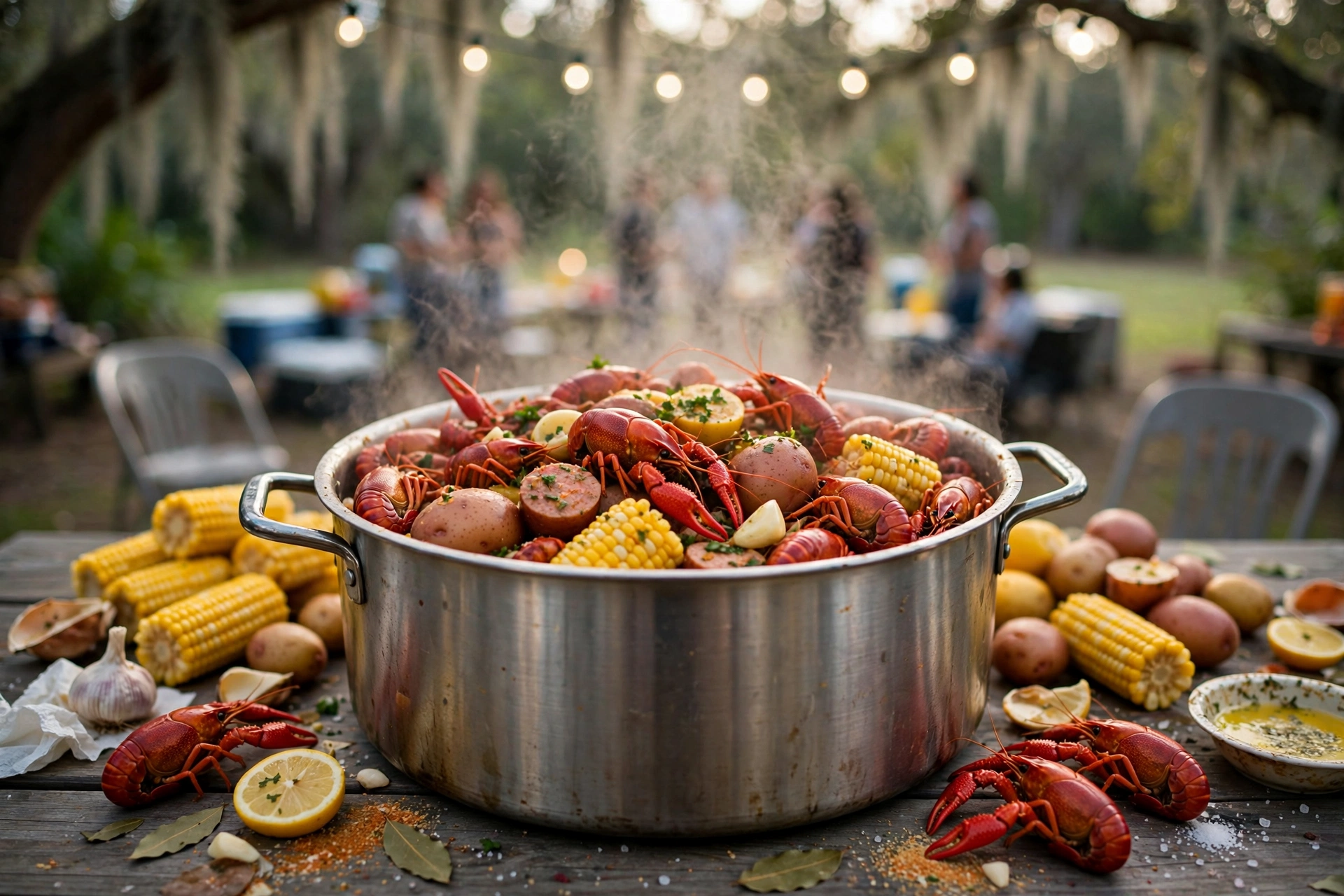
Jambalaya is the second great one-pot dish, a rice dish cooked with chicken, andouille sausage, the holy trinity, and Cajun seasoning, all simmered together so that the rice absorbs the flavour of everything in the pot. Cajun jambalaya is usually made without tomatoes, giving it a brown, smoky character, while the town of Gonzales in Louisiana is known as the world capital of jambalaya and holds a jambalaya festival every May. Étouffée, usually made with crawfish or shrimp smothered in a rich, buttery sauce and served over rice, is another classic, and boudin — a sausage of pork, rice, and spices, sometimes served as deep-fried boudin balls — is the snack that Louisianans reach for on the road. Red beans and rice, traditionally cooked on Mondays, and a crawfish boil, a festive outdoor feast of boiled crawfish with corn and potatoes, complete the list of dishes every newcomer should try. You can read more on Lonely Planet’s guide to what to eat in Louisiana.
Cajun vs Creole: What’s the Difference?
Cajun and Creole cooking are often confused, and the confusion is understandable, because both come from Louisiana, both use the holy trinity, and both appear on the same menus. The difference is really a difference of history and of place: Cajun cooking comes from the Acadian exiles who settled in rural south-west Louisiana, while Creole cooking developed in New Orleans among a mix of French, Spanish, African, and Caribbean influences. Cajun food is often described as country cooking, while Creole food is often described as city cooking, and that simple contrast explains a great deal about how each one tastes.
In practice, the differences show up in the ingredients and in the richness of the dishes. Cajun cooking tends to be simpler and more rustic, built on pork, game, and seafood, with a dark roux and no tomatoes in dishes such as gumbo and jambalaya. Creole cooking tends to be richer and more varied, using tomatoes, butter, and cream more freely, and drawing on a wider range of influences, including Caribbean and African flavours. The two traditions have borrowed from each other for generations, so the line between them is not always sharp, but knowing the distinction will help you read a menu with confidence and understand why two gumbos can taste quite different.
How to Find Good Cajun Food Near You
Finding good cajun food near me starts with a search, but the way you search matters, because a generic search will show you every restaurant that mentions Louisiana, whether the food is authentic or not. Start by searching for the specific dishes as well as the cuisine, using phrases such as “gumbo near me”, “crawfish boil near me”, or “boudin near me”, and compare the results, because a restaurant that serves several genuine Cajun dishes is a better bet than one that lists a single token item. Check the restaurant’s own menu and photos, and look for the signs of real Cajun cooking — dark roux gumbo, andouille sausage, crawfish étouffée, and red beans and rice — rather than a menu that only offers generic “Cajun-spiced” chicken.
Reviews are your next best tool, and the most useful reviews are the ones that mention specific dishes rather than general praise. Look for reviewers who talk about the gumbo’s roux, the spice level of the jambalaya, or the freshness of the crawfish, and pay attention to reviewers who say they are from Louisiana or who compare the food to what they ate there. Local food groups on social media can also help, because a recommendation from someone who grew up with Cajun food carries more weight than a star rating alone. If you are travelling, the best hunting grounds are Louisiana itself, especially Lafayette, Breaux Bridge, and Lake Charles, and the wider Gulf Coast, where Cajun cooking is part of everyday life. You can read more in Cajun Food Tours’ guide to the most popular Cajun dishes.
What to Order the First Time You Try Cajun Food
If you are trying Cajun food for the first time, the safest and most rewarding order is a bowl of gumbo, because it gives you the fullest picture of the cuisine in a single dish. Choose chicken and andouille sausage gumbo if you prefer something hearty and smoky, or seafood gumbo if you want to taste the Gulf, and eat it over rice with a little hot sauce on the side so you can adjust the heat yourself. A cup rather than a bowl is a sensible choice if you plan to try more than one dish, and many restaurants offer a combination plate or a sampler that lets you taste gumbo, jambalaya, and étouffée together.
For a second dish, jambalaya is the natural choice, because it shows off the one-pot rice tradition and the smoky flavour of andouille sausage, and it is usually milder than people expect. If crawfish is in season, usually from February through to mid-June, a crawfish boil is the most memorable experience of all, because it is as much a social occasion as a meal, with everyone peeling crawfish at a table covered in newspaper. Ask your server what they recommend, tell them it is your first time, and mention your spice tolerance honestly, because a good Cajun kitchen would rather adjust the heat than watch a newcomer struggle through a dish that is too hot to enjoy.
Signs of an Authentic Cajun Restaurant
An authentic Cajun restaurant usually gives itself away before the food even arrives, because the signs are visible in the menu, the room, and the way the staff talk about the dishes. The menu should name real Cajun dishes — gumbo, jambalaya, étouffée, boudin, red beans and rice — and describe them with specifics such as dark roux, andouille sausage, and crawfish, rather than vague words such as “Louisiana style” or “Cajun-spiced”. The kitchen should be confident about spice, offering heat as part of the dish rather than as an afterthought, and the staff should be able to tell you what is in the gumbo and where the crawfish comes from.
The atmosphere matters too, although it is not a guarantee on its own. Many genuine Cajun restaurants are casual, noisy, family-run places where the portions are generous and the food arrives in big bowls meant for sharing, and live music or a community feel is a good sign. Be cautious of places where the menu is dominated by generic fried food with a Cajun label, where the gumbo is thin and pale, or where no one can explain the difference between Cajun and Creole cooking. A restaurant does not need to be in Louisiana to be authentic, and searching for cajun food near me can turn up excellent kitchens far from the bayou, but the best ones will always show their knowledge in the details.
Cooking Cajun Food at Home: The Basics
Cooking Cajun food at home is easier than it looks, and it starts with three skills that every Cajun cook learns first: making a roux, building the holy trinity, and seasoning with confidence. To make a roux, cook equal parts flour and oil or butter in a heavy pot over a medium heat, stirring constantly, until it turns the colour of peanut butter for a lighter roux or dark chocolate for a gumbo roux, and be patient, because a rushed roux will burn and a burnt roux cannot be saved. Add the chopped onion, bell pepper, and celery to the hot roux, let them soften, and you have the base for gumbo, étouffée, and many other dishes.
Seasoning is the second skill, and it is worth buying a good Cajun seasoning blend or making your own from paprika, cayenne, garlic powder, onion powder, black pepper, and dried herbs. Season in layers, tasting as you go, and remember that the heat should build gently rather than overwhelm the dish. Start with a simple recipe, such as red beans and rice or a chicken and sausage jambalaya, because both are forgiving and both teach the core techniques. Serve the food family style, with rice, hot sauce, and French bread on the table, and you will have the spirit of Cajun cooking even before you have mastered the details.
Conclusion
Cajun food is one of America’s great regional cuisines, and the search for cajun food near me is really a search for a particular kind of warmth: dark roux, the holy trinity, generous seasoning, and food that is meant to be shared. Whether you find it in a small family restaurant, at a food truck, or in your own kitchen, the dishes to look for are the same — gumbo, jambalaya, étouffée, boudin, red beans and rice, and a crawfish boil when the season is right. Knowing the difference between Cajun and Creole cooking, and knowing the signs of an authentic kitchen, will help you choose well wherever you live.
The best way to learn Cajun food is to taste it, so use the tips in this guide, read the reviews, ask questions, and order boldly on your first visit. Start with gumbo, add jambalaya, and save room for whatever the kitchen is proudest of, because a good Cajun cook will always have a dish they love to recommend. And if no restaurant near you measures up, try cooking it at home, because a pot of gumbo shared with friends is the truest taste of Louisiana there is.
What is Cajun food?
Cajun food is the traditional cooking of Louisiana’s Acadian people, French-speaking settlers who arrived in south-west Louisiana in the eighteenth century and built a cuisine around local ingredients, family gatherings, and the belief that a good meal should be shared generously with everyone at the table. Its foundations are a dark roux, the “holy trinity” of onion, bell pepper, and celery, and bold seasoning with cayenne, paprika, and garlic. Signature dishes include gumbo, jambalaya, crawfish étouffée, boudin, red beans and rice, and crawfish boils, and the food is known for being hearty, rustic, and made for sharing.
Is Cajun food always spicy?
Cajun food is flavourful and often spicy, but it is not always hot, and the idea that all Cajun food burns your mouth is a common misunderstanding. Good Cajun cooking layers seasoning so that the flavour comes first and the heat builds gently, and many dishes, such as red beans and rice or a mild chicken gumbo, are gentle enough for most people. If you are unsure, ask the restaurant about the spice level, because a good kitchen will adjust the heat or suggest a milder dish, and searching for cajun food near me is easier when you know what level of spice you enjoy.
What is the difference between Cajun and Creole food?
Cajun food comes from the Acadian settlers of rural south-west Louisiana, while Creole food developed in New Orleans from a mix of French, Spanish, African, and Caribbean influences. Cajun cooking is usually simpler and more rustic, with dark roux and no tomatoes in gumbo and jambalaya, while Creole cooking is richer and more varied, often using tomatoes, butter, and cream. Both traditions share the holy trinity of onion, bell pepper, and celery, and they have influenced each other for generations, so the line between them is not always sharp.
What should I order first at a Cajun restaurant?
If it is your first time, start with a bowl of gumbo, because it gives you the fullest taste of Cajun cooking in a single dish, with its dark roux, holy trinity, and choice of chicken and sausage or seafood. A small cup is a good choice if you want to try more than one dish, and jambalaya or crawfish étouffée make excellent second dishes. If crawfish is in season, a crawfish boil is the most memorable option, and asking your server for a recommendation is always a good idea when you are new to the cuisine.