
What’s the Difference Between Catholic and Christian? A Clear, Respectful Guide
The short answer is simple: Catholics are Christians, and the question of what’s the difference between catholic and christian is really a question about branches of one faith rather than two separate religions. Christianity is the wider family of faith centred on Jesus Christ, while Catholicism is its largest and oldest branch, led by the Pope in Rome. When most people ask this question, they usually mean how the Catholic Church differs from other Christian churches, especially Protestant ones. This guide explains those differences clearly and respectfully, without taking sides, so that you can understand what is shared and what is distinct.
It helps to picture Christianity as a large family tree with three main branches: Catholicism, Eastern Orthodoxy, and Protestantism. All three branches share the same roots in the life, death, and resurrection of Jesus Christ, and all three read the Bible as sacred Scripture. The differences sit in how each branch understands authority, worship, and the life of faith, and those differences grew over many centuries of history. None of this makes one group Christian and another group not Christian, and this article treats every tradition it describes with the same respect.
Are Catholics Christians?
Yes, Catholics are Christians, and that is the single most important fact to take away from this guide. A Christian is someone who follows Jesus Christ and believes that he is the Son of God, who died and rose again, and Catholic teaching holds all of those beliefs at its very centre. The Catholic Church describes itself as tracing its history back to Jesus and the apostles, and Britannica describes Roman Catholicism as one of the three major branches of Christianity, alongside Eastern Orthodoxy and Protestantism. So the question of what’s the difference between catholic and christian is best understood as asking how one large branch of the family differs from its sister branches.
The confusion usually comes from everyday language rather than from theology, because in many English-speaking countries people say “Catholic” and “Christian” as though they were two separate labels. What they normally mean is “Catholic” on one side and “Protestant” on the other, since Protestant churches are often simply called Christian churches in casual conversation. This habit is understandable, but it is misleading, because it quietly suggests that Catholics sit outside Christianity when in fact they form its largest single branch, with about 1.3 billion members worldwide according to Britannica, as of November 2026.
What Do Catholics and Other Christians Share?
Catholics and other Christians share far more than they disagree about, and that shared ground is worth naming first because it puts every later difference in its proper perspective. All Christians believe in one God in three persons — Father, Son, and Holy Spirit — a belief known as the Trinity, and all Christians hold that Jesus Christ is the Son of God who became human, died on the cross, and rose again. They all regard the Bible as the written Word of God, they all practise baptism, they all share bread and wine in memory of Christ, and they all look forward to eternal life through him.
Beyond those central beliefs, Catholics and other Christians also share the same moral vision in most of its essentials, including love of neighbour, care for the poor, honesty, forgiveness, and prayer. They read many of the same prayers, including the Lord’s Prayer, they celebrate the same great festivals of Christmas and Easter, and they draw on the same early Christian creeds, such as the Nicene Creed, which was agreed in the fourth century. When a Catholic and a Protestant sit down to talk about who Jesus is and what he did, they will agree on far more than they dispute, and that common ground is the reason dialogue between the traditions has grown so much in recent decades.
Where Does Authority Come From in Each Tradition?
Authority is the deepest difference between the Catholic Church and most Protestant churches, because it shapes how each side decides what is true and who gets to decide it. Catholics hold that authority rests on three connected foundations: Sacred Scripture, Sacred Tradition passed down from the apostles, and the Magisterium, which is the teaching office of the Pope and the bishops. The Pope, as Bishop of Rome, is seen as the successor of the apostle Peter, and Catholics believe that Christ gave Peter a special role in leading the Church, a reading grounded in the words of Matthew 16:18.
Most Protestant churches, by contrast, hold to the principle of sola scriptura, which means “Scripture alone”, and they teach that the Bible is the final authority for faith and practice. Tradition and church leaders are respected, but their teaching must always be tested against Scripture, and no single human leader holds authority over all Protestant churches. That is why Protestantism is not one church but a family of many denominations, including Lutherans, Anglicans, Baptists, Methodists, and Pentecostals, each governing itself. The Catholic Church, meanwhile, is a single worldwide communion under the Pope, who as of November 2026 is Pope Leo XIV, elected in May 2025 according to Britannica.
How Do the Sacraments Differ?
The sacraments are another clear difference, and they follow naturally from the question of authority, because each tradition counts them differently. The Catholic Church recognises seven sacraments: Baptism, Confirmation, the Eucharist, Penance, Anointing of the Sick, Holy Orders, and Matrimony, and the Catechism of the Catholic Church describes them as effective signs of grace instituted by Christ and entrusted to the Church. Catholics believe these sacraments genuinely convey God’s grace to the person who receives them with faith, and three of them — Baptism, Confirmation, and Holy Orders — are received only once because they leave a permanent mark.
Most Protestant churches recognise only two sacraments, Baptism and the Eucharist, which is also called Communion or the Lord’s Supper, and they generally understand them differently from Catholics. Many Protestants see Baptism and Communion as ordinances commanded by Christ and as powerful symbols of faith, rather than as channels that convey grace in the Catholic sense, although views vary widely between denominations. The Catholic understanding of the Eucharist is also distinctive: Catholics believe that the bread and wine truly become the body and blood of Christ, a teaching called transubstantiation, while most Protestants understand Christ to be present spiritually or see the meal as a memorial. These are sincere theological differences, and they are the reason a Protestant visitor to a Catholic Mass is normally not invited to receive Communion, and vice versa.
What About Mary, the Saints, and Purgatory?
Mary, the saints, and purgatory are three topics that often surprise people who are new to this conversation, because they are central to Catholic life but play little or no role in most Protestant churches. Catholics honour Mary, the mother of Jesus, with a special devotion, and they believe in two teachings about her that Protestants do not share: the Immaculate Conception, meaning Mary was conceived without original sin, and the Assumption, meaning she was taken body and soul into heaven. Catholics also ask the saints, men and women recognised for holy lives, to pray for them, just as one might ask a friend to pray, and the process of recognising a saint is called canonisation.
Protestants, on the other hand, honour Mary as the mother of Jesus and as an example of faith, but they do not pray to her or to the saints, because they believe prayer should be directed to God alone and that Christ is the only mediator between God and humanity. The same pattern applies to purgatory, which Catholics understand as a state of purification after death for those who die in God’s friendship but still need to be made fully ready for heaven. Most Protestants do not accept the teaching of purgatory, holding instead that believers pass directly into God’s presence through faith in Christ. These differences are real and deeply felt, yet they grow out of the same love for Christ and the same hope of eternal life.
How Did the Split Happen? A Short History
The story of how one Christian Church became several branches is a long one, but two great turning points explain most of what we see today. The first was the Great Schism of 1054, when the Christian world divided between the Catholic West, centred on Rome, and the Orthodox East, centred on Constantinople, largely over the authority of the Pope and over differences of language, culture, and theology. The Eastern Orthodox churches remain a distinct branch to this day, sharing much with Catholicism, including seven sacraments and a high view of tradition, while rejecting the authority of the Pope.
The second turning point was the Protestant Reformation of the sixteenth century, when reformers such as Martin Luther challenged what they saw as abuses and errors in the Western Church, most famously by publishing his Ninety-five Theses in 1517. Luther and other reformers questioned the sale of indulgences, the authority of the Pope, and several Catholic teachings, and their movement eventually produced the many Protestant denominations that exist today. The Catholic Church responded with its own renewal at the Council of Trent, and the centuries since have seen both conflict and, more recently, patient dialogue, including the Second Vatican Council of 1962 to 1965, which encouraged Catholics to work and pray with other Christians.
How Do Worship and Daily Life Compare?
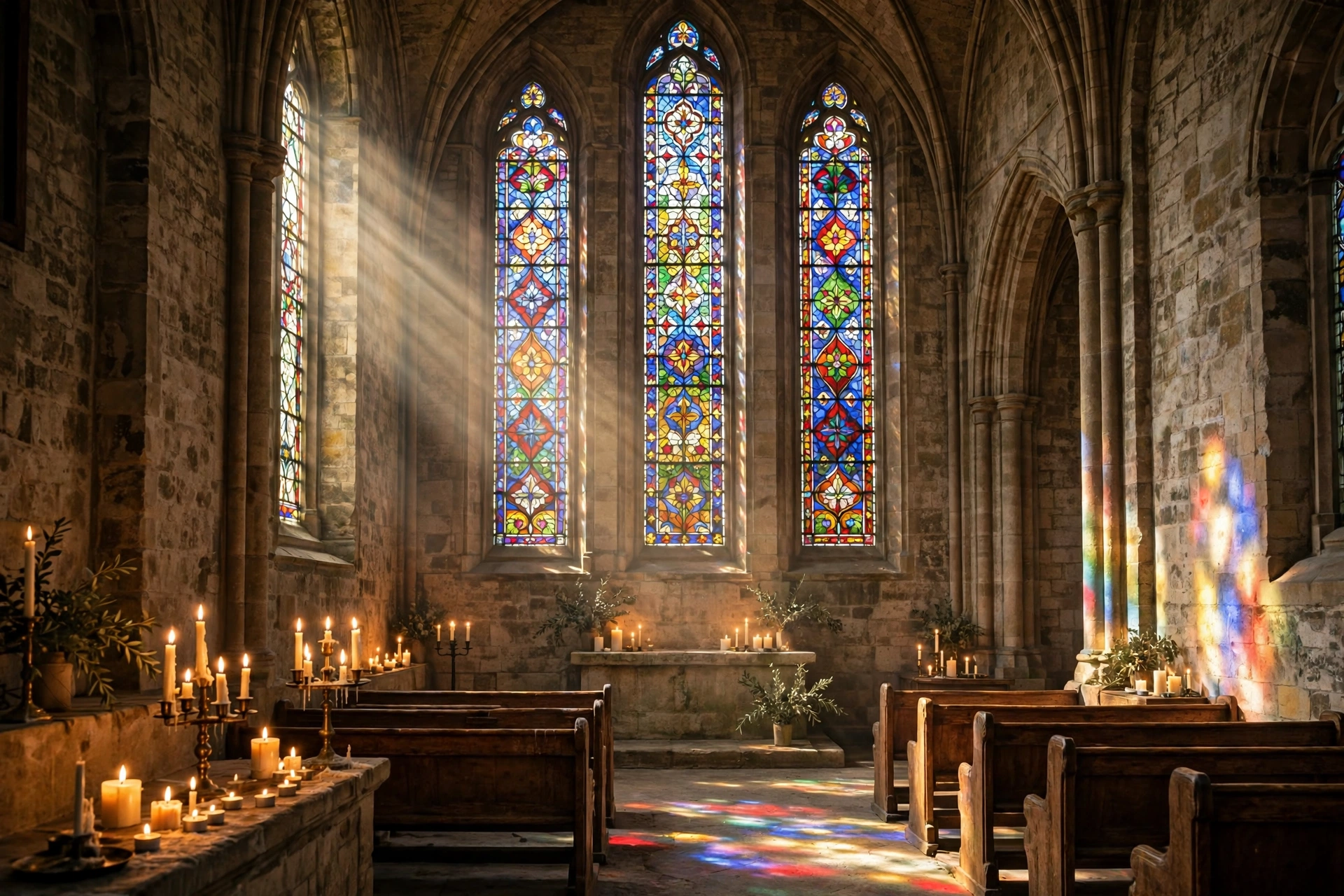
Worship is where the differences become most visible to an ordinary visitor, because the shape of a service tells you a great deal about what a church believes. A Catholic Mass follows the same ordered pattern all over the world, with set prayers, readings from Scripture, a sermon, and the celebration of the Eucharist at its heart, and it is led by an ordained priest wearing vestments in a church often decorated with statues, candles, and stained glass. The rhythm of the liturgical year, with seasons such as Advent and Lent, shapes Catholic life week by week, and the sacraments mark the great moments of life from baptism through marriage to the anointing of the sick.
Protestant worship varies far more from one church to another, which reflects the diversity of the tradition itself. Some Anglican and Lutheran services look very similar to a Catholic Mass, with formal liturgy and robes, while a Baptist or Pentecostal service may be much simpler, centred on preaching, prayer, and sung worship, with communion celebrated less often. Daily life differs in smaller ways too: Catholics may pray the Rosary, go to confession, or observe holy days of obligation, while many Protestants place a stronger emphasis on personal Bible reading and on the sermon as the centre of Sunday worship. For someone wondering about what’s the difference between catholic and christian in everyday life, these visible patterns of worship are usually the first thing they notice.
Conclusion
The heart of the matter is easy to state and worth remembering: Catholics are Christians, and the real question is how the Catholic branch of Christianity differs from its sister branches. They share the same Lord, the same Bible, the same Trinity, and the same hope of salvation through Jesus Christ, and the differences that remain are about authority, the sacraments, the role of Mary and the saints, and the shape of worship. Those differences are genuine, and they matter deeply to the people who hold them, but they exist within one Christian family rather than between two unrelated religions.
If you are exploring faith for yourself, the best next step is a respectful one: visit both a Catholic Mass and a service at another Christian church, read the Bible for yourself, and talk with believers from each tradition about what their faith means to them. You will find that the shared ground is wider than you expected, and that the differences, once understood, make much more sense than they did at first. Whatever tradition you come from, understanding the question of what’s the difference between catholic and christian with patience and honesty is a good way to honour a faith that has shaped the world for two thousand years.
Is Catholicism a separate religion from Christianity?
No, Catholicism is not a separate religion from Christianity, and the question of what’s the difference between catholic and christian is a question about branches within one faith. Catholicism is the largest branch of Christianity, and Catholics believe in Jesus Christ as the Son of God, in the Trinity, and in the Bible as sacred Scripture, just as other Christians do. The differences lie in authority, the sacraments, and certain teachings such as the role of Mary and the saints, but those differences sit inside the Christian family rather than outside it.
Do Catholics read the same Bible as other Christians?
Catholics and other Christians read the same core Bible, but Catholic Bibles contain a few additional books in the Old Testament, known as the deuterocanonical books, which most Protestant Bibles do not include. These books, which include Tobit, Judith, and the Wisdom of Solomon, were part of the ancient Greek translation of the Scriptures and were affirmed by the Catholic Church at the Council of Trent. The New Testament is identical in Catholic and Protestant Bibles, and both traditions regard the Bible as the written Word of God.
Why do Catholics have a Pope and other Christians do not?
Catholics have a Pope because they believe Christ gave the apostle Peter a special leadership role in the Church, and that the Bishop of Rome inherits that role as Peter’s successor. This belief rests on the words of Jesus to Peter in Matthew 16:18, where he says that on this rock he will build his Church, and Catholics understand the Pope as the visible head who preserves unity in faith and morals. Most Protestant churches do not accept this teaching, and they govern themselves through their own leaders, councils, or congregations instead.
Can a Protestant take Communion at a Catholic Mass?
In general, a Protestant visitor is not invited to receive Communion at a Catholic Mass, because the Catholic Church understands Communion as a sign of full unity in faith, including belief in the real presence of Christ in the Eucharist and in the authority of the Church. This is a matter of theology rather than unfriendliness, and visitors are warmly welcome to attend Mass and to receive a blessing instead. The rules vary slightly between churches, so anyone who is unsure should speak with the priest before the service begins.