
Understanding the Connector Hssgamepad and Its Role in Modern Gaming
Getting your gaming gear configured smoothly can make or break an intense gameplay session. When working with specialized gaming controllers, the physical and protocol link known as the connector hssgamepad plays a central role in ensuring your button presses convert into split-second in-game actions. Whether you are running a custom PC rig, a console setup, or a Linux-based gaming station, understanding how this connection operates gives you a noticeable edge in input responsiveness and stability.
Modern controllers rely on specialized interface protocols to bridge the gap between physical switches and operating system input stacks. The connector hssgamepad setup handles high-speed data transmission between the gamepad logic board and host system ports. Unlike generic peripheral connections that prioritize battery saving or basic plug-and-play simplicity, this connection focuses on maintaining sub-millisecond signal delivery, stable voltage output, and active signal shielding against external interference.
For competitive gamers and hardware enthusiasts, ignoring connection parameters often leads to unexplained input dropouts, jittery thumbstick telemetry, or input lag during peak action. Taking the time to understand how the connector hssgamepad manages data packets allows you to optimize operating system polling rates, select the proper physical USB bus lines, and maintain peak controller performance for years to come.
Hardware Specifications and Core Technical Capabilities
Under the hood, the connector hssgamepad architecture is designed to manage high-density input streams without buffering delays. The controller interface utilizes reinforced pin layouts and custom signal controllers that convert analog stick movements, trigger pressure measurements, and digital button clicks into a compact, low-overhead data package. This efficient packet structure ensures that even when multiple buttons are pressed simultaneously, signal collisions are virtually non-existent.
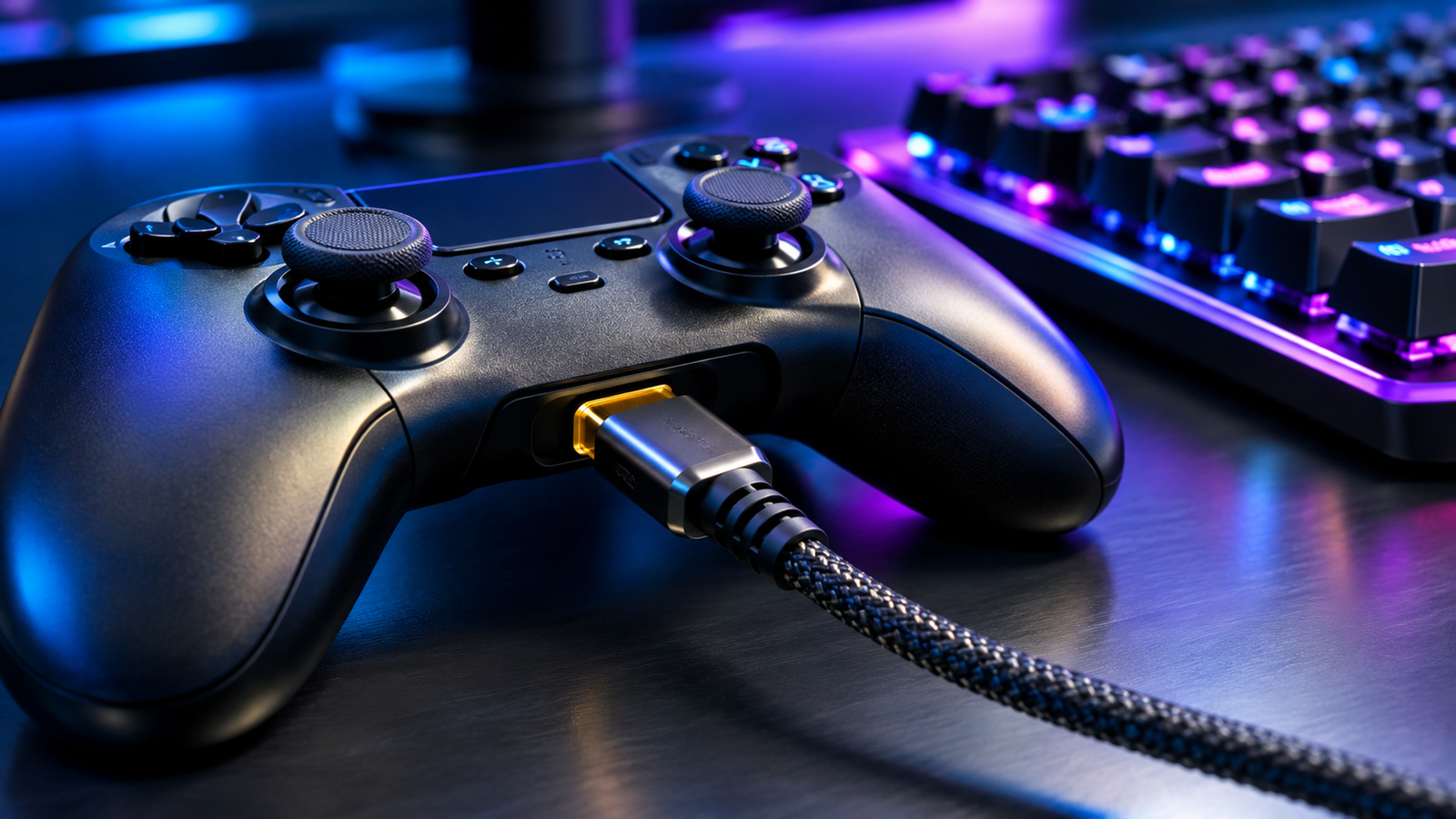
Physical durability is another cornerstone of the connector hssgamepad build. Connectors often feature gold-plated contact points to minimize oxidation and maintain low electrical resistance over thousands of connection cycles. Additionally, high-grade strain relief surrounds the port housing to protect the delicate solder joints on the interior PCB from accidental cable tugs or sudden drops during gaming sessions.
On the data transfer side, the interface supports high polling frequencies ranging from standard 125 Hz up to overclocked 1000 Hz polling rates on compatible platforms. This means your system receives updated gamepad coordinates every single millisecond. The robust bus bandwidth also allows advanced features like multi-zone haptic feedback rumble, dynamic trigger resistance, and integrated headset audio channels to transmit concurrently without choking the primary button input bandwidth.
Step-by-Step Installation and Initial Configuration Guide
Setting up your device with a connector hssgamepad interface is straightforward once you know the optimal sequence. Begin by connecting the device directly to a high-speed motherboard USB port rather than an unpowered external USB hub. Powered direct connections supply stable 5V rail power, ensuring that internal sensors, LEDs, and haptic motors receive consistent voltage without causing input disconnects.
Once plugged in, your operating system will detect the gamepad device under Human Interface Devices or custom Xbox/DirectInput controller categories. It is best practice to open your system’s device manager or gamepad configuration panel immediately to verify that all axis inputs respond smoothly. If your host system supports vendor-specific driver packages, installing them before launching demanding games unlocks advanced feature sets like custom dead-zone adjustments and button remapping profiles.
The final step in initial setup involves calibrating the analog thumbsticks and analog triggers. Open your operating system’s controller properties window, initiate the calibration wizard, and rotate both thumbsticks through their full range of motion. This process maps the physical min-max electrical resistance of your specific connector hssgamepad unit to software coordinate space, eliminating drift and dead-zone dead spots right out of the box.
Optimizing Connection Stability and Reducing Input Lag
Achieving ultra-low input latency requires subtle adjustments to both hardware placement and software power management. First, inspect your motherboard’s USB topology and try plugging the connector hssgamepad into a dedicated USB controller host port, preferably on the rear I/O panel. Avoiding shared USB hubs prevents host controller bandwidth splitting, which can introduce microscopic frame-delay spikes during fast button sequences.
Next, address operating system power management settings that silently throttle peripheral ports. In Windows or Linux power settings, disable USB selective suspend and peripheral power saving modes. When power management is left on default settings, the OS may briefly lower port voltage during idle moments, causing a brief micro-stutter or delayed response when you suddenly press a button after standing still in-game.
Finally, consider utilizing specialized polling rate utility tools if you play fast-paced fighting games or competitive first-person shooters. Increasing the communication frequency between the connector hssgamepad driver and your display engine narrows the gap between physical finger movement and rendered frame action. Paired with high-refresh-rate monitors, this optimization delivers a crisp, instantaneous control feel that elevated competitive play demands.
Troubleshooting Common Connector Hssgamepad Connectivity Issues
Even top-tier peripherals can encounter occasional glitches, usually stemming from software driver overlaps or port conflicts. If your system continuously plays the device disconnect sound or fails to recognize the controller, the first step is clearing stale driver entries. Open Device Manager, enable hidden devices, and remove duplicate gamepad profiles before reconnecting the connector hssgamepad.
Physical connection drops are another common headache, often caused by loose port tolerance or dust accumulation inside port housings. Inspect the connector points under bright light for debris or bent pins. Cleaning contact points gently with a drop of isopropyl alcohol on a soft microfiber pick restores proper electrical contact and resolves erratic power loss issues without needing hardware replacements.
When facing button mapping errors where inputs register as wrong buttons or axes fail to center, software input mappers are usually the culprit. Third-party overlay tools or background emulation software can capture inputs twice, creating conflicting virtual controller instances. Closing redundant background mapping programs and relying on primary native driver settings restores normal input behavior across all title libraries.
Comparing Connector Hssgamepad with Standard Controller Connections
| Feature / Metric | Connector Hssgamepad Protocol | Standard Wireless / Bluetooth | Generic USB DirectInput |
|---|---|---|---|
| Average Latency | 1 ms – 2 ms | 8 ms – 16 ms | 4 ms – 8 ms |
| Polling Rate | Up to 1000 Hz | 125 Hz – 250 Hz | 125 Hz – 500 Hz |
| Signal Stability | Exceptionally High (Zero EMI) | Variable (Subject to 2.4GHz interference) | High |
| Power Delivery | Continuous 5V Rail Power | Battery Dependent | Continuous 5V |
| Advanced Haptics Support | Full Bandwidth Concurrent | Compressed / Limited | Basic Dual-Motor |
As illustrated in the comparison table, choosing a dedicated wired connector hssgamepad structure provides distinct advantages over wireless alternatives. While wireless controllers offer living room movement freedom, they remain susceptible to radio frequency congestion from routers, smartphones, and Bluetooth devices. The physical wire and targeted protocol stack guarantee that signal timing remains rock-solid regardless of surrounding wireless noise.
In addition to latency advantages, direct wired connections eliminate battery degradation concerns entirely. Wireless gamepads gradually lose charge capacity over time, leading to voltage drops that can weaken haptic rumble strength or cause random disconnects late in gaming sessions. The continuous power provided through the connector hssgamepad interface ensures uniform performance from the moment you boot up until you sign off.
Furthermore, driver compatibility across multi-platform environments is significantly cleaner with specialized wired configurations. Operating systems handle physical HID endpoints with native priority, bypassing the complex pairing handshakes, pin codes, and re-connection delays that often complicate multi-device wireless setups.
Advanced Customization and Long-Term Maintenance Practices
To keep your controller running like new over years of heavy use, establish a simple routine maintenance habit. Periodically inspect the cable and connector housing for signs of twisting or excessive tension. When wrapping the cable for storage, avoid winding it tightly around the controller body; instead, use loose figure-eight loops to prevent internal copper wire fatigue near the connector hssgamepad entry point.
On the customization front, taking advantage of software macros and custom response curves elevates your control setup to match specific game genres. For example, applying an S-curve sensitivity profile to thumbsticks gives you smooth, fine-grained aiming adjustments near the dead-zone center while retaining rapid 100% turn speeds at full stick tilt.
Finally, keep your operating system drivers and controller firmware updated. Peripheral manufacturers frequently release minor firmware patches that refine sensor algorithms, fix edge-case game engine incompatibilities, and optimize power draw. Keeping your connector hssgamepad firmware current ensures maximum system compatibility as new games and operating system updates launch.
You May Also Raed: Stealthgram