
If you have been searching for how to use freedoor2.4.6.8 on Mac, you have probably noticed that information about this particular software version is surprisingly inconsistent. Some online guides describe FreeDoor 2.4.6.8 as a lightweight networking or proxy-related utility, while others provide instructions for running it on Windows and suggest alternative methods for Mac users. That makes it important to understand exactly what you have downloaded before trying to run it.
The biggest issue is not simply clicking an installer. You first need to determine whether your copy is a genuine macOS application, a Windows executable, or an older package that requires compatibility software. Current online references do not consistently agree on this point, so the safest approach is to verify the package and then choose the appropriate method for your Mac.
This guide explains the practical steps involved, what to check before installation, how to deal with macOS security warnings, and what to do if the version you have is Windows-only. The goal is to help you use FreeDoor 2.4.6.8 without making unnecessary changes to your Mac or trusting an unknown download.
What Is FreeDoor2.4.6.8?
FreeDoor 2.4.6.8 is commonly described on third-party websites as a networking, proxy, or tunnelling-related utility. Some descriptions associate it with alternative network routing and access to websites or services that may be difficult to reach through a normal connection. However, technical information about this exact release is not consistently documented across the web.
That lack of consistent documentation matters. Several websites describe FreeDoor 2.4.6.8 differently, with some calling it a proxy tool and others making broader claims about security, privacy, or networking. Because of these differences, you should not assume that every file carrying the name “FreeDoor2.4.6.8” is the same software.
In particular, the filename alone does not establish authenticity. An executable called FreeDoor2.4.6.8.exe could be a legitimate older package, a repackaged version, or an unrelated file using the same name. Before learning how to use freedoor2.4.6.8 on Mac, therefore, the first priority should be identifying the package and checking its source.
Check Whether Your FreeDoor Package Supports Mac
The first step is to look at the file you actually downloaded. A native macOS application will normally use a format such as .app, .dmg, or .pkg. If your download contains a Windows executable such as FreeDoor.exe, that is an important indication that you are not dealing with a native Mac application.
This is where many online tutorials become confusing. Some pages claim that FreeDoor 2.4.6.8 is available as a .dmg file and can simply be dragged into Applications. Other recent sources state that the software is primarily Windows-oriented and suggest running the Windows version through Wine or a virtual machine.
Do not download a supposed Mac version simply because a website labels it as “FreeDoor2.4.6.8 for Mac.” Check who published the package, whether the source is trustworthy, whether a checksum or signature is available, and whether the file behaves like a genuine macOS application. This verification step is especially important for older or poorly documented software.
How to Use FreeDoor2.4.6.8 on Mac If You Have a Native Mac Package
If you have independently verified that your copy is a genuine macOS-compatible package, the installation process should follow normal macOS practices. For a .dmg file, open it from Finder and examine what it contains. A conventional Mac application will usually provide an application icon that can be moved to the Applications folder.
After copying the application to Applications, open Finder and select Applications. Locate FreeDoor and attempt to launch it from there rather than repeatedly opening the installer or disk image. Keeping the application in Applications also makes it easier to manage later.
macOS may display a security message when an application has not been recognised by Apple’s normal verification process. Do not automatically bypass such a warning. First confirm where the software came from and whether the file is legitimate. If you have verified the application and macOS still requires confirmation, use the security controls provided by your version of macOS rather than disabling system security globally.
How to Run FreeDoor2.4.6.8 on Mac When It Is Windows-Only
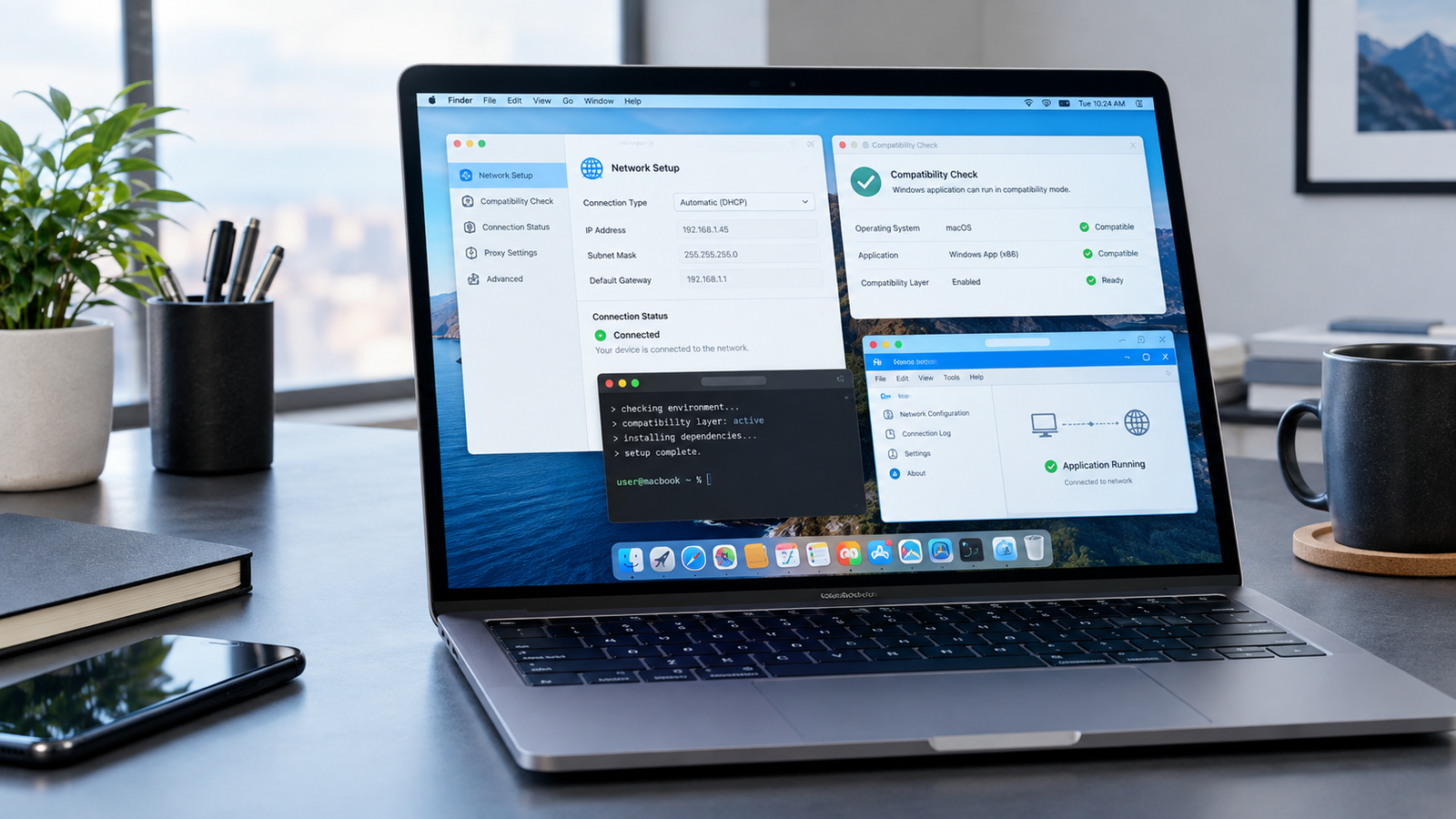
If your copy of FreeDoor 2.4.6.8 is a Windows .exe file, it cannot normally be opened directly like a native Mac application. In that situation, you need a compatibility layer or a Windows environment.
One option discussed by current third-party guides is Wine. Wine can allow some Windows applications to run on macOS without installing a complete Windows desktop. However, compatibility is not guaranteed, particularly with older networking applications that interact with system-level proxy, firewall, or network functions.
Another approach is to use a virtual machine containing Windows. This gives the Windows application a more conventional Windows environment, which can sometimes be easier for older software. The downside is that virtual machines require additional storage, memory, and configuration. For a networking application, you also need to understand how traffic moves between macOS, the virtual machine, and the application itself.
Using Wine as a Possible Mac Workaround
If you decide to test the Windows version through Wine, begin with a clean environment rather than immediately changing your Mac’s global network settings. The purpose of this approach is to establish whether the application itself can run before making broader configuration changes.
Some online guides suggest installing Wine through Homebrew and then launching the Windows executable through Wine. For example, third-party instructions describe a workflow involving Homebrew, Wine, and a command such as wine freedoor2.4.6.8.exe.
However, treat those commands as an example rather than a guaranteed recipe. Wine support varies between macOS versions, Mac hardware architectures, Wine builds, and individual Windows applications. A program that opens successfully may still fail to perform its networking functions correctly.
If FreeDoor starts but does not establish a connection, do not assume that repeatedly changing macOS proxy settings will solve the problem. First check the application’s own logs, status messages, and configuration options. Changing one setting at a time makes troubleshooting considerably easier.
Configure Network or Proxy Settings Carefully
If your FreeDoor package provides proxy or tunnel settings, read the available options carefully before changing anything. Some third-party guides associate FreeDoor with local proxy configuration, but exact ports and connection methods can vary between builds.
Avoid copying a proxy address or port from a random tutorial unless it matches the version and configuration you are actually using. A port mentioned in one guide may belong to a particular build or setup and may not apply to your copy.
It is also useful to record your original network settings before experimenting. If the application changes proxy settings and you later decide to remove it, you will then know what needs to be restored. This is especially useful on a Mac because network configuration can affect multiple applications at once.
After making a configuration change, test the connection before changing anything else. If the connection works, keep a note of the successful settings. If it fails, return to the previous configuration and test another approach rather than changing several variables simultaneously.
How to Check Whether FreeDoor Is Working
Once FreeDoor launches, look for a status indicator, connection message, log, or other information showing whether the application is active. The exact interface can differ depending on the build, so there is no single screen that can be guaranteed for every FreeDoor 2.4.6.8 package.
You can also test normal internet access after establishing a connection. Open a browser and visit a few ordinary websites. If pages stop loading after FreeDoor starts, that is a sign that the connection or proxy configuration needs further investigation.
A successful launch is not necessarily the same thing as successful network routing. An application can open normally while its networking component fails. That is why checking actual connectivity is an important part of learning how to use freedoor2.4.6.8 on Mac.
For privacy-sensitive use, do not assume that a proxy or tunnelling application automatically provides complete anonymity or security. The protection offered depends on how the software works, how traffic is routed, and who operates the remote infrastructure.
Common Problems When Using FreeDoor on Mac
One of the most common problems is trying to open a Windows .exe directly on macOS. If your file is an executable designed for Windows, Finder will not treat it as a native Mac application. You will need a compatible Windows environment or compatibility layer if the application is suitable for that approach.
Another issue is macOS security protection. A downloaded application may trigger a warning because it is unsigned, unnotarised, or otherwise unfamiliar to the operating system. Do not treat every warning as an obstacle that should simply be bypassed. Verify the application before deciding whether it is safe to open.
Network configuration is another possible source of problems. If FreeDoor changes proxy settings and your browser suddenly loses internet access, check the Mac’s network and proxy configuration. Restore the previous settings if necessary and then investigate the application’s configuration independently.
Finally, remember that version compatibility matters. A program that worked on an older Intel-based Mac may not behave the same way on a newer Apple silicon machine. Compatibility layers and virtual machines can introduce additional variables, so the exact macOS version and Mac architecture should be considered when troubleshooting.
Is FreeDoor2.4.6.8 Safe to Use on a Mac?
Safety should be considered before functionality. The current search results for FreeDoor 2.4.6.8 contain conflicting descriptions of the software, its platform support, and even its intended purpose. Some pages provide detailed Mac installation instructions, while others describe it as primarily Windows software.
That inconsistency means you should be especially careful with download sources. A page appearing in search results is not automatically an official software source. Before opening an executable, check the publisher, file type, digital signature where available, and checksum if a trustworthy source provides one.
It is also sensible to scan downloaded files with your Mac’s security tools and avoid disabling security protections simply to make an unknown program run. If a package requests permissions that seem unrelated to its stated purpose, stop and investigate before approving them.
Final Thoughts on How to Use FreeDoor2.4.6.8 on Mac
The answer to how to use freedoor2.4.6.8 on Mac depends primarily on which package you actually have. If you have a verified native macOS build, the process may involve opening the installer, placing the application in Applications, reviewing macOS security prompts, and then configuring the available network options.
If your download is a Windows .exe, the situation is different. You may need Wine or a Windows virtual machine, and even then, compatibility with networking features is not guaranteed. Current online sources disagree about native Mac support, so it is better to verify the package than blindly follow a generic installation tutorial.
Most importantly, do not judge a download by its filename alone. Verify the source, inspect the package, keep macOS security protections active, and test network changes carefully. With those precautions, you can determine whether your particular FreeDoor 2.4.6.8 package is suitable for your Mac without unnecessarily putting your system or personal data at risk.
Frequently Asked Questions
Can I install FreeDoor2.4.6.8 directly on Mac?
It depends on the package. Some online guides claim a native .dmg version exists, while other sources describe FreeDoor 2.4.6.8 as primarily Windows software. Verify your specific package before installation.
Can I run the Windows version on macOS?
A Windows executable may be tested through a compatibility layer such as Wine or inside a Windows virtual machine. However, successful launching does not guarantee that the application’s networking features will work correctly.
Why does macOS block FreeDoor?
macOS may block unfamiliar applications because of security and application-verification controls. Before overriding a warning, verify the source and integrity of the software rather than automatically allowing it.
Is FreeDoor a VPN?
Online descriptions vary. FreeDoor 2.4.6.8 is frequently described as a proxy or tunnelling-related utility, but you should not assume it provides the same functionality or security model as a modern commercial VPN without reliable technical documentation.
What should I do if FreeDoor changes my internet settings?
Record your original network configuration before experimenting. If the application causes connectivity problems, restore the previous proxy or network settings and then troubleshoot the FreeDoor configuration separately.
You May Also Raed: Stealthgram